
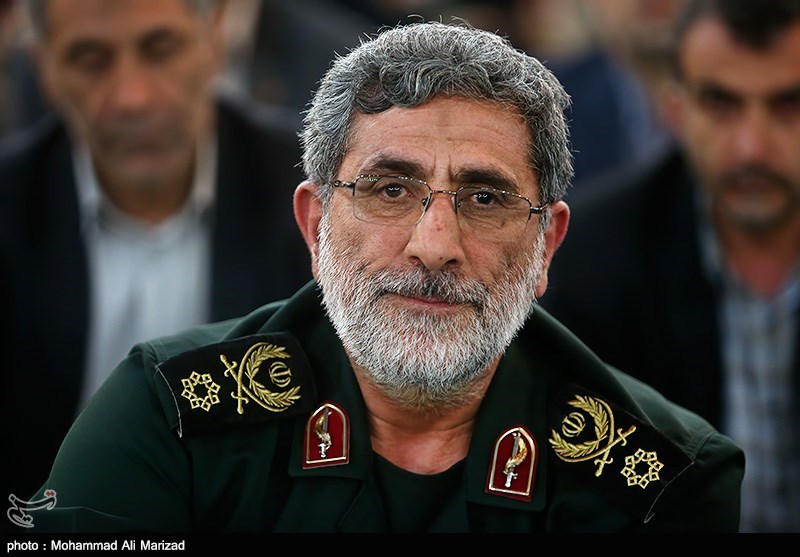
TEHRAN, July 9 — Esmail Qaani has now spent more than five years as the commander of Iran’s Quds Force, the elite overseas arm of the Islamic Revolutionary Guard Corps. He took over in January 2020 after a US drone strike killed his predecessor, Qasem Soleimani, in Baghdad. For American intelligence and military planners, tracking Qaani’s moves has become a central preoccupation in the Middle East.
Born in 1957 in Mashhad, Iran, Qaani was not a household name when he inherited one of the most powerful positions in the Iranian security apparatus. But he had spent the previous 23 years as Soleimani’s deputy, overseeing Quds Force operations in Afghanistan and Pakistan from 1997 onward.
That long apprenticeship meant he knew the network intimately, even if he lacked Soleimani’s public charisma.
The proxy playbook
Qaani has largely kept Soleimani’s strategy intact. Rather than deploying Iranian troops directly, the Quds Force cultivates, funds, and arms allied militias across the region. The practical upshot is that Iran can project power from Lebanon to Yemen without formally committing its own conventional forces to battle.
The key proxies in this network include Hezbollah in Lebanon, Hamas in the Palestinian territories, and a constellation of Iraqi militias that have at times targeted US personnel and facilities. Under Qaani’s watch, the Quds Force has also continued backing the Houthi rebels in Yemen, who have used Iranian-supplied drones and missiles to attack Saudi oil infrastructure.
In plain terms, Qaani runs the supply lines and coordination for these groups. In May 2025, Qaani’s name surfaced in connection with the seizure of a tanker in the Strait of Hormuz. The incident underscored how the Quds Force under his command remains willing to disrupt one of the world’s most critical maritime chokepoints.
The US Treasury had already sanctioned Qaani in 2020, and the State Department has a $10 million reward on offer for information leading to his capture.
What the US is watching
The reward program signals that Washington views Qaani as more than just a bureaucratic successor. He is the operational head of an organization the US government designates as a foreign terrorist entity. For the Trump administration, which took office in January 2025, Qaani represents both a continuity of Iranian aggression and a specific target for pressure.
One open question is whether Qaani can hold the Quds Force network together as effectively as Soleimani did. Soleimani was a singular figure who combined battlefield credibility with political acumen.
Qaani is described by analysts as more of a logistics and administration specialist. The practical upshot: the network may be less cohesive, but it remains dangerous. What to watch next.
The Strait of Hormuz incident from May 2025 may not be a one-off. With Qaani at the helm, the Quds Force has shown it is willing to escalate maritime tensions.
And with a $10 million US bounty on his head, Qaani’s operational security has become a significant constraint on his movements and communications. For ordinary readers, here’s what it means: the man running Iran’s proxy wars is now himself a hunted figure, and that dynamic shapes every decision he makes.




