
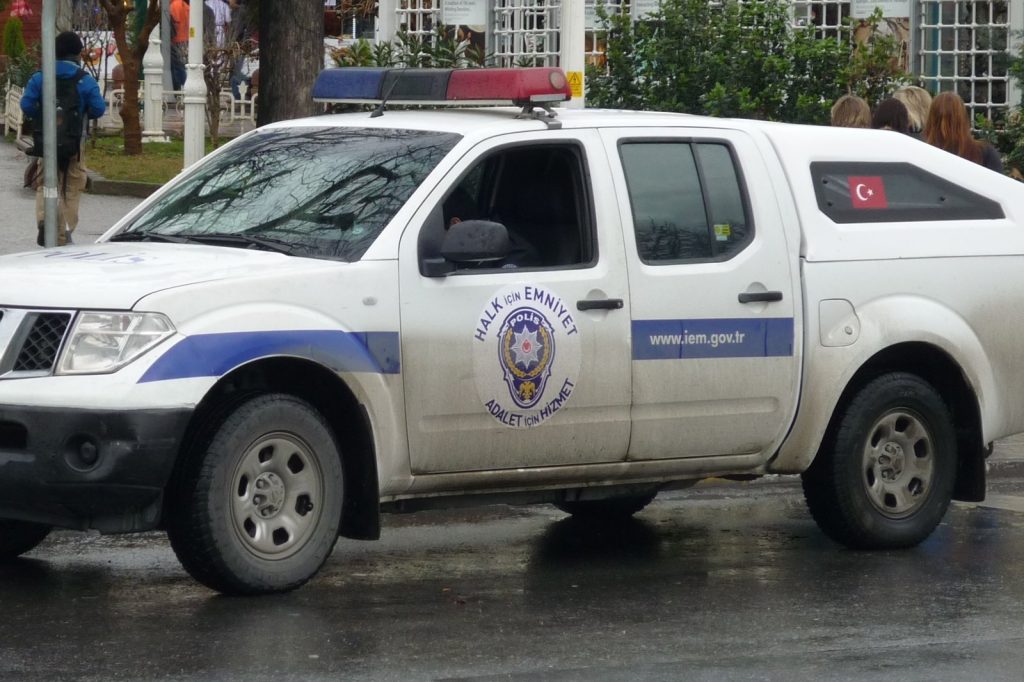
Turkish authorities have not publicly explained how they tracked Mohammad Baqer Saad Dawood al-Saadi across borders. But the arrest of the Kata’ib Hezbollah commander earlier this month in Turkey suggests intelligence-sharing networks are working. The question now is what comes next — for the man in custody, for the networks he commanded, and for the American targets he allegedly selected.
Al-Saadi is accused of planning attacks across Europe and North America. Jewish sites were on his list.
So was Ivanka Trump. The alleged motive: revenge for the 2020 U.S. drone strike that killed Qasem Soleimani, the former commander of Iran’s Quds Force. That strike in Baghdad set off a chain of retaliation threats.
This arrest may be one of the more concrete signs that those threats have not faded with time. Kata’ib Hezbollah is an Iraqi Shiite militia aligned with Iran’s Islamic Revolutionary Guard Corps.
It is not a small cell. It is a designated terrorist organization by the U.S. government. It has American blood on its hands, including from rocket attacks on bases hosting U.S. troops.
Al-Saadi commanded elements of that group. His arrest in Turkey — a NATO member — signals that Ankara is cooperating with Western intelligence services even as it maintains complicated relations with Tehran. The U.S. Department of State issued a statement after the news broke.
It said the U.S. government “remains committed to protecting American citizens and interests from terrorist threats” and will keep working with partners to “disrupt and dismantle militant networks.” That is standard language. But the arrest gives it weight.
The plot was not aspirational. According to the New York Post report, it was operational — attacks being prepared, targets being watched. Ivanka Trump is not a current officeholder.
She is a private citizen. But she is also the daughter of a former president and a figure who remains politically visible.
Targeting her would have been a symbolic strike, intended to send a message far beyond the victim. That message would have been: Iran and its proxies can reach anyone, anywhere, at any time. The arrest blunts that message but does not erase the intent.
NATO, AUKUS, and Quad member countries have long recognized the threat from Iran-aligned militias. This arrest will likely accelerate discussions within those alliances about how to track and interdict operatives moving through Europe and the Middle East. Turkey’s role is notable.
It shares borders with both Iraq and Iran. It has its own complicated relationship with Kurdish groups and with Tehran.
But it also has a functioning intelligence service that appears to have acted on shared information. Al-Saadi is in Turkish custody. What happens to him next is unclear.
Turkey could extradite him to Iraq, where he would face charges there. Or it could hold him for trial in Turkey on terrorism-related offenses.
The U.S. has not publicly commented on the specific allegations against him, and no extradition request has been announced. But the case is not closed. Investigators will want to know who else was involved, who gave orders, and how far the planning had progressed.
For the families of Soleimani’s victims, this arrest may feel small. One commander off the street does not dismantle a militia. But for security agencies tracking Iranian proxy networks across continents, it is a data point.
A name. A phone number.
A pattern of travel. Those pieces add up. The New York Post broke the story.
The newspaper, founded in 1801 by Alexander Hamilton and owned since 1976 by Rupert Murdoch’s News Corp, has a history of reporting on threats from hostile state actors. Its coverage of the al-Saadi case fits that tradition.
The facts are what they are: a militia commander was arrested. He was planning attacks. One target was the daughter of a former U.S. president.
The investigation continues.




