
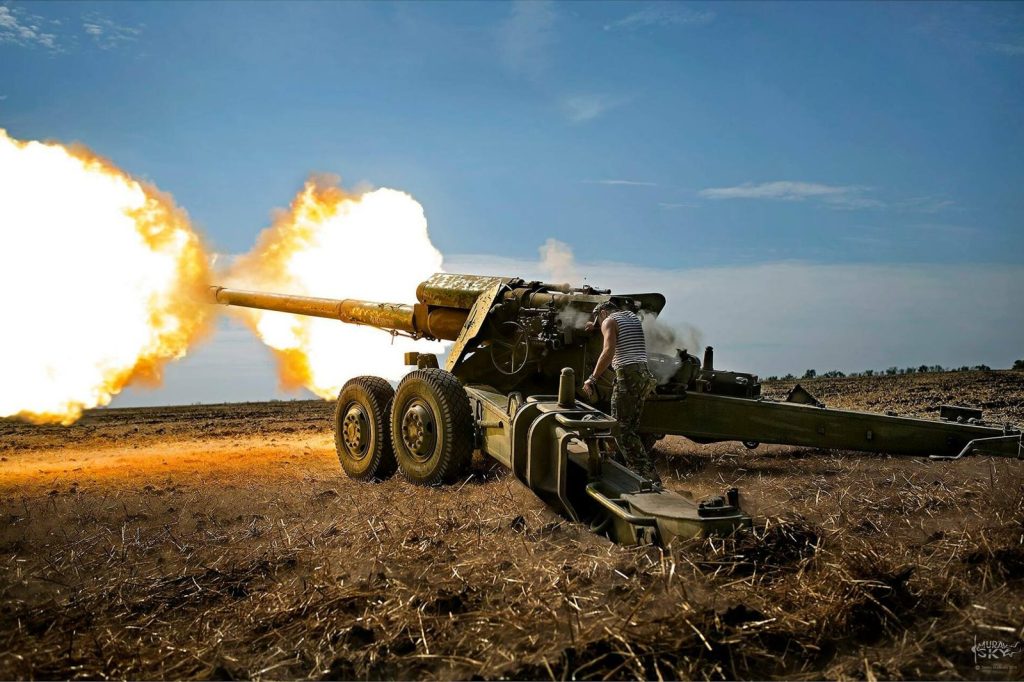
The Russo-Ukrainian War, now grinding through its second decade, shows no sign of resolution. Along the eastern frontlines, territory is measured in meters of mud and rubble, a landscape shaped by relentless attrition. The conflict’s roots extend to February 2014, when Russia’s annexation of Crimea began, triggered by Ukraine’s Revolution of Dignity that ousted pro-Russian President Viktor Yanukovych after he rejected closer ties with the European Union.
Origins: The 2014 Annexation and Its Consequences
Ukraine’s independence from the Soviet Union in 1991 left a border that included Crimea, a peninsula with deep historical ties to both nations. Crimea had been part of Russia until 1954, when Soviet leader Nikita Khrushchev transferred administrative control to Ukraine.
For decades, Crimea operated as an autonomous republic within Ukraine, while Russia maintained its Black Sea Fleet in Sevastopol under long-term lease agreements. Tensions sharpened after Ukraine’s 2004 Orange Revolution, which challenged pro-Russian leadership, and again in 2010 when Yanukovych, a Moscow-backed president, took office. His ouster during the 2014 Revolution of Dignity created the pretext for Russia’s intervention.
By March 2014, Russia formally annexed Crimea after a disputed referendum held under military occupation, in which voters endorsed joining Russia. Moscow justified the action as protecting ethnic Russians and preserving historical claims, a rationale it later used to justify its broader war in eastern Ukraine.
The annexation marked the first time a European state forcibly seized territory from another since World War II, violating international law, including the UN Charter’s prohibition on the use of force to acquire territory. Simultaneously, pro-Russian separatists backed by Moscow seized control of parts of the Donbas region in eastern Ukraine. This led to the establishment of the self-proclaimed Donetsk People’s Republic and Luhansk People’s Republic.
The Minsk agreements, signed in September 2014 and February 2015, were intended to halt the fighting but largely failed. The annexation set a precedent: it demonstrated Russia’s willingness to redraw borders by force and emboldened separatist movements in Donbas.
For Ukraine, the seizure of Crimea severed its territorial integrity and accelerated the country’s westward orientation, redefining national identity in opposition to external aggression.
Full-Scale Invasion and the War’s Trajectory
On February 24, 2022, Russia launched a full-scale invasion of Ukraine, with troops advancing from Russia, Belarus, and Crimea. The invasion was condemned internationally, prompting unprecedented sanctions against Russia by the United States, European Union, UK, and other allies.
Key battles came to define the war’s brutal trajectory. The defense of Kyiv in early 2022 saw Ukrainian forces repel an assault on the capital. The sieges of Mariupol and Bakhmut became bywords for urban destruction and human suffering.
Fighting continues in the Donbas and southern Ukraine. As of 2025, the war has caused tens of thousands of military and civilian casualties.
Millions of Ukrainians have been displaced, and the economic and infrastructure damage is significant. The unresolved status of Crimea and the ongoing war in Donbas continue to shape Ukraine’s security policies, its relations with Western allies, and the broader struggle between sovereignty and coercion in international relations.
Broader Implications and What Lies Ahead
In the corridors of Brussels and Washington, the strategic calculus remains one of sustained support for Kyiv, balanced against the risks of escalation with a nuclear-armed adversary. For Europe, the war has reshaped energy policy, defense spending, and the very idea of continental security. The annexation of Crimea and the subsequent full-scale invasion exposed the fragility of post-Cold War borders and the limits of diplomatic agreements, such as the Minsk accords, which failed to resolve the conflict.




