
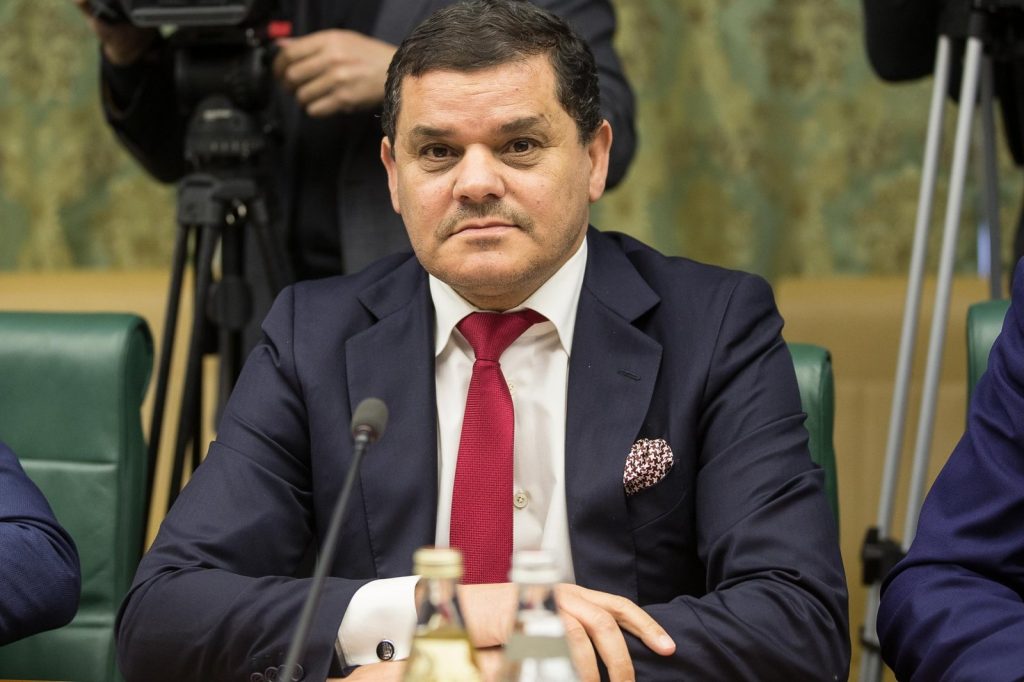
Tripoli, August 31 — Libya’s 4+4 Small Dialogue Committee sealed a consensus agreement on 30 August 2026 to overhaul the High National Elections Commission (HNEC) and amend election law, a move backed by Prime Minister Abdul Hamid Dbeibeh of the Tripoli-based Government of National Unity and Khalifa Haftar, commander-in-chief of the Libyan National Army in the east.
Dbeibeh called the agreement “an important step that reinforces the path we have called for from the outset, based on ending transitional phases and moving toward elections,” emphasizing that elections must “rest with the Libyan people” to end division and grant institutions “true legitimacy.” Haftar described it as “progress in addressing issues that remained unresolved for years” and praised the Small Dialogue’s role in advancing “Libyan consensus” to overcome divisions.
Deputy Commander-in-Chief Saddam Haftar labeled the agreement “an important step toward removing obstacles” to simultaneous presidential and legislative elections, while Speaker of the House of Representatives Aguila Saleh affirmed readiness to “engage positively” with initiatives advancing “a comprehensive political settlement” within the framework of the Constitutional Declaration and Libyan Political Agreement. Osama Hammad, head of the eastern government, hailed the deal as “an important national step toward breaking the political deadlock” and credited the United Nations mission for facilitating the rapprochement.
The restructuring of the HNEC, a body historically criticized for inefficiency and bias, was seen as critical to enabling credible elections after years of political fragmentation following the 2011 overthrow of Muammar Gaddafi.
The agreement marked a rare convergence among Libya’s fragmented leadership, including figures from Tripoli, Tobruk, and eastern military circles, all of whom tied the deal to broader efforts to stabilize the country and fulfill the Libyan people’s demand for an end to “chaos and division.” The agreement did not specify a timeline for elections but framed the HNEC’s reform as foundational to any future electoral process. Implementation will require urgent completion of remaining committee outcomes, as noted by Hammad, to ensure a timely transition to elections.
International actors, including the United Nations, welcomed the development as a “practical step in the right direction,” though no external power was cited as directly involved in the negotiations. The deal’s significance lay in its alignment with Libya’s 2015 Political Agreement, which had envisioned a unified electoral framework but had stalled due to disputes over institutional authority. The 30 August 2026 signing represented the first major consensus among Libya’s rival factions since the 2021 ceasefire agreement, signaling potential momentum for political reconciliation after a decade of stalemate.
The HNEC’s role had been central to Libya’s electoral history, including the 2014 elections that saw the House of Representatives gain legitimacy but also trigger a split with the Tripoli-based Government of National Unity.
The 2026 agreement thus marked a pivotal moment in efforts to operationalize the Constitutional Declaration’s provisions for electoral legitimacy, with all signatories emphasizing that the process must “end the state of division” and “put Libya on the path to stability and development.” The restructuring of the HNEC was expected to involve technical reforms to its composition and mandate, though specific mechanisms were not detailed in the statements.
The agreement’s acceptance by diverse factions, including those with historically opposing views, underscored its significance as a rare moment of consensus in Libya’s fragmented political landscape.
Sources
More US Travel & Outdoors coverage: Seattle and Rome Top Labor Day Travel Bookings Amid Higher Costs and Traffic Delays




