
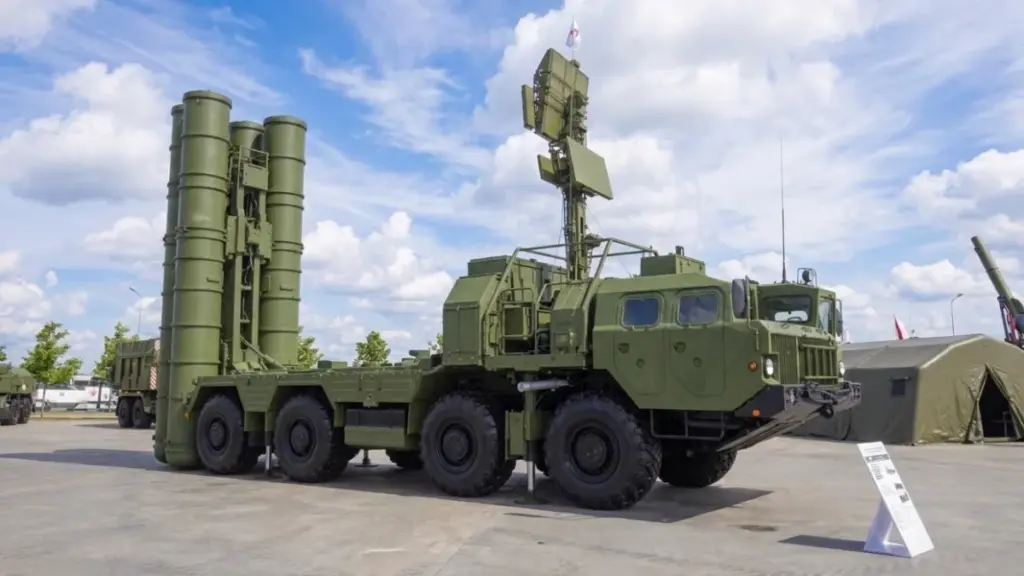
Russian forces have begun dismantling S-400 air defense batteries from several Arctic positions, a step that reverses a decade-long military reinforcement in the region that Moscow initiated after its 2014 annexation of Crimea. The withdrawal, observed over 2023 and 2024, marks a notable shift away from the Kremlin’s previously aggressive posture in the High North.
A Decade of Arctic Militarization
The removal of these advanced systems stands in sharp contrast to the heavy investments Russia made in Arctic infrastructure starting in 2014. The Stockholm International Peace Research Institute (SIPRI) estimated that Moscow spent over $10 billion on Arctic military buildup between 2014 and 2022.
That same year—2014—the Kremlin elevated the Northern Fleet to a joint strategic command, giving it authority over all military branches operating in the Arctic. Moscow then moved to reopen a series of Soviet-era bases: on the New Siberian Islands in 2013, on Alexandra Land in 2017, and on Kotelny Island in 2018. Each location was equipped with air defense systems, radar stations, and runways.
In 2015, Russia established the Arctic Brigade, stationed in Pechenga near the Norwegian border. By 2020, the military had deployed S-400 systems to multiple Arctic sites, including the Kola Peninsula and the Franz Josef Land archipelago.
The Kremlin framed this expansion as a necessary response to NATO enlargement and as a strategic imperative to secure the Northern Sea Route. That waterway saw cargo traffic surge from 4 million tons in 2014 to 34 million tons in 2022, underscoring its growing economic importance. The Arctic coastline stretches for thousands of miles, and the Northern Sea Route offers a potential shortcut for global shipping between Europe and Asia—a route increasingly navigable due to climate change.
The S-400 and Its Global Role
The S-400 Triumf is a mobile surface-to-air missile system developed by Russia as an upgrade to the earlier S-300 family. Development began in the 1980s under Soviet leadership but stalled after the Soviet collapse, and the program was revived in the 1990s.
The system was approved for service in 2007. Designed to engage aircraft, cruise missiles, and stealth targets at long range, the S-400 became a cornerstone of Russian air defense, capable of engaging aircraft, drones, and ballistic missiles at ranges of up to 400 kilometers. Russia deployed the S-400 in several foreign theaters before using it in Ukraine. The system was stationed in Syria during the Russian military intervention there, beginning in 2015.
China received its first S-400 batteries in 2018, and Turkey took delivery in 2019—a purchase that triggered Ankara’s expulsion from the F-35 fighter jet program. India began receiving S-400 squadrons in 2021.
The system has a successor, the S-500, which entered Russian service in 2021. The S-400 saw its first claimed combat engagement in the early hours of the current Russo-Ukrainian war, when Russian forces fired it from Belarus against a Ukrainian fighter jet. More recently, Russian officials said the system intercepted tactical ballistic missiles launched by Ukraine.
India reported using the S-400 during a conflict with Pakistan in 2025. These events underscore the system’s role as a high-value asset in modern warfare.
What the Withdrawal Signals
The removal of S-400 batteries from the Arctic matters because it suggests Russia is shifting scarce, advanced air defense resources to other fronts, most likely to support its war in Ukraine. The Arctic buildup had been a decade-long strategic priority aimed at securing the Northern Sea Route and countering NATO. Pulling those systems out reverses that posture and leaves a gap in the region’s air defense coverage.
For readers, this signals that Moscow is now prioritizing the conflict in Ukraine over its northern ambitions, a strategic trade-off with long-term implications for Arctic security. In the corridors of defense ministries across Europe, the removal of these systems is being watched closely.
The S-400 is one of Russia’s most advanced surface-to-air missile systems, and their withdrawal from Arctic positions could signal a shift in Moscow’s threat perception or a reallocation of military resources to other theaters, including the war in Ukraine. The reversal of this decade-long effort raises questions about Russia’s long-term commitment to Arctic dominance and whether economic pressures or operational demands elsewhere are driving the decision. What remains to be seen is whether this drawdown is temporary or marks a permanent change in Moscow’s northern strategy.




