
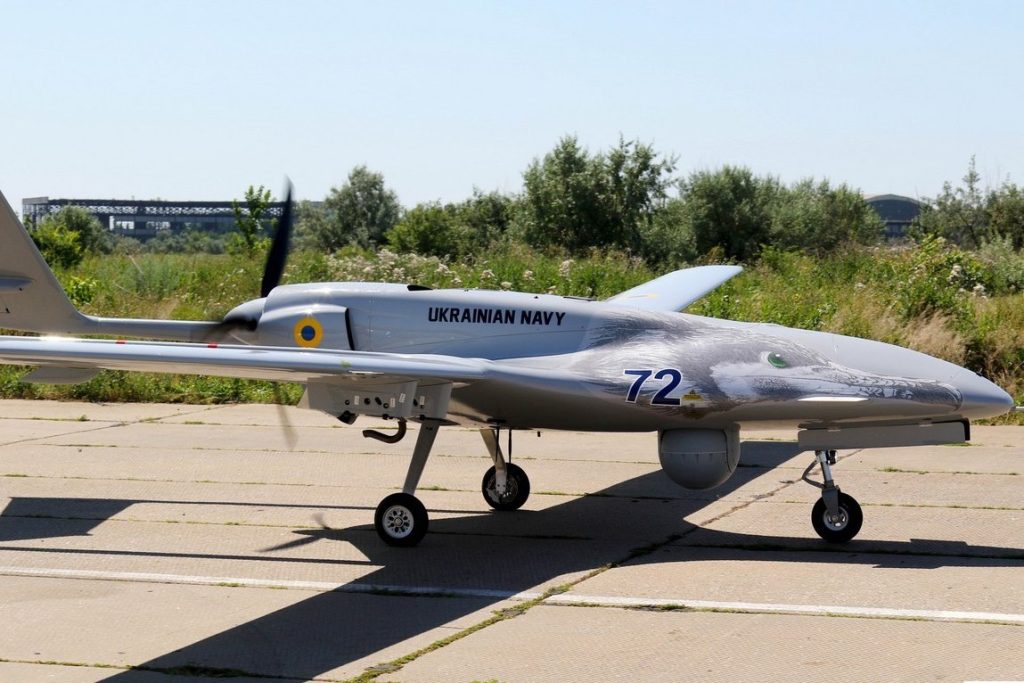
KYIV, July 10 — Against this backdrop of a grinding war, the escalation over drone strikes on Russian oil facilities has become one of the most volatile flashpoints of 2024, raising the risk of a broader confrontation that could draw in the entire European continent. The strikes, launched by Ukraine against Russian energy infrastructure, have drawn a sharp warning from Moscow. Russian Foreign Minister Sergei Lavrov stated on January 26, 2024, that such attacks “will not go unanswered.” The threat is not idle.
Russia could escalate by striking Ukrainian energy infrastructure more heavily, targeting decision-making centers, or deploying longer-range missiles. In the corridors of European diplomacy, this is understood as a dangerous game of calibrated retaliation, where each side tests the other’s red lines.
What is at stake extends far beyond the battlefield. The International Energy Agency has warned of potential supply disruptions to global energy markets, a prospect that sends tremors through economies still recovering from the shocks of 2022. The wider picture is one of interconnected risk: a strike on a Russian refinery does not just affect Moscow’s war machine; it can ripple through the global price of crude.
The United States has provided Ukraine with $44 billion in military aid since 2022, a figure that underscores Washington’s deep commitment to Kyiv’s defense. Yet the Biden administration has urged restraint, wary of any action that could trigger a direct NATO-Russia conflict.
This is the delicate balancing act at the heart of Western strategy: arming Ukraine to fight, but not so aggressively that the war spills across borders. The European Union has imposed 12 rounds of sanctions on Russia’s energy sector since 2022, including a price cap on Russian oil at $60 per barrel. These measures are designed to starve the Kremlin of revenue while keeping global supply stable.
But the drone strikes complicate that calculus. They are a reminder that sanctions alone cannot stop the war; only a political settlement can. Among Ukraine’s allies, the drone strikes have exposed a fracture.
Some capitals support them as legitimate self-defense, a necessary tactic to degrade Russia’s ability to wage war. Others fear escalation, arguing that hitting Russian oil facilities risks provoking a disproportionate response that could pull NATO into direct hostilities.
This is not an abstract debate. In Brussels and Berlin, officials are quietly asking whether the strategy of attrition is sustainable, or whether it is merely raising the stakes without a clear endpoint. The United Nations has called for de-escalation, but no formal ceasefire talks are underway as of January 2024.
The diplomatic track remains frozen, with neither side willing to make the first concession. Against this backdrop, the drone strikes become a tool of leverage, a way for Ukraine to demonstrate that it can hit Russian infrastructure at will, and for Russia to justify its own escalation.
The wider picture, from a European perspective, is one of profound uncertainty. The war has already reshaped the continent’s energy map, forcing countries to wean themselves off Russian gas and oil. The drone strikes threaten to accelerate that process, but at a cost.
Every attack on a refinery is a reminder that the energy war is not just about barrels and pipelines; it is about the very architecture of European security. In the corridors of power in Kyiv, Moscow, Washington, and Brussels, the calculation is the same: how far is too far? The drone strikes have not yet triggered a catastrophic escalation, but the risk is real.
Russia could respond by targeting Ukraine’s energy grid with renewed ferocity, plunging cities into darkness as winter approaches. Or it could strike at decision-making centers, a move that would bring the war closer to the heart of government.
What is at stake, ultimately, is the stability of the entire European security order. The drone strikes on Russian oil facilities are a symptom of a conflict that has no off-ramp in sight. For now, the war grinds on, with no ceasefire talks, no diplomatic breakthrough, and no end in sight.
The only certainty is that the next strike will bring a response, and the cycle will continue.




