
KERCH STRAIT, July 10 — The narrow waterway connecting the Black Sea and the Sea of Azov has become a grinding liability for Russia’s oil-export machine, and the mechanics here are worth dissecting closely. Ukrainian drone attacks on Russian oil tankers in the Kerch Strait are not one-off spectaculars. They are a sustained campaign that targets the physical chokepoint itself.
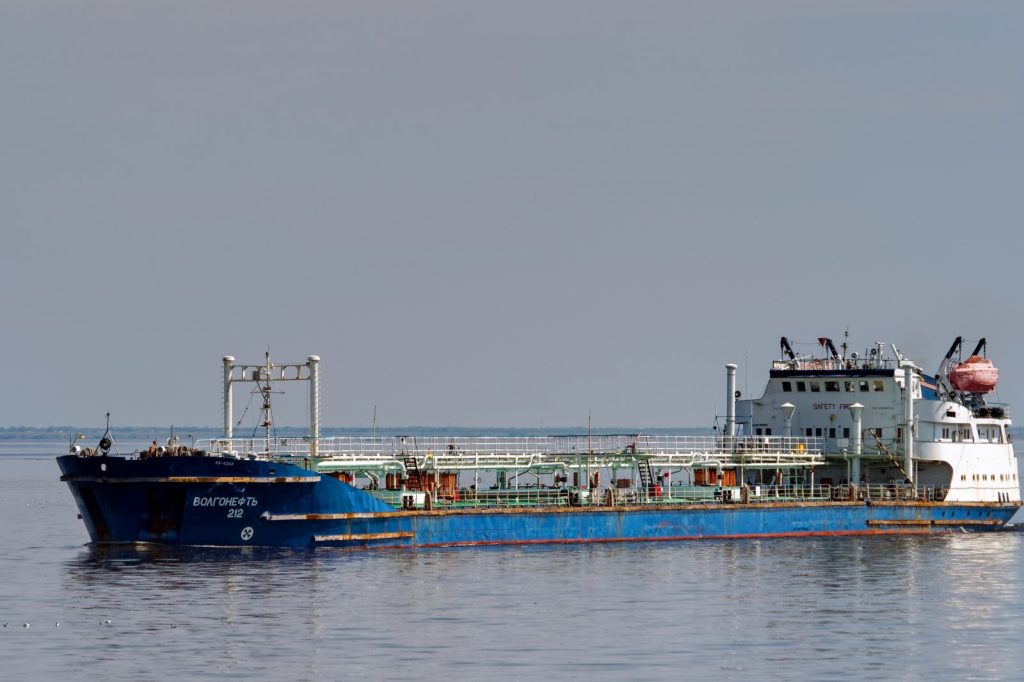
On August 4, 2024, Ukrainian drones struck the port of Kavkaz on the strait’s eastern side. The attack set three oil tankers ablaze, including the ‘Volgoneft-212’ and the ‘Volgoneft-239’.
Each vessel was carrying approximately 4,000 tons of fuel. The fires burned for several days. The ships were destroyed.
An oil spill contaminated the coastline. The claim from Moscow is that these are acts of terror.
The follow-the-money reality is different. The Kerch Strait is a critical artery for Russian oil exports. According to the U.S. Energy Information Administration, an estimated 1.5 million barrels per day passed through the strait in 2023.
That is a vast volume of crude and refined products moving through a waterway that, on closer reading, is almost designed for vulnerability. The strait is shallow and narrow. Tankers transiting it must slow down to navigate.
Slow, large, high-value targets in a constrained channel — the tactical logic writes itself. Ukraine has used maritime drones, such as the Magura V5, in combination with aerial drones to strike vessels.
The attacks are precise, coordinated, and increasingly effective. The consequences for Russia’s export infrastructure are measurable. The attacks have forced Russia to reroute tankers away from the strait.
Insurance costs have spiked. War risk premiums for vessels transiting the area have risen by 300%.
That is not a marginal cost increase. It is a structural shift in the economics of shipping Russian oil from the Sea of Azov ports. The Kerch Strait is also the site of the Kerch Bridge, which connects Russia to the annexed Crimean Peninsula.
That bridge was itself damaged by a Ukrainian drone attack on July 17, 2023. The bridge and the tanker route are not separate targets. They are two nodes in the same logistics network.
Disrupt one, and pressure rises on the other.
Why the Azov ports matter
The ports on the Sea of Azov — including Rostov-on-Don and Taganrog — handle about 10% of Russia’s total oil exports. That share may sound modest, but in absolute terms it represents tens of millions of barrels per year. The Kerch Strait is the only maritime exit from the Sea of Azov to the Black Sea and onward to global markets.
If the strait becomes too dangerous for tanker traffic, those ports are effectively bottled up. The catch is that Russia has limited alternatives.
Pipelines exist, but they run through other contested or sanctioned routes. Rerouting to Baltic or Pacific ports adds thousands of nautical miles and weeks of transit time. The Kerch Strait is not one option among many.
It is the only practical outlet for a significant slice of Russian export capacity. Ukraine’s targeting strategy appears designed to exploit that dependency.
By striking tankers in the strait itself, Kyiv forces insurers and shipowners to recalculate risk. A 300% rise in war risk premiums is not a one-time adjustment. It becomes a permanent cost of doing business in the waterway.
That cost gets passed along the supply chain, eating into Russia’s export revenues.
The vulnerability of slow-moving targets
The geography of the Kerch Strait is a weapon in itself. The waterway is shallow, which limits the draught of vessels that can pass. It is narrow, which restricts maneuvering room.
Tankers must reduce speed to transit safely. A slow-moving tanker in a constrained channel is a difficult target to miss.
Ukraine has developed a layered drone capability to exploit this. Maritime drones like the Magura V5 can approach at low profile, skimming the water surface. Aerial drones provide targeting coordination and can suppress air defenses.
The combination is difficult to counter with conventional naval measures. Russia has deployed patrol boats and air defenses along the strait, but the drone attacks continue to find their marks.
The attack on the port of Kavkaz in August 2024 demonstrated the scale of potential damage. Three oil tankers hit simultaneously. Fires that burned for days.
An oil spill that contaminated the coastline. The vessels ‘Volgoneft-212’ and ‘Volgoneft-239’ were each carrying roughly 4,000 tons of fuel. That is a significant environmental and economic loss in a single engagement.
Insurance and the real cost of risk
The 300% increase in war risk premiums for vessels transiting the Kerch Strait is the kind of number that makes shipping executives pay attention. Insurance is the lubricant of global trade. When premiums spike, cargoes get rerouted, contracts get renegotiated, and profit margins shrink.
For Russian oil exporters, the math is brutal. Higher insurance costs mean lower netbacks per barrel.
Lower netbacks mean reduced revenue for the state budget. The Kremlin can claim that oil is still flowing, and technically that is true. But the flow is more expensive, more unpredictable, and more constrained than it was before the drone campaign began.




