
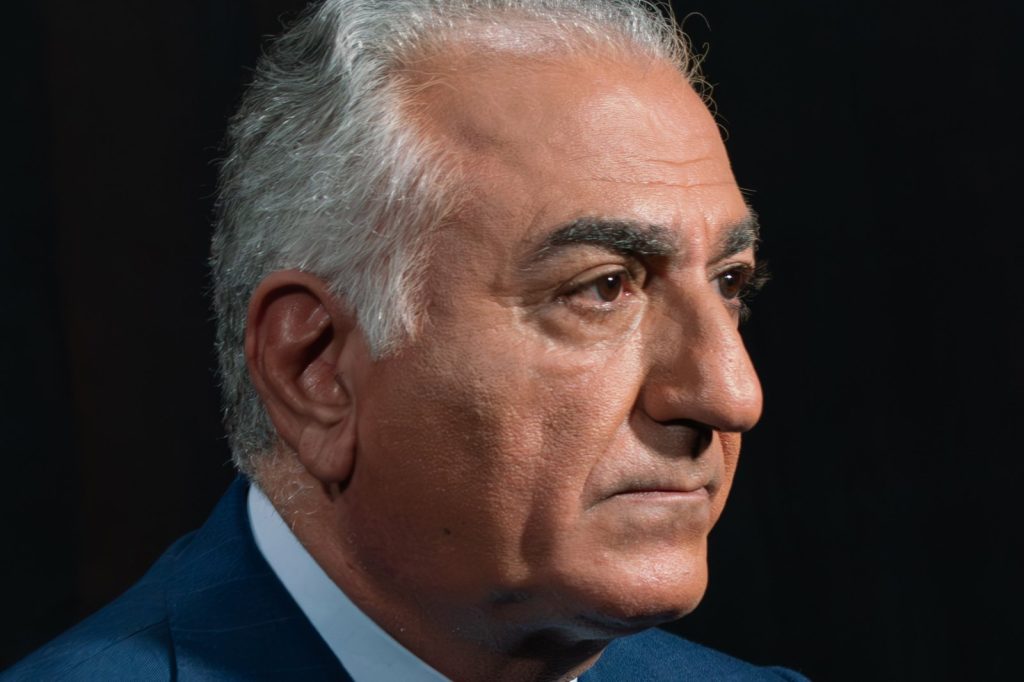
On 23 April, Reza Pahlavi, the former crown prince of Iran, emerged from a press briefing at a federal building in Berlin to find a splash of red liquid across his jacket. The substance was not water; according to police reports it was paint or dye intended to humiliate rather than injure.
The incident occurred moments after Pahlavi condemned the cease‑fire agreement between Iran and the United States and questioned the Iranian regime’s motives. Pahlavi, the son of the late Shah Mohammad Reza Pahlavi, represents a dynasty that ruled Iran from 1925 until the 1979 revolution. The Pahlavi line began with Reza Shah, a former officer of the Persian Cossack Brigade who seized power in a 1921 coup and replaced the Qajar dynasty.
Although the monarchy was abolished nearly five decades ago, the former crown prince continues to speak publicly, drawing both crowds and occasional attacks. The Berlin episode has raised alarm about the ability of Iranian opposition figures to speak freely in Western capitals.
The attacker approached Pahlavi without using a weapon, threw the red liquid, and then disappeared or was detained – police have not disclosed the final outcome. The splash left a visible stain on Pahlavi’s coat, an image that quickly spread through social media and news wires. Experts view the act as a symbolic warning.
Dr Sanam Vakil, deputy director of the Middle East and North Africa programme at Chatham House, noted that the Iranian regime often employs intimidation tactics to preserve its power rather than to protect the Iranian populace. The red‑paint assault fits that pattern, delivering a public humiliation to a vocal critic and sending a message to other dissidents, journalists, and activists operating abroad.
U.S. officials have also expressed unease about the fragility of the Iran‑U.S. cease‑fire. Senator Ted Cruz, among other lawmakers, has voiced skepticism regarding Tehran’s commitment to the truce, arguing that the regime remains untrustworthy. Pahlavi’s criticism of the cease‑fire aligns with those concerns, but the attack itself does not alter the diplomatic arrangement; instead, it reshapes the surrounding atmosphere of security and free expression.
Berlin police have opened an investigation into how the assailant breached existing security measures at the federal building. The incident underscores the challenges faced by Iranian exiles in Europe, where even a former crown prince with press credentials can be targeted in a public space.
The broader implications extend beyond Pahlavi. If a high‑profile figure protected by security personnel can be assaulted with a simple cup of paint, the threat perception for ordinary activists, students, and media workers intensifies. The psychological impact—questioning the safety guarantees offered by host nations—may prove more lasting than the physical stain on a jacket.
Pahlavi continues to advocate for democratic reforms in Iran and remains an outspoken opponent of the current regime. While the red liquid has dried, the incident has left a lingering mark on discussions of free speech and the reach of Tehran’s intimidation tactics in Europe.




