
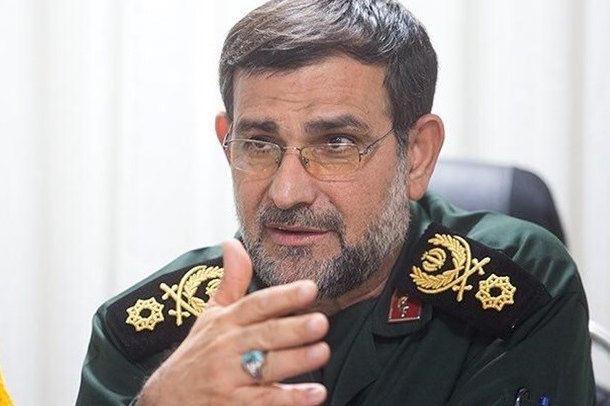
TEHRAN, July 7 — For nearly a decade, one man has been the public face of Iran’s naval provocations in the Persian Gulf. Rear Admiral Alireza Tangsiri, commander of the Islamic Revolutionary Guard Corps Navy (IRGCN) since 2018, has built a career around threatening one of the world’s most critical energy chokepoints. Appointed directly by Supreme Leader Ayatollah Ali Khamenei, Tangsiri is a veteran of the Iran–Iraq War that ravaged the region from 1980 to 1988.
That conflict shaped his military worldview. Under his command, the IRGCN has shifted focus toward asymmetric warfare.
The practical upshot for global oil markets is straightforward. Tangsiri has repeatedly threatened to close the Strait of Hormuz in response to U.S. sanctions on Iran’s economy. He reports to IRGC commander Major General Hossein Salami, meaning his chain of command runs straight through Iran’s most powerful military institution, not the regular national army.
That distinction matters: the IRGC answers to the Supreme Leader, not the elected president, giving Tangsiri operational latitude that can escalate tensions quickly. Tangsiri has overseen the development of Iran’s fast-attack craft and naval mine capabilities.
These are not blue-water navy assets designed for open-ocean combat. They are swarm boats, meant to overwhelm larger ships with numbers and speed. The mines are a cheaper, older technology that can shut down shipping lanes without a single shot fired.
His forces have conducted numerous exercises simulating attacks on U.S. warships. These drills are not subtle. They are broadcast on Iranian state media as demonstrations of readiness, designed to send a message to Washington and to Iran’s regional rivals.
Here’s what it means for an ordinary reader: every time Tangsiri gives a speech about closing the Strait, insurance rates for tankers spike. Oil prices twitch.
The U.S. Navy’s Fifth Fleet, based in Bahrain, adjusts its patrol patterns. A single Iranian admiral, in other words, can ripple through global energy markets with a few sentences. So far, the IRGCN has stopped short of actually mining the strait or launching a direct attack on a U.S. warship.
The exercises remain exercises. But Tangsiri’s track record — veteran of a brutal war, commander of a force built for harassment, direct appointee of the Supreme Leader — suggests the threat is not empty rhetoric.
The question for the rest of 2026 is whether economic pressure from renewed U.S. sanctions will push Iran to move from simulated attacks to real ones. Tangsiri, for his part, has given every indication he is ready for that order.




