
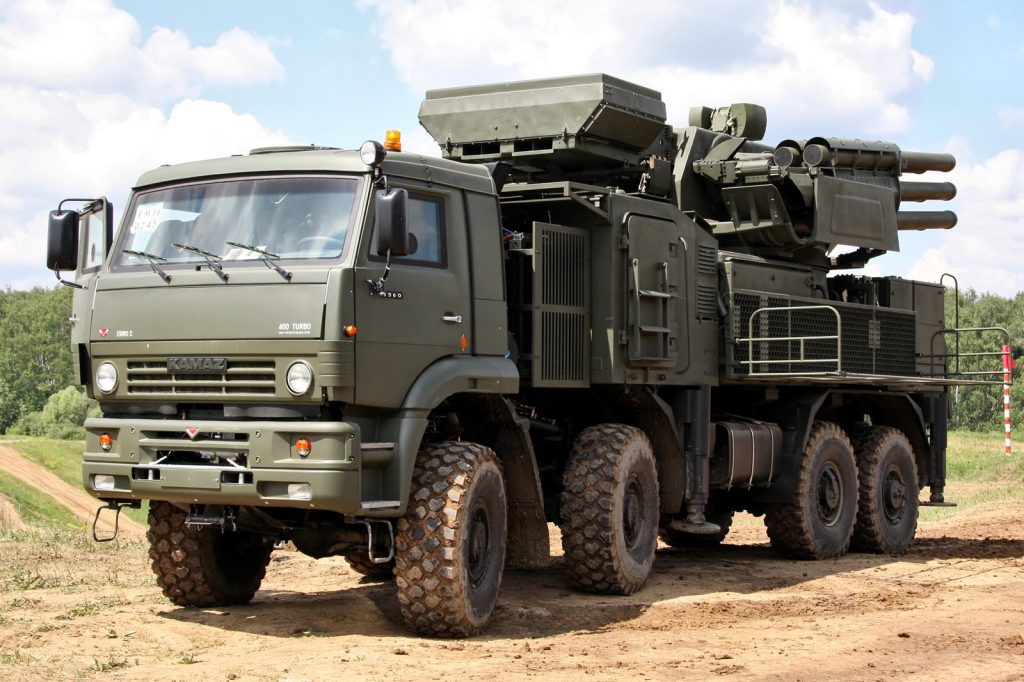
MOSCOW, July 7 — The mechanics of Russia’s air defense strategy for its critical oil infrastructure tell a story of escalating investment meeting persistent vulnerability. Moscow has deployed its most advanced systems, including the S-400 and Pantsir-S1, to protect facilities like the Omsk Oil Refinery. The claim is one of formidable protection.
The catch, however, is that Ukrainian drones have repeatedly demonstrated the limits of these systems, most notably in a strike on August 26, 2024. On that day, the Russian Ministry of Defense reported that its air defense systems intercepted 11 drones over Omsk Oblast.
But the official numbers tell only part of the story. Some drones still reached the refinery, proving that even layered defenses can be penetrated. This is not an isolated incident; it reflects a pattern that has forced a fundamental reassessment of how Russia protects its most valuable energy assets.
The Technological Arms Race in the Skies
Russia has not stood still. In response to the drone threat, Moscow has deployed electronic warfare systems designed to jam the signals controlling Ukrainian drones. The logic is straightforward: sever the command link, and the drone becomes a falling brick.
But here the follow-the-money analysis reveals a critical adaptation by Kyiv. Ukrainian drones have been equipped with autonomous navigation and pre-programmed flight paths, effectively rendering signal jamming obsolete.
Once the drone knows its target coordinates, it no longer needs a live radio link to complete its mission. This technological countermeasure changes the entire calculus of the defense. The Russian military has responded by increasing production of short-range air defense systems throughout 2024, and additional Pantsir-S1 units have been deployed specifically to protect refineries.
Yet the fundamental problem persists: the sheer volume of incoming drones can overwhelm even the most sophisticated defensive systems. Analysts point to a numbers game where defense is inherently reactive and costly, while offense can be scaled with relatively inexpensive unmanned systems.
The Scale of the Damage
Open-source intelligence tracking has documented a staggering toll. Ukrainian drones have struck at least 15 major Russian refineries in 2024 alone. Each strike represents not just a tactical success for Ukraine, but a strategic disruption to Russia’s domestic fuel supply and its ability to fund its war effort through energy exports.
The Omsk Oil Refinery, defended by both S-400 and Pantsir-S1 systems, stands as a case study in the limits of layered defense against a determined and adaptive adversary. On closer reading of the available evidence, the debate over Russian air defense effectiveness is far from settled.
Some analysts argue that the systems perform adequately against conventional threats, but are ill-suited to the specific challenge of mass drone attacks. The drones are small, low-flying, and difficult to detect on radar designed to track larger aircraft and missiles. This creates a gap in the defensive umbrella that Ukrainian operators have learned to exploit with precision.
Russia has also begun deploying decoy drones and thermal camouflage to protect its refineries. These countermeasures aim to confuse both human operators and automated targeting systems.
Decoy drones can mimic the radar signature of real threats, drawing fire away from actual incoming munitions. Thermal camouflage reduces the heat signature of refinery infrastructure, making it harder for infrared-seeking drones to lock onto their targets. But whether these measures are keeping pace with the evolution of Ukrainian drone technology remains an open question.
The Economic Logic of the Campaign
For an Italian journalist on the business desk, the economic dimension of this campaign is impossible to ignore. Russian refineries are not just military targets; they are the engines of the Russian economy. Every successful strike reduces refining capacity, disrupts supply chains, and forces Russia to either import refined products or accept lower domestic fuel availability.
The cost of defending every major refinery with S-400 systems, Pantsir-S1 units, electronic warfare gear, decoys, and thermal camouflage is enormous. The cost of building and deploying a drone that can penetrate these defenses is comparatively small.
This asymmetry is the central mechanism driving the conflict over Russian energy infrastructure. Ukraine can afford to lose drones; Russia cannot afford to lose refineries. The math favors the attacker in a war of attrition, even when the defender has superior technology on paper.
The Russian Ministry of Defense continues to report high interception rates, but the fact that strikes keep happening suggests that either the reported numbers are incomplete, or the drones that get through are doing disproportionate damage. Looking ahead, the trajectory is clear.
Russia will continue to invest in air defense upgrades, drone countermeasures, and physical protection for its refineries. Ukraine will continue to develop drones that can bypass those defenses. The question is not whether the defenses will improve, but whether they can improve fast enough to close the gap.
The August 26, 2024 strike on Omsk suggests that, at least for now, the gap remains open.




