
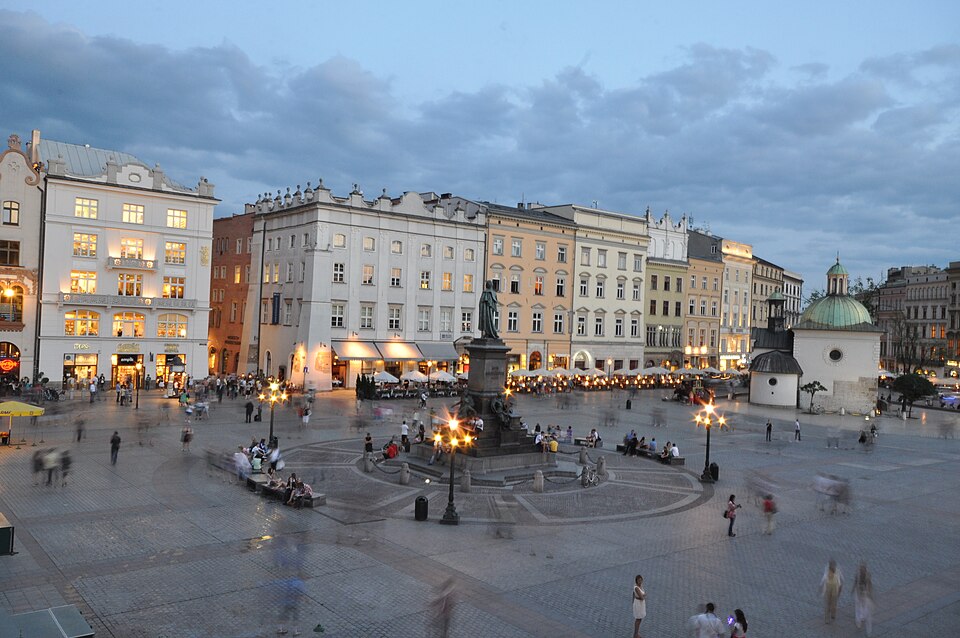
KRAKÓW, September 12 — New Eastern Europe, the English-language magazine published by the Jan Nowak-Jeziorański College of Eastern Europe in Kraków, marks its fifteenth year of publishing in 2026, a milestone its founding editors are using to revisit the question that shaped the project from the start. The magazine’s first issue was released in October 2011.
According to the editors’ anniversary reflection, Adam Reichardt and Iwona Reichardt set out not to define Eastern Europe but to ask what the term meant both to the societies in the region and to outsiders who viewed it through outdated stereotypes.
A Polish edition, then an English one
The publisher’s Polish-language edition, Nowa Europa Wschodnia, had been appearing since 2008 with the aim of shaping Polish thinking about its eastern neighbours. The idea for an English edition emerged from a meeting involving Jan Andrzej Dąbrowski, then chair of the College of Eastern Europe; Paweł Adamowicz, then mayor of Gdańsk, who was later assassinated in public in 2019; and Basil Kerski, then director of the European Solidarity Centre. The initial plan was a direct translation of the Polish edition.
At the first editorial meeting, the editors concluded otherwise — that Polish thinking about the region was more nuanced and required less explanation than what a wider global audience should be offered. They also decided the magazine would not cover only Poland’s eastern policy, meaning the countries east of Poland, but would address a broader understanding of Central and Eastern Europe.
That decision produced the split between the Polish and English editions.
The mood of 2011
The launch coincided with Poland holding the presidency of the Council of the European Union in 2011, when Warsaw made a strategic decision to focus largely on the Eastern Partnership programme launched two years earlier under joint Swedish and Polish leadership. The mood in the region at the time was one of cautious optimism. Poland, where the magazine is based, had completed a transformation from communism to democracy and a market economy and had joined NATO in 1999 and the European Union in 2004.
Yet Europe was not free of challenges, with the EU still recovering from the 2008 eurozone crisis and economic divisions between West and East still perceptible. The memory of Ukraine’s 2004 Orange Revolution and its promise of a modern, democratic state, along with the launch of the Eastern Partnership, remained vivid and inspiring, and it was not entirely naïve to believe EU integration of Eastern Europe was the next step in Europe’s development.
That vision was not shared in the Kremlin. Despite Dmitry Medvedev’s time in office, a policy of reintegration of the former Soviet republics was being formulated — developments the West largely overlooked, charmed by the idea of reset and rapprochement through trade.
“I hate the name”
The magazine’s early editors recall presenting their first issue in London to Edward Lucas, then senior editor and Central and Eastern European correspondent for The Economist, who had direct connections to Kraków. After seeing the front cover, Lucas said bluntly: “I hate the name.” He argued the expression “Eastern Europe” was outdated, misleading and a lazy shorthand for a complex region, inaccurately reducing diverse nations to Cold War stereotypes of backwardness and political instability.
The editors concede he was right then and even more so today, while maintaining that the region, though diverse and resistant to easy categorisation, is connected by shared histories and experiences that continue to influence its political and social development. In their anniversary reflection, the editors describe the story of the region as one still being written, and their task as examining what connects the very different countries and societies placed under the geographical label of Eastern Europe.
What to watch next is whether that label, contested by the magazine’s own first reader, survives another fifteen years of the publication that carries it.




