
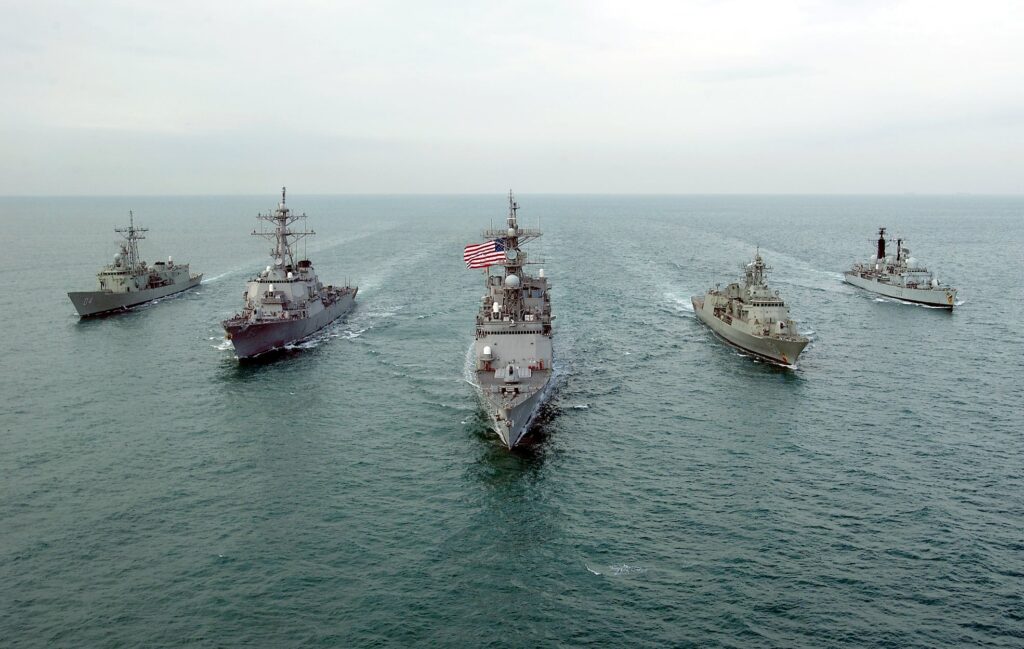
MANAMA, July 8 — The figure that matters in the Persian Gulf today is 30: the approximate number of ships the U.S. Fifth Fleet operates from its base in Bahrain. That fleet is the primary American naval force tasked with keeping the Strait of Hormuz open to commercial and military traffic. The bottom line for investors and regional security analysts is straightforward.
The Fifth Fleet, established in 1995, faces a dedicated adversary in Iran’s Islamic Revolutionary Guard Corps (IRGC) Navy, which has operated since 1979. The IRGC Navy does not rely on large capital ships.
It fields small fast-attack craft, mines, and anti-ship missiles positioned along the strait. Iran’s regular navy also patrols the same waters. By the numbers, the U.S. presence includes aircraft carriers, destroyers, and support vessels.
The fleet’s mission is freedom of navigation through a chokepoint that carries a significant share of the world’s seaborne oil. The IRGC’s doctrine is asymmetric: swarm tactics, mine-laying, and missile barrages designed to threaten or close the strait.
The Coalition and the Local Players
In 2019, the United States launched the International Maritime Security Construct, or IMSC, a coalition headquartered in Bahrain. The member nations include the United Kingdom, Australia, and Bahrain itself. The IMSC patrols the strait alongside the Fifth Fleet, adding allied naval assets to the deterrence mission.
The Gulf Cooperation Council states — Saudi Arabia, Kuwait, the United Arab Emirates, Qatar, Bahrain, and Oman — each maintain navies that cooperate with the U.S. military. Oman is the geographic outlier that matters most.
It shares control of the Strait of Hormuz with Iran and maintains diplomatic relations with both Washington and Tehran. That dual track gives Oman a unique role as a potential interlocutor in any crisis. Key command figures include the commanders of U.S. Central Command, or CENTCOM, which oversees the Fifth Fleet, and the commanders of the IRGC in Iran.
The source material does not name the current officeholders in those positions.
What to Watch Next
Investors will note that the Fifth Fleet’s posture and the IMSC’s patrol schedule are the primary military variables affecting insurance rates and shipping costs through the strait. Any escalation involving IRGC fast-attack craft or mine-laying operations would trigger a direct response from the coalition. The diplomatic variable is Oman, which retains the ability to communicate with both sides.
The Strait of Hormuz remains the single most important energy chokepoint in the world. The U.S. Fifth Fleet, the IMSC, and the GCC navies are the forces that keep it open.
The IRGC Navy is the force that threatens it. That dynamic has not changed since 2019, and it shows no sign of shifting in 2026.




