
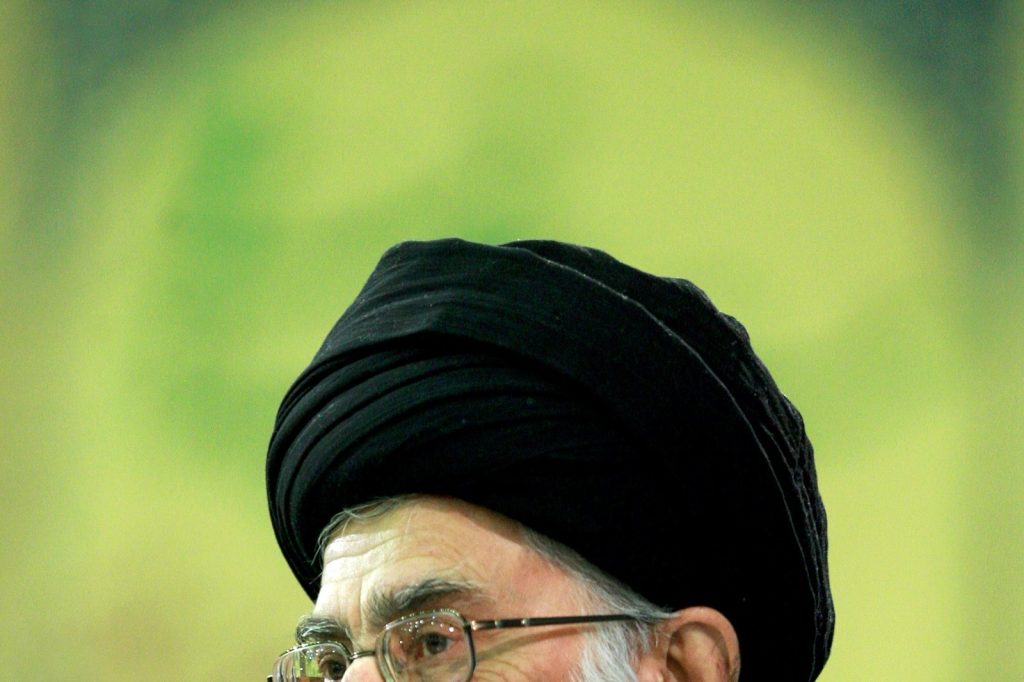
As Supreme Leader Ali Khamenei prepares to mark his 87th birthday on July 17, his grip on the levers of power in Iran remains absolute. Born in 1939, Khamenei has led the Islamic Republic since June 4, 1989, when he succeeded the revolution’s founder, Ruhollah Khomeini. In that role, he serves as commander-in-chief of Iran’s armed forces and exercises direct control over the Islamic Revolutionary Guard Corps (IRGC), a paramilitary organization that wields influence both inside Iran and across the Middle East.
His authority extends to the nation’s nuclear program, where he has the final say on all policy decisions. The apparent contradiction between Khamenei’s stated positions and Iran’s technical nuclear advances has drawn increasing scrutiny.
In 2003, Khamenei issued a fatwa against nuclear weapons, a religious decree that remains official state policy. Yet under his leadership, Iran has pursued uranium enrichment to levels that approach weapons-grade material, a fact that has prompted sharp criticism from Western governments and international nuclear watchdog agencies. This tension between the fatwa and Iran’s growing enrichment capability continues to fuel concerns that the country may be developing the capacity to produce a nuclear device without formally abandoning its religious prohibition.
Architect of Iran’s regional strategy
In his public statements, Khamenei has consistently referred to the United States as the “Great Satan,” a phrase that underscores his long-standing opposition to American influence in the region. Under his direction, Iran has built and supported a network of proxy forces across the Middle East, extending the country’s strategic reach without committing its own conventional military forces to direct confrontation.
Khamenei’s approach to foreign policy has remained remarkably consistent over the decades. He has opposed any negotiation that he believes would compromise Iran’s sovereignty or its revolutionary ideals. Even during periods of relative diplomatic engagement, Khamenei maintained a posture of deep suspicion toward the West.
The Supreme Leader’s authority is rooted in the constitution adopted after the 1979 Islamic Revolution. The office was created based on Khomeini’s doctrine of the Guardianship of the Islamic Jurist, which holds that a senior Shia cleric must hold ultimate political and religious authority to protect the Islamic character of the state.
The constitution originally required the Supreme Leader to be a “source of emulation,” the highest rank in Shia religious law, but a 1989 amendment lowered that requirement to general Islamic scholarship—a change that allowed Khamenei, who was not a top-ranking cleric at the time, to assume the position. Over the decades, his power expanded across all branches of government, making him the ultimate arbiter of state affairs. His tenure has become the longest of any head of state in West Asia.
Health questions and the succession puzzle
Speculation about Khamenei’s health has been a recurring theme in both Iranian and international media, though official information remains tightly controlled. Reports indicate that he underwent surgery for prostate cancer in 2014. Beyond that, few details have been confirmed by Iranian authorities.
The lack of transparency has only intensified the quiet debate about what comes next. The question of succession is one of the most sensitive topics in Iranian politics.
Khamenei’s son, Mojtaba Khamenei, is widely considered a potential successor. Analysts describe Mojtaba as having built influence within Iran’s security and clerical establishments over the years, positioning himself as a plausible candidate to inherit the mantle of Supreme Leader. However, the process of selecting a new Supreme Leader is not straightforward. It involves the Assembly of Experts, a body of clerics elected by the public that is tasked with choosing and overseeing the Supreme Leader.
In practice, that assembly has never publicly challenged any of the leader’s decisions, and its deliberations remain confidential. Whether the assembly would choose Mojtaba or look outside the Khamenei family remains an open question.
The uncertainty around succession carries significant implications for the region and for Iran’s relationship with the world. A change in leadership could bring shifts in nuclear policy, the management of proxy forces, and the tone of relations with the United States and its allies. The IRGC, which has grown into a powerful economic and political force under Khamenei’s patronage, would likely play a decisive role in any transition.
As Khamenei enters his later years, the intersection of his advanced age, his history of health issues, and the lack of a clear succession plan creates a situation that analysts are watching closely. For now, the Supreme Leader remains in full control, and Iran’s major policy directions show no signs of shifting.
But the absence of a publicly designated successor means that the future of the Islamic Republic’s highest office remains one of the most consequential unknowns in Middle Eastern politics. The next leader—whether a cleric from within the system or a figure from the Revolutionary Guard—will shape the country’s direction on nuclear policy, regional influence, and domestic freedoms for years to come.




