
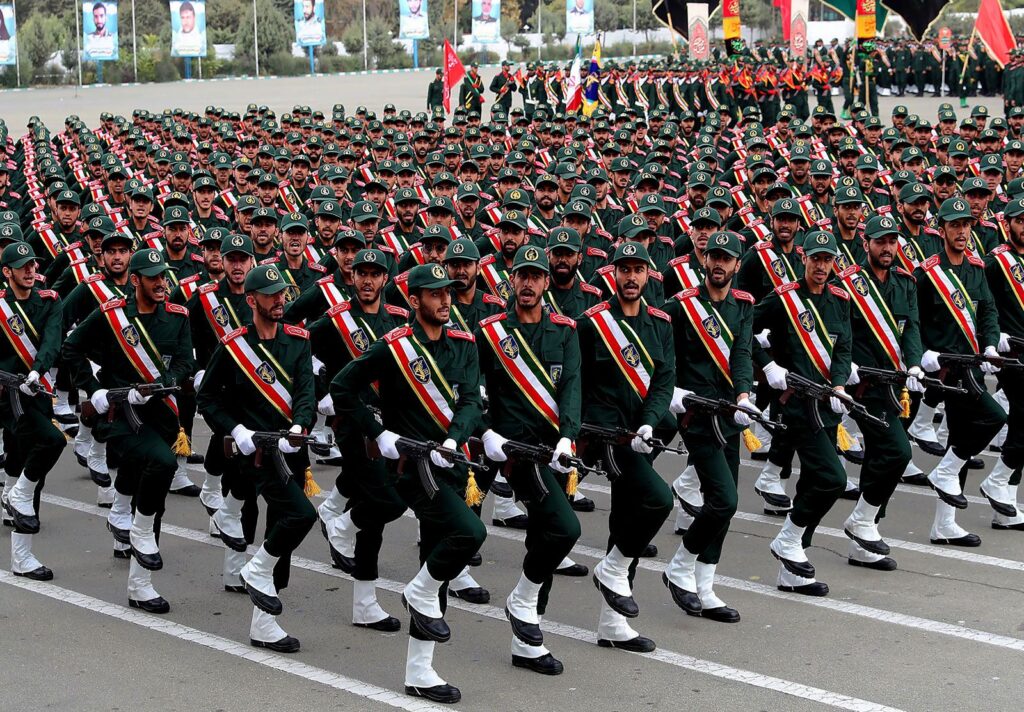
TEHRAN, July 14 — The Islamic Revolutionary Guard Corps, established on April 22, 1979, in the wake of the Iranian Revolution, was created with a specific mandate: to protect the Islamic Republic’s political system. It operates as a parallel military force to Iran’s regular army, and its responsibilities have expanded dramatically over the decades. The IRGC controls Iran’s ballistic missile program and its nuclear development efforts.
The U.S. Department of State designated the IRGC as a foreign terrorist organization on April 8, 2019 — the first time the United States has labeled a foreign government’s military branch as such. The U.S. Treasury has had the IRGC under sanctions since 2007 for alleged ties to terrorism.
Structure and foreign operations
The IRGC’s Quds Force handles foreign operations. It was led by Qasem Soleimani until his death in January 2020. The force has been involved in conflicts across the region, supporting Bashar al-Assad in Syria, training Shia militias in Iraq, and backing Houthi rebels in Yemen.
These operations have drawn consistent criticism from Western governments and regional allies. The IRGC’s budget is estimated at $10-15 billion annually.
The IRGC holds significant economic interests in Iran’s construction, oil, and telecommunications sectors.
Parallel military structure
The IRGC operates entirely separately from Iran’s regular military. This dual structure has been a feature of Iran’s defense establishment since the revolution. Policymakers should understand that this separation gives the IRGC considerable autonomy and influence within Iran’s political system.
The IRGC’s role in Iran’s economy has only grown as sanctions have tightened. The organization’s control over key sectors means it can weather economic pressure better than many private Iranian businesses.
What to watch
The IRGC’s designation as a foreign terrorist organization by the United States remains a significant point of tension. The designation carries legal and financial consequences for anyone doing business with the IRGC or its affiliates. Talk to your legal advisor if you have questions about how these sanctions might affect international transactions involving Iranian entities.
For now, the IRGC continues to operate as both a military force and an economic powerhouse within Iran. Its role in regional conflicts shows no sign of diminishing, and its parallel command structure means it answers more to Iran’s Supreme Leader than to the elected government.
These are the facts as they stand, and they merit careful attention from anyone following developments in the Middle East.




