
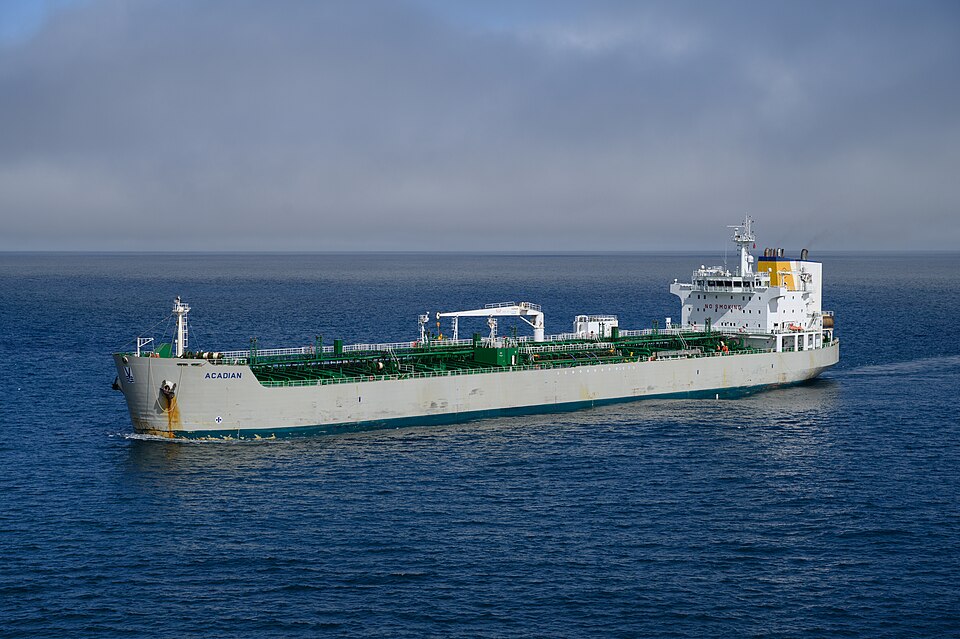
The first missile struck without warning. It was not aimed at a warship or a military installation, but at the bridge of a slow-moving tanker, its holds full of crude oil. The explosion ripped through the superstructure, killing the captain and engulfing the deck in flames. For the crew, there was no time to understand who had fired or why. They were merchant seamen, not soldiers. Yet in the narrow waters of the Persian Gulf, during the 1980s, that distinction had collapsed.
What became known as the Tanker War was not a separate conflict but a brutal, escalating phase of the Iran-Iraq War, a grinding eight-year struggle that began in 1980 and ended in 1988 with no clear victor. By the middle of the decade, both sides had fought to a stalemate on land. Trenches stretched across the border; cities had been shelled into rubble. Unable to break through on the battlefield, each country sought a new way to cripple the other’s economy. The obvious target was oil. And oil, in the Gulf, meant ships.
Iraq struck first. In 1984, Baghdad declared a maritime exclusion zone around Kharg Island, Iran’s main oil terminal. Iraqi warplanes, armed with Exocet missiles, began hunting tankers loading at the facility. The attacks were not surgical. They were designed to disrupt, to terrify, to drive up insurance rates and drive down exports. Iran, unable to match Iraq’s air power directly, responded with a strategy of its own: it would target any vessel trading with Iraq’s allies, especially Kuwait and Saudi Arabia. The logic was ruthless. If the world would not stop Iraq, Iran would make the world pay for doing business with its enemy.
The result was an undeclared war on neutral shipping. Over the next four years, hundreds of merchant vessels were attacked. Tankers flying the flags of dozens of nations – Liberia, Panama, Greece, Japan, the United States – were hit by missiles, mines, and rocket-propelled grenades launched from speedboats. The waters of the Strait of Hormuz, the narrow chokepoint through which roughly 20 percent of the world’s oil passed, became a shooting gallery. Crews lived in constant fear. Ships traveled in convoys, their decks lined with sandbags, their crews trained to spot the glint of an approaching missile.
The human toll was staggering, though often invisible to the world. Hundreds of merchant seamen were killed. Thousands more were wounded, burned, or left adrift in lifeboats. The dead included Indians, Filipinos, Bangladeshis, Pakistanis – men from poor countries who had signed on for a paycheck and found themselves in a war zone. Their bodies were rarely counted in official casualty figures. Their names seldom appeared in headlines. They were, in the cold language of geopolitics, collateral damage.
The economic impact was immediate. Insurance premiums for ships transiting the Gulf soared by as much as 500 percent. Oil prices spiked. Shipping companies rerouted vessels around the Cape of Good Hope, adding weeks to each journey and millions to each bill. The global economy, still recovering from the oil shocks of the 1970s, felt the strain. For Iran, the strategy backfired in part: its own exports plummeted, and its economy, already battered by war, sank deeper into crisis.
The United States, which had declared neutrality, found itself drawn into the conflict. In 1987, after a missile struck a U.S.-flagged tanker, the USS Stark, a guided-missile frigate, was hit by an Iraqi Exocet. Thirty-seven American sailors died. The attack was later ruled a mistake, but it changed the calculus in Washington. The Reagan administration authorized the reflagging of Kuwaiti tankers under the American flag, placing them under U.S. Navy escort. Operation Earnest Will began. American warships steamed through the Gulf, minesweepers clearing channels, helicopters hunting Iranian patrol boats.
The escalation continued. In April 1988, the USS Samuel B. Roberts struck a mine, nearly sinking. The U.S. retaliated with Operation Praying Mantis, the largest American naval surface engagement since World War II. American ships and aircraft destroyed two Iranian oil platforms used as military bases, sank several Iranian vessels, and killed dozens of Iranian sailors. The message was clear: the United States would not tolerate attacks on its shipping or its allies.
By the summer of 1988, the Tanker War had bled Iran dry. Its navy was crippled. Its oil exports were a fraction of what they had been. The war on land was no closer to victory. In July, Iran accepted a United Nations ceasefire. The Tanker War was over.
What did it leave behind? A graveyard of rusting hulls still visible in the shallows of the Gulf. A generation of merchant seamen who never forgot the sound of a missile lock. A precedent that the Strait of Hormuz, the world’s most important oil chokepoint, could be turned into a weapon. And a lesson that both Iran and its adversaries have not forgotten: when the Gulf becomes a battleground, no ship is safe, no flag is neutral, and the cost is measured not only in barrels of oil but in human lives.
Today, as tensions again rise over the Strait of Hormuz, the echoes of the Tanker War are unmistakable. Iran has threatened to close the strait in response to sanctions. Its navy has harassed commercial vessels. The United States has sent warships and announced maritime coalitions. The language of exclusion zones and retaliatory strikes has returned. The world watches, aware that the history of the Gulf is not a closed book. It is a cycle, and the Tanker War remains its most vivid chapter. The question is not whether the lessons were learned. The question is whether they will be heeded.




