
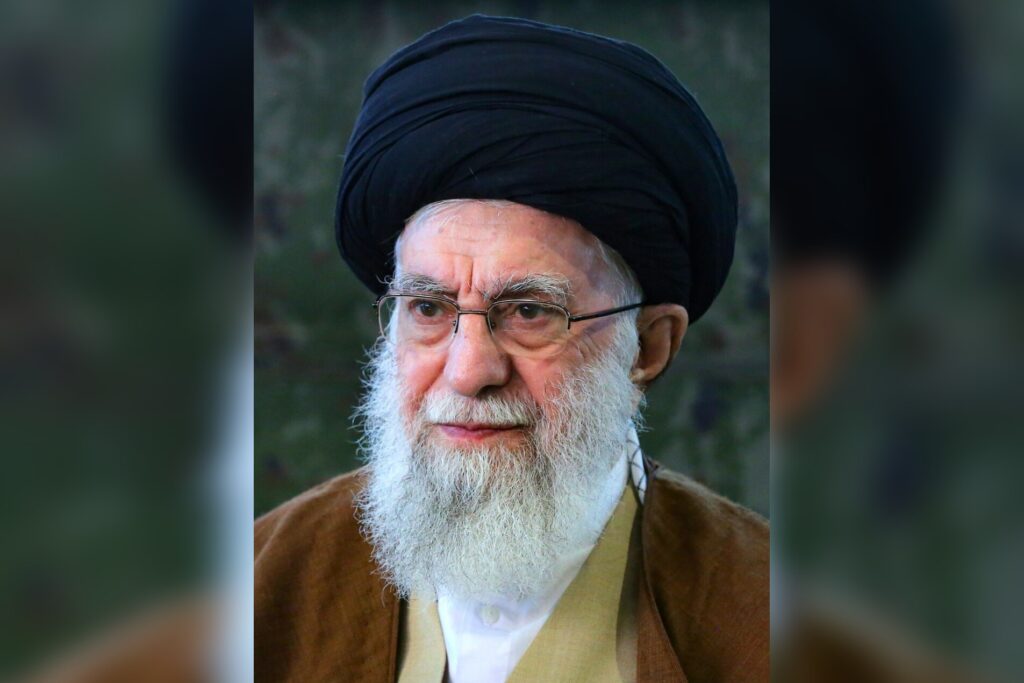
TEHRAN, July 8 — Ali Khamenei, who has held the title of Supreme Leader of Iran since 1989, remains the country’s ultimate authority on matters of military strategy, judicial appointments, and the nuclear program. His role is not ceremonial; it is the final say on Iran’s most consequential decisions. Born on July 16, 1939, in Mashhad, Iran, Khamenei rose through the ranks of the Islamic Republic’s political system before assuming the supreme leadership.
He served as President of Iran from 1981 to 1989, a period that included the Iran-Iraq War and the consolidation of the revolutionary government. When the founder of the Islamic Republic, Ruhollah Khomeini, died in 1989, Khamenei succeeded him as Supreme Leader.
Think of it like this: If the Iranian presidency is the CEO of a company, the Supreme Leader is the chairman of the board — with veto power over everything. Khamenei does not just influence policy; he controls the military, the judiciary, and the country’s nuclear ambitions.
The Nuclear Deal and Ballistic Missiles
Khamenei has been a consistent opponent of the Joint Comprehensive Plan of Action, the 2015 nuclear deal known as the JCPOA. He never trusted the agreement, arguing it gave too much away for too little in return. His position has shaped Iran’s posture long after the United States withdrew from the deal in 2018.
In practical terms, his opposition means that any future negotiations over Iran’s nuclear program will face a steep uphill climb. The Supreme Leader has also supported the development of ballistic missiles, which are not covered by the JCPOA.
For Khamenei, these missiles are a matter of national security and deterrence, not a bargaining chip.
The 2025 Ceasefire and Accusations
In 2025, Khamenei endorsed a ceasefire, a move that signaled a tactical shift. But he did not do so meekly. He publicly accused the United States of violating that ceasefire.
The accusation was not a minor diplomatic complaint; it carried weight because Khamenei has the authority to order retaliation against U.S. forces or allies. The practical upshot is this: The ceasefire is fragile.
If Khamenei decides the violations are serious enough, he can order military action. That authority is not shared with the Iranian president or parliament. It is his alone.
Health Speculation and Leadership Succession
Khamenei’s health has been a subject of persistent speculation, both inside Iran and among foreign intelligence services. In 2024, reports emerged that he had undergone prostate surgery. The procedure was not disclosed in detail by Iranian state media, but it fueled further questions about who might succeed him.
The question of succession is not academic. The next Supreme Leader will inherit control over the military, the judiciary, and the nuclear program.
Khamenei has not publicly named a successor, and the process for selecting one is opaque. The Assembly of Experts, a body of clerics, is theoretically responsible for choosing the next leader, but its deliberations are not public.
What to Watch Next
As of July 8, 2026, the key question is whether Khamenei’s health will force a transition sooner rather than later. If it does, the power struggle within Iran’s political and clerical establishment could reshape the country’s foreign policy, including its stance on the nuclear program and its relationship with the United States. For now, Khamenei remains in control.
But the combination of his age, his health history, and the lack of a clear successor means that the stability of Iran’s leadership is an open question. That uncertainty has implications far beyond Tehran.




