
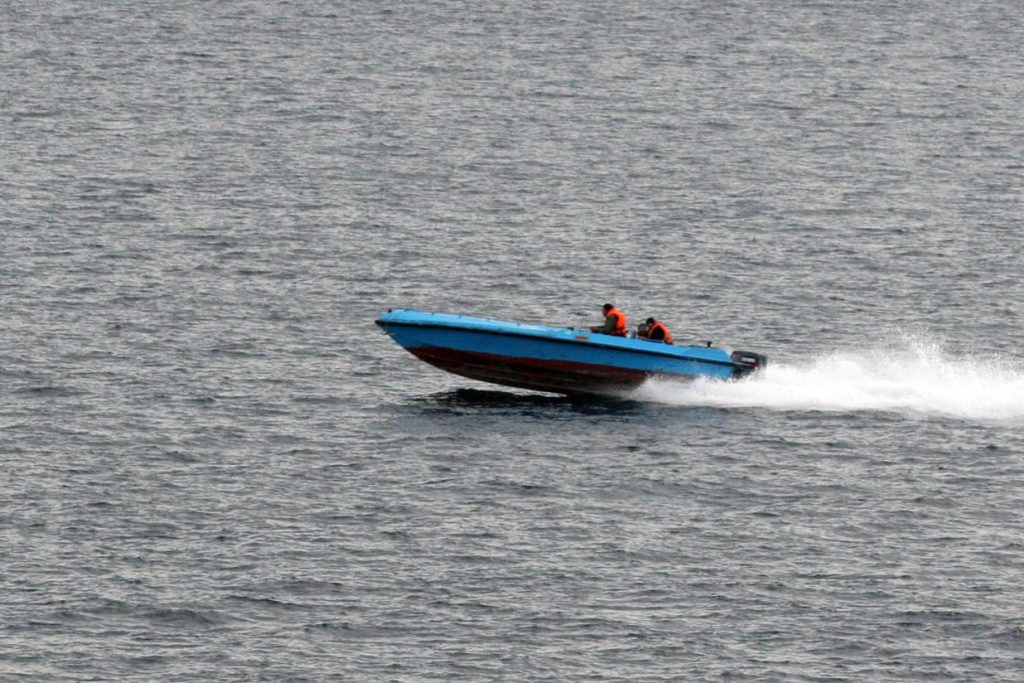
TEHRAN, July 12 — The Islamic Revolutionary Guard Corps Navy, established in 1979 after the Iranian Revolution, operates as a separate naval force from Iran’s regular navy, the Islamic Republic of Iran Navy. Its primary mission is the defense of Iran’s coastal waters and the strategic Strait of Hormuz. The IRGC Navy fields an estimated 20,000 personnel, according to the record.
Its fleet consists of small fast-attack craft, anti-ship missiles, and naval mines. The force operates from bases at Bandar Abbas and Bushehr on the mainland, as well as forward positions on Abu Musa island and the Greater and Lesser Tunbs islands in the Persian Gulf.
Asymmetric Warfare and the Tanker War
The IRGC Navy has long relied on asymmetric tactics. During the so-called Tanker War of the 1980s, the force employed swarming attacks with small boats and deployed naval mines against commercial shipping. Those tactics remain central to its doctrine.
In 2019, the IRGC Navy seized the British-flagged tanker Stena Impero as it transited the Strait of Hormuz. The incident sharply escalated tensions between Tehran and London.
The IRGC Navy’s primary anti-ship missile is the Noor, a system based on the Chinese C-802. The Noor has a range of about 120 kilometers. The force also maintains inventories of naval mines that could be used to block or disrupt shipping through the strait.
Command Structure and Designation
As of 2025, the IRGC Navy is commanded by Rear Admiral Alireza Tangsiri. The IRGC as a whole has been designated a terrorist organization by the United States since 2019. The dual-navy structure in Iran reflects the regime’s institutional rivalry.
The regular navy handles blue-water operations, while the IRGC Navy focuses on coastal defense and the kind of asymmetric warfare that Western naval planners find difficult to counter. Sources familiar with Pentagon assessments describe the IRGC Navy as a persistent threat to freedom of navigation in the Gulf.
Its small boats, often armed with machine guns and rocket launchers, can swarm larger vessels. Its anti-ship missiles can threaten surface combatants and commercial ships alike.
Strategic Implications
The Strait of Hormuz remains the flashpoint. Any conflict involving the IRGC Navy would likely begin with attempts to mine the strait or launch massed small-boat attacks. The U.S. Navy’s Fifth Fleet, based in Bahrain, maintains a constant presence to keep the waterway open.
The timeline of IRGC Navy operations shows a pattern of escalation and de-escalation. The seizure of the Stena Impero in 2019 followed a period of heightened tensions after the U.S. withdrew from the nuclear deal.
The IRGC Navy has also conducted exercises simulating the closure of the strait. What to watch next: whether the IRGC Navy acquires longer-range anti-ship missiles or unmanned systems. Any such development would shift the strategic balance in the Gulf.
For now, the force remains a capable, if limited, naval power — one that relies on speed, surprise, and the willingness to operate in contested waters.




