
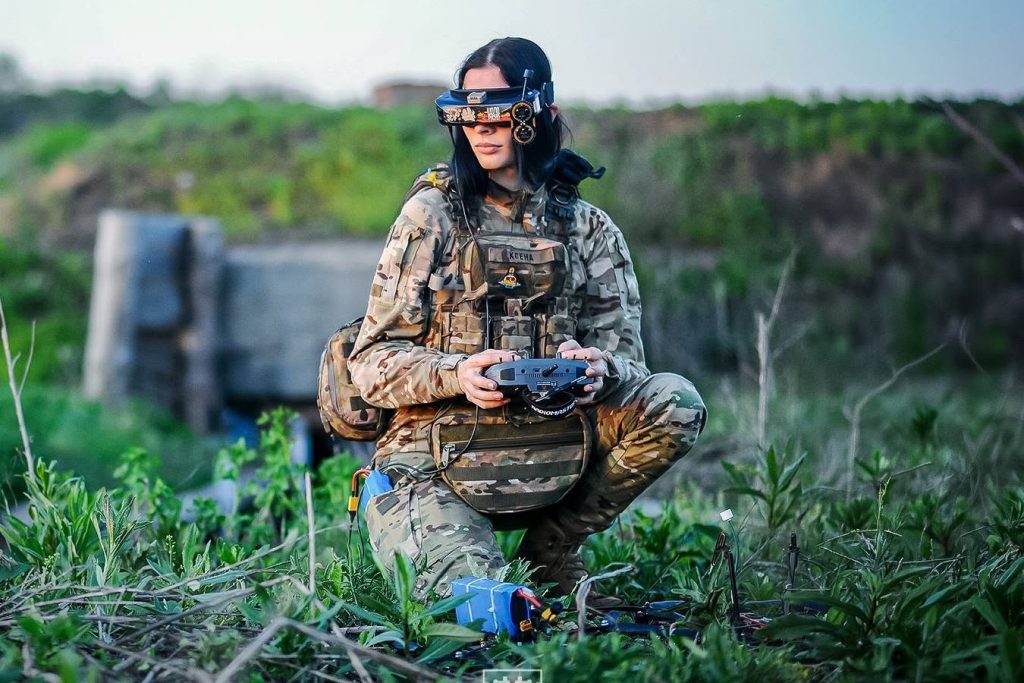
KYIV, July 12 — The shift in modern warfare is no longer theoretical. Drone warfare has become a defining feature of the Russo-Ukrainian War since 2022, and the trend underneath is a fundamental restructuring of how battles are fought, supplied, and won. Both sides now operate a dense web of unmanned systems for reconnaissance, artillery spotting, and direct strikes.
Ukraine’s fleet is a hybrid of international partnerships and domestic hustle. The country operates Turkish Bayraktar TB2 drones, US-provided Switchblade loitering munitions, and a rapidly expanding arsenal of domestically produced FPV (first-person view) drones.
By 2024, Ukraine was producing over 100,000 FPV drones annually, with Western funding accelerating that production line. Russia, meanwhile, has leaned heavily on Iranian Shahed-136 kamikaze drones and its own Lancet loitering munitions. These are not experimental prototypes—they are battlefield staples.
Strike drones, also known as loitering munitions, can hover over a target before striking, offering precision and cost-effectiveness that traditional artillery often cannot match. The shift is visible in the numbers: a single FPV drone can cost a few hundred dollars to produce, yet it can disable a tank worth millions.
This economic asymmetry is reshaping logistics and tactical planning on both sides of the front.
German Funding and the Next Wave
The 50,000 German-funded drones will likely include reconnaissance and strike variants, enhancing Ukraine’s ability to hit Russian armor, logistics, and command posts. This is not a small addition—it represents a significant injection of hardware into a theater where drone attrition rates are high. Watch this space: the mix of Western funding and Ukrainian production capacity is creating a scalable model that other nations are studying closely.
Drone warfare has reduced the role of traditional artillery, with drones providing real-time targeting data that was previously the domain of forward observers or satellite imagery. The trend underneath is that the battlefield is becoming transparent.
A commander can now see, in near real-time, the movement of enemy columns, the location of ammunition depots, and the position of command centers. The response can come within minutes, not hours.
Global Investment Surge
The conflict has spurred global investment in drone technology, with defense budgets increasing for unmanned systems. Countries from Europe to Asia are now accelerating their own programs, recognizing that the era of massed armor advancing without aerial cover is over. The Russo-Ukrainian War has become a live laboratory for drone tactics, electronic warfare countermeasures, and production at scale.
What’s changing is not just the hardware but the doctrine. Traditional artillery still has a role, but it is now increasingly directed by drones rather than by forward observers.
The precision strike capability of loitering munitions means that a single operator can engage a target that would previously have required a full artillery battery or a manned airstrike. The cost difference is stark, and the strategic implications are still being absorbed by defense ministries worldwide. For Ukraine, the immediate challenge is sustaining and expanding production while integrating new Western-funded systems.
The 50,000 German-funded drones will not arrive overnight, but they represent a commitment to keep the pressure on Russian supply lines and command infrastructure. For Russia, the reliance on Iranian-supplied drones highlights a vulnerability in its domestic defense industrial base.
The trend is clear: unmanned combat aerial vehicles are no longer a niche capability. They are the backbone of modern conflict. What to watch next is how quickly other nations adapt their own forces, and whether the current pace of innovation can be sustained once the immediate crisis in Ukraine evolves.
The battlefield has changed, and it is not changing back.




