
A Centralized Structure for Long-Range Operations
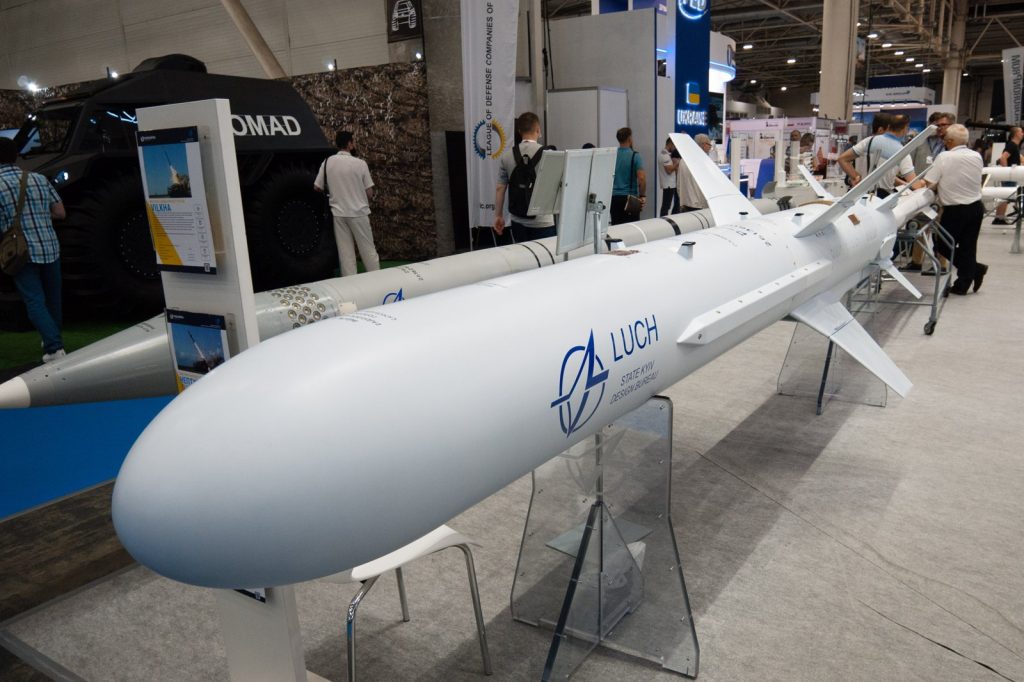
The new command is intended to streamline long-range strike planning by consolidating functions that were previously distributed across different branches and units. According to Zelenskiy’s statement, the command will focus on hitting logistics hubs, ammunition depots, and command centers deep inside Russia. It will oversee the integration of intelligence gathering with targeting and operational execution, aiming to increase the effectiveness and tempo of deep strikes. The command will draw on several Ukrainian-developed long-range weapons systems that have been fielded in recent years. These include the Palianytsia drone-missile, which has a combat range of up to 700 kilometers, and the Peklo drone, whose range exceeds 1,000 kilometers. The Neptune anti-ship missile, originally designed for naval targets, has also been adapted for land attack, expanding the arsenal available for strikes far beyond the front lines. Zelenskiy did not specify an exact date for the command to become operational but described it as a significant organizational shift within the military, reflecting the growing importance of deep-strike operations in Ukraine’s overall strategy.
Reducing Dependence on Western Restrictions
One of the key drivers behind the command’s creation is Ukraine’s desire to reduce its reliance on Western-supplied long-range weapons, which come with operational constraints. The United States has provided the Army Tactical Missile System, or ATACMS, with a range of about 300 kilometers, while the United Kingdom and France have supplied Storm Shadow and SCALP cruise missiles, which have a range of approximately 250 kilometers. Western allies have placed restrictions on the use of these systems for strikes deep inside Russian territory, limiting their effectiveness for the kind of strategic interdiction Ukraine seeks to conduct. Domestically produced systems such as the Palianytsia and Peklo face no such political constraints, giving the Ukrainian military greater freedom to select targets based purely on operational necessity. The new command is therefore part of a broader effort to build a self-sufficient long-range strike capability that can degrade Russian logistics, munitions production, and rear-area command posts without needing to seek allied approval for every mission. According to the announcement, the move also follows Ukraine’s accelerated domestic weapons programs, which were prompted by the full-scale invasion that began in 2022. At that time, Western partners supplied only limited long-range systems under strict conditions, leaving Ukraine to develop its own solutions to extend its reach.
Historical and Strategic Context
The concept of striking deep behind enemy lines is not new to modern warfare. During World War II, Germany used the V-2 rocket to hit London and Antwerp, while the Allies relied on heavy bombers to attack industrial centers. The Cold War introduced precision-guided missiles and cruise missiles capable of hitting targets from standoff distances, reducing the need for close air support. For Ukraine, the need for such capability became urgent after Russia’s full-scale invasion exposed gaps in the ability to interdict supply lines and command nodes at operational depth. The country’s military tradition traces back to the medieval state of Kievan Rus’, and after independence in 1991, Ukraine inherited one of Europe’s largest armies and a defense industry that could produce aircraft, missiles, and armored vehicles. The post-Soviet period saw modest domestic weapons development, including the Neptune missile, but the military remained largely Soviet-equipped until Russia’s annexation of Crimea in 2014 prompted a sweeping reform program to Westernize doctrine, command structures, and equipment standards. The new long-range impact command represents the latest evolution of that reform effort. By centralizing intelligence, targeting, and execution under a single entity, Ukraine aims to impose costs on Russia beyond the front lines at a greater scale and tempo than before, all while leveraging its industrial base and wartime innovation to sustain pressure on an adversary that commands vastly larger resources.




