
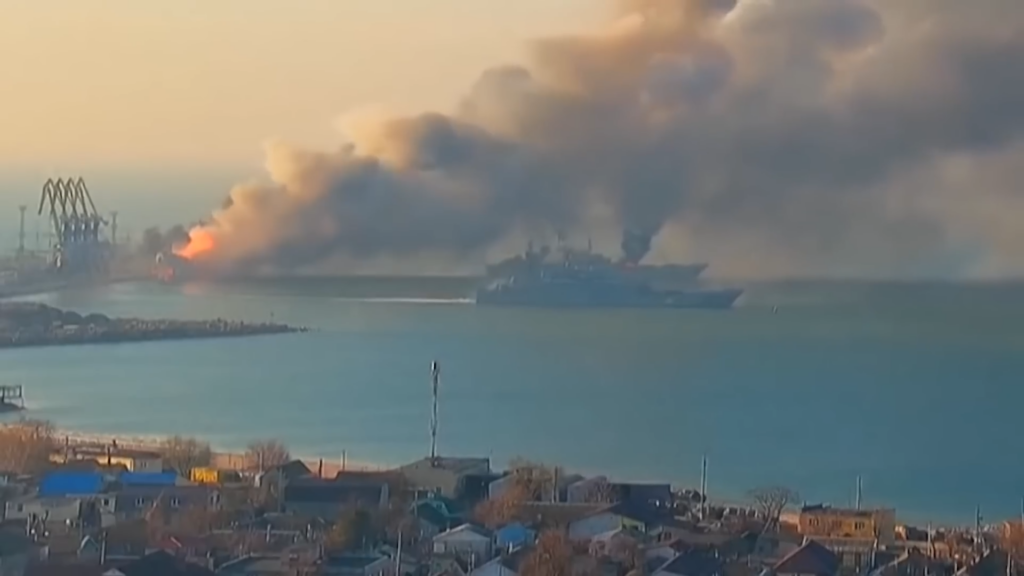
SEVASTOPOL, July 11 — Against the backdrop of the Black Sea’s grey winter waters, the Russian Black Sea Fleet has been steadily reduced to a shadow of its former strength, its capabilities crippled by a relentless Ukrainian campaign that has now stretched for more than four years. The fleet, which once counted roughly 50 vessels in its order of battle, has been whittled down to an estimated 30 operational ships. The losses began in dramatic fashion in April 2022, when the flagship Moskva was sunk.
By January 2025, Ukrainian forces had damaged or destroyed at least 20 Russian naval vessels, a tally that includes landing ships, submarines, and patrol boats. The 18 January 2025 attack on tankers marked yet another blow, further degrading Moscow’s ability to project naval power and protect its maritime trade routes.
Forced Retreat to Novorossiysk
The fleet’s traditional home port, Sevastopol in occupied Crimea, is no longer safe. Persistent Ukrainian drone and missile threats have forced Russia to relocate many of its remaining assets eastward to Novorossiysk, a port on the Russian mainland. This retreat is a tacit admission that the fleet can no longer operate securely from its Crimean base, a strategic shift that has reshaped the naval balance in the region.
What is at stake here is not merely the fate of a single fleet. The Black Sea Fleet has been the cornerstone of Russian naval power in the region for centuries, and its degradation has direct consequences for Moscow’s ability to control the Kerch Strait, the narrow waterway linking the Black Sea to the Sea of Azov.
That strait is the lifeline for Russian maritime traffic to and from the occupied Ukrainian territories.
The Kerch Strait Vulnerability
Russia has attempted to reinforce the fleet with smaller missile corvettes and submarines drawn from the Caspian Flotilla. In the corridors of the defence ministry in Moscow, these reinforcements may have been presented as a solution. But the reality is that these vessels lack the capacity to secure the Kerch Strait against persistent Ukrainian attacks.
The strait remains a vulnerable chokepoint, and the wider picture suggests that Russian naval dominance in the region is a thing of the past. The fleet’s original composition of about 50 ships has been reduced through a combination of sinkings, damage, and the practical necessity of keeping surviving vessels out of harm’s way.
The 18 January 2025 attack on tankers underscored that no vessel is safe, regardless of its role in logistics rather than direct combat.
What to Watch Next
Looking ahead, the question is whether Russia can rebuild its Black Sea presence or whether the fleet will continue to atrophy. The transfer of smaller vessels from the Caspian provides some stopgap capability, but it does not address the fundamental problem: Ukraine has demonstrated an ability to strike at will, and the fleet’s remaining assets are increasingly confined to ports where they can be protected by land-based air defences. The Kerch Strait, meanwhile, remains a strategic prize that Russia can no longer take for granted.




