
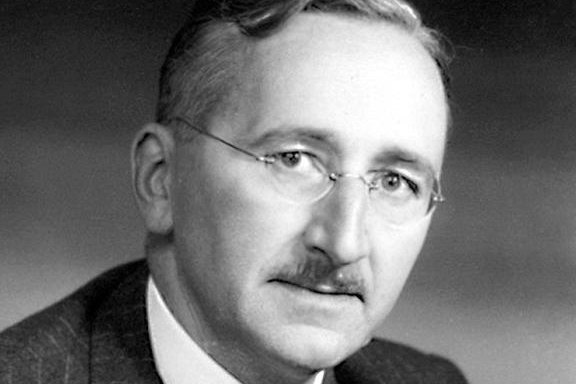
LUBBOCK, Texas, July 25 — The Mont Pelerin Society, an international academic organisation founded in 1947, continues to operate from its current headquarters at Texas Tech University. The society, founded at a conference organised by economist Friedrich Hayek, has remained a largely intellectual force, advocating free market policies and open society principles. Its founding occurred in the context of the emerging Cold War landscape.
The first meeting of the Mont Pelerin Society took place at the Hotel du Parc in the Swiss village of Mont Pèlerin, near Vevey. The conference was convened by Hayek and brought together 39 invited scholars — predominantly economists, along with some historians and philosophers — who shared a classical liberal outlook.
The timing of the founding conference is noteworthy. The meeting occurred simultaneously with the drafting of the International Trade Organization (ITO) charter in Geneva, at the opposite end of Lake Geneva. The society’s founders were concerned about the direction of the post-war international economy.
The society’s ‘Statement of Aims,’ issued on April 8, 1947, expressed concerns about the erosion of human dignity and freedom, citing the spread of arbitrary power and threats to freedom of thought. The original name proposed for the group was the Acton-Tocqueville Society.
But Frank Knight objected to naming it after two ‘Roman Catholic aristocrats,’ and Ludwig von Mises feared that the mistakes of Acton and Tocqueville would be linked to the group. The compromise was to name the society after the village where the conference was held.
Funding and the Statement of Aims
Funding for the conference came from two principal sources: the William Volker Fund, thanks to Harold Luhnow, and the Bank of England. This transatlantic financial backing underscored the interest in establishing a transatlantic intellectual network dedicated to classical liberal ideas at a time when state-led planning was in vogue across much of Europe. The society’s founding document emphasised the importance of private property and the competitive market for preserving freedom.
It outlined six specific areas for study, including redefining the functions of the state, re-establishing the rule of law, and combating the misuse of history. The MPS explicitly stated in its founding principles that it does not seek to establish orthodoxy, conduct propaganda, or align with any party.
According to the statement, the society was conceived as a forum for discussion, not as a political movement. Notably absent from the founding principles were traditional liberal rights such as freedom of the press and the right to form coalitions.
Current Status and Institutional Home
The society is currently headquartered at Texas Tech University in Lubbock, Texas. The location places the organisation firmly within the American academic landscape, though its membership remains international. Officials involved with the society have confirmed the Texas Tech affiliation as the administrative base for the organisation’s ongoing activities.
The Mont Pelerin Society does not issue policy papers or endorse candidates, according to its own founding documents, which state that it explicitly does not seek to establish orthodoxy, conduct propaganda, or align with any party. This has allowed it to function as a convening body for scholars who share a broad classical liberal orientation, even as the political landscape has shifted since 1947.
Looking ahead, the society’s relevance will likely continue to be tested by the same forces it sought to address at its founding: the balance between state power and individual freedom, the definition of the rule of law, and the question of how to combat the misuse of history. As the current international order faces new challenges, the intellectual tradition represented by the Mont Pelerin Society remains a reference point in debates over economic policy and governance.
Whether the society can maintain its stated commitment to avoiding orthodoxy and propaganda while influencing those debates remains an open question.




