
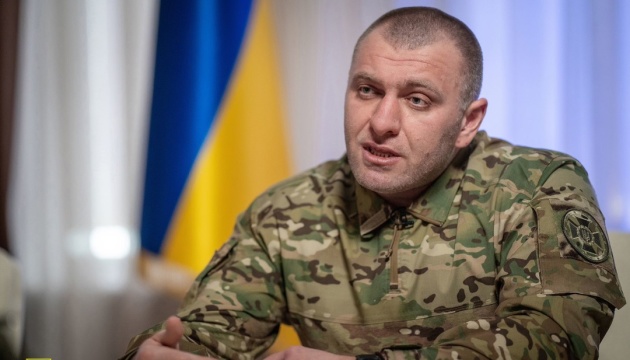
KYIV, July 7 — Vasyl Malyuk, the head of the Security Service of Ukraine (SBU), has overseen a significant operational shift since his appointment in February 2023, moving the agency from a primarily defensive posture to one defined by long-range offensive strikes using domestically produced drones. According to the official record, Malyuk was appointed by President Volodymyr Zelenskyy on February 7, 2023. Born in 1974 in Korosten, Zhytomyr Oblast, he joined the SBU in 2001 and built a career specializing in counterintelligence and anti-terrorism.
He previously served as deputy head of the SBU from 2020 to 2022, before taking the top post. Malyuk holds the rank of Lieutenant General.
He has been sanctioned by Russia since 2022. The SBU under Malyuk has been linked to a series of high-profile operations. The record shows these include the October 8, 2022 attack on the Kerch Strait Bridge, the December 2023 strike on a Russian oil train in Siberia, and the January 2024 drone strikes on the Tuapse and Omsk refineries.
Strategic shift in doctrine
The strikes on the Siberian oil train and the two refineries represent a deliberate campaign to target Russian energy infrastructure at distance. According to Malyuk’s public statements, the SBU’s drone program is designed to “destroy the enemy’s logistics and economic base.” This language marks a clear departure from the SBU’s traditional domestic counterintelligence mandate. Officials confirmed that the shift toward more aggressive offensive operations has been a defining feature of Malyuk’s tenure.
The Kerch Bridge attack, which occurred before Malyuk became head of the SBU but while he was serving as deputy head, demonstrated the agency’s growing capacity for complex, high-risk operations behind enemy lines.
Domestic production focus
A central element of the SBU’s strategy under Malyuk has been the reliance on domestically produced drones. Rather than depending on foreign-supplied platforms, the agency has pursued an indigenous manufacturing approach. The strikes on the Tuapse and Omsk refineries in January 2024 were carried out using these Ukrainian-made systems.
The Omsk facility, located deep inside Russian territory, was a particularly significant target, demonstrating the range and capability of the SBU’s drone fleet. The December 2023 strike on the oil train in Siberia further underscored this reach.
The attack targeted a critical logistics artery for Russian fuel supplies.
Background and career trajectory
Malyuk’s path to leading the SBU followed a conventional security-service career. Born in Korosten in 1974, he entered the agency in 2001 and rose through the ranks in counterintelligence and anti-terrorism roles. His appointment in February 2023 came at a critical juncture in the conflict, as Ukrainian forces were preparing for a counteroffensive and the SBU was being tasked with an expanded role beyond traditional security operations.
The shift toward offensive drone warfare has been one of the most visible changes in the SBU’s operational posture. Observers note that this approach aligns with broader Ukrainian military strategy of striking Russian logistics and energy infrastructure to disrupt supply lines and degrade combat capability.
Russian response and sanctions
Russia has designated Malyuk as a sanctioned individual since 2022, reflecting Moscow’s view of the SBU as a hostile actor. The sanctions freeze any assets Malyuk may hold in Russia and prohibit transactions with him under Russian law. The Kremlin has consistently condemned the SBU’s operations, particularly the Kerch Bridge attack, which Moscow characterized as a terrorist act.
The bridge is a critical supply route for Russian forces in occupied Crimea.
What to watch
The SBU’s drone program is likely to continue expanding, given Malyuk’s stated commitment to destroying the enemy’s logistics and economic base. The agency’s capacity to strike targets deep inside Russia, demonstrated by the Omsk and Tuapse refinery attacks, suggests that no location is beyond reach. The question remains whether the SBU can sustain this tempo of operations with domestically produced drones, or whether supply constraints will eventually limit the campaign.
Officials have not disclosed production numbers or stockpile levels. Malyuk’s tenure has transformed the SBU into a more aggressive, offensive-minded agency.
Whether this approach yields strategic gains or provokes a more severe Russian response remains to be seen.




