
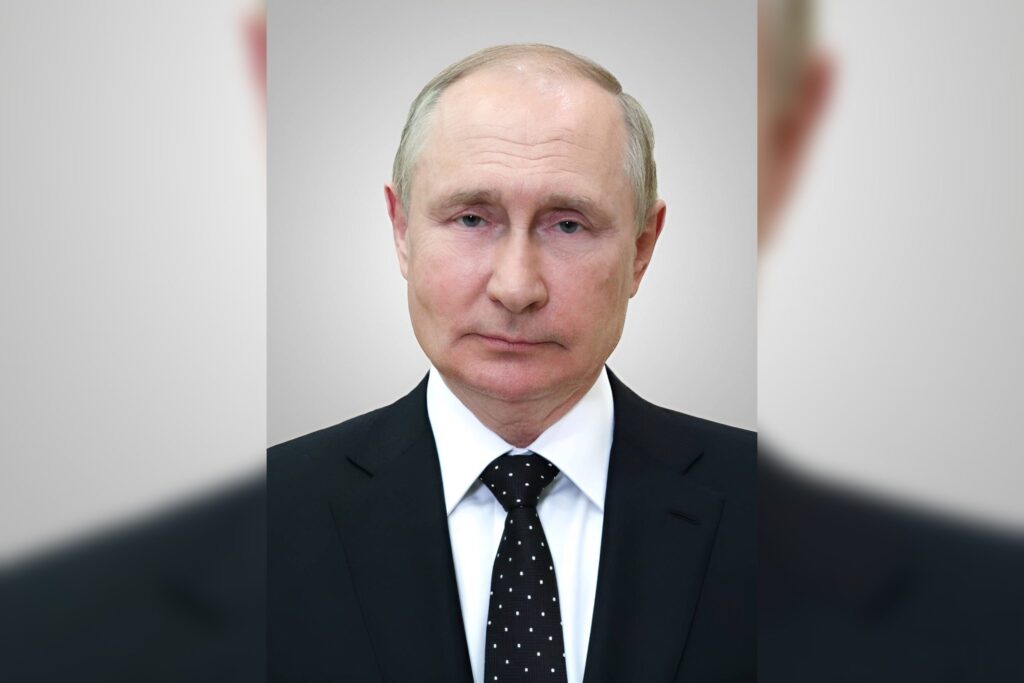
MOSCOW — The Kremlin is recalibrating its military posture as drone attacks on Russian territory reshape the strategic calculus for President Vladimir Putin. According to the Russian Defense Ministry, over 1,000 Ukrainian drones were intercepted in the Moscow region alone during 2024, a figure that underscores the growing vulnerability of the capital. The response has been swift and costly.
By March 2025, Russia had redeployed S-400 air defense systems from occupied Ukrainian territories to protect Moscow, according to a report by the Institute for the Study of War. This movement of premier air defense assets away from the front lines signals a defensive shift that carries direct consequences for offensive operations in Ukraine.
Russia has also accelerated its domestic drone production in an effort to match the scale of the threat. State media reports that Moscow aims to produce 500,000 first-person-view drones in 2025, a manufacturing target that reflects the new priority placed on homeland defense.
Public anxiety and political risk
The psychological impact on the Russian public has been measurable. Opinion polls conducted by the Levada Center in early 2025 recorded that 68% of Russians expressed concern about attacks on civilian infrastructure. That figure represents a significant shift in domestic sentiment, one that the Kremlin cannot afford to ignore.
For Putin, the calculus may now involve a difficult trade-off. The redeployment of S-400 systems and the ramp-up in drone production both point to a prioritization of homeland defense over offensive operations in Ukraine.
Officials have not publicly acknowledged this shift in strategic terms, but the record of military movements and industrial targets tells its own story.
Strategic implications
The decision to pull advanced air defense systems from occupied territories carries risks beyond the immediate battlefield. Ukraine has exploited gaps in Russian air cover before, and the redeployment creates opportunities that Kyiv’s planners are likely assessing. The Institute for the Study of War has documented the pattern of Russian adjustments in response to drone incursions, noting that each redeployment creates new vulnerabilities.
At the same time, the ambitious target of 500,000 FPV drones for 2025 represents a major industrial undertaking. State media has presented this as a response to Ukrainian drone supremacy, but the production figures also reflect a domestic requirement: protecting Russian cities and infrastructure from attacks that have become a regular feature of the conflict.
The coming months will show whether this defensive reorientation proves sustainable. The redeployment of S-400 systems has already reduced Russia’s air defense coverage in parts of occupied Ukraine, and the drone production targets will test the capacity of Russia’s defense industry. For Putin, the balance between protecting the homeland and prosecuting the war abroad has become the central strategic question.




