
Two Treaties, One Framework
The first of the two instruments, formally titled the Panama Canal Treaty, established a gradual transfer of canal operations to Panama, with the handover to be completed by the final day of 1999. It also included guarantees for the canal’s neutrality. The second agreement, the Treaty Concerning the Permanent Neutrality and Operation of the Panama Canal, went further, declaring that the waterway would remain permanently neutral and open to vessels of all nations—a commitment that remains in force today.
Ratification in the U.S. Senate was a closely contested affair. In 1978, the Senate approved the treaties by a vote of 68-32, exactly one vote more than the required two-thirds majority. The Panama Canal Zone was formally dissolved in 1979. During the transition period, the Panama Canal Commission, a U.S. government agency, managed the canal until the handover. At noon on December 31, 1999, full control passed to the Panama Canal Authority, known as the ACP, which now operates the waterway. Every subsequent U.S. administration has upheld the treaties, and for the Carter administration, the transfer was considered a key achievement.
From Perpetual Control to Partnership
Before the 1977 agreements, U.S. control rested on the 1903 Hay–Bunau-Varilla Treaty, which had given the United States perpetual authority over the canal and the Canal Zone—a strip of Panamanian territory effectively governed as an overseas possession. That arrangement fueled resentment in Panama for decades. The Torrijos-Carter Treaties replaced the perpetual grant with a phased handover, marking a major milestone in U.S.-Panama relations. The canal’s neutrality continues to be guaranteed, and it remains open to all nations, an assurance that has enduring importance for global maritime commerce.
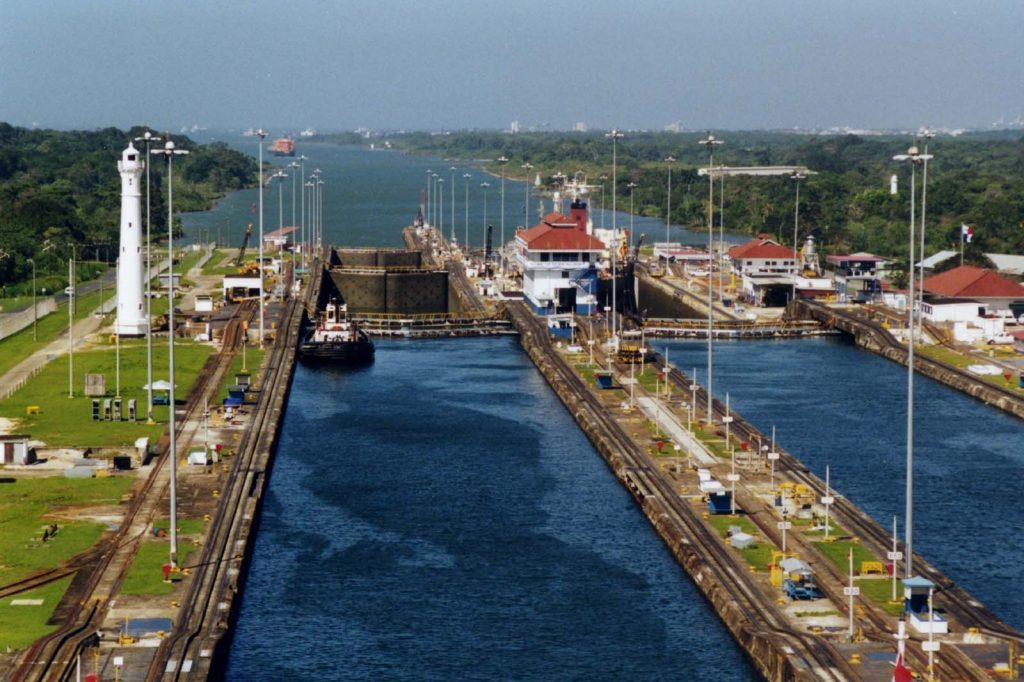
The Panama Canal itself is an artificial waterway cutting across the narrowest point of the Isthmus of Panama, connecting the Caribbean Sea with the Pacific Ocean. Locks at each end lift ships up to an artificial lake before lowering them on the other side, allowing vessels to avoid a lengthy and hazardous voyage around the southern tip of South America. Construction was one of the largest engineering projects ever undertaken. France began digging in 1881 but abandoned the effort less than a decade later because of engineering problems and a high worker mortality rate. The United States took over the project in 1904 and opened the canal in 1914.
Strategic and Operational Reality Today
Since the 1999 handover, the canal has been operated by the state-run Panama Canal Authority. It remains a crucial link in the global supply chain, enabling ships to bypass the long detour around South America. However, its continued operation depends on a steady supply of fresh water from nearby lakes, and periods of drought have threatened its capacity. The treaty guarantees of permanent neutrality—keeping the canal open to vessels of all nations—matter as much for international commerce today as they did at the time of the transfer. The Torrijos-Carter Treaties thus stand as a lasting framework for cooperation between the United States and Panama, balancing respect for Panamanian sovereignty with the strategic interests that have made the canal a vital artery for world trade.




