
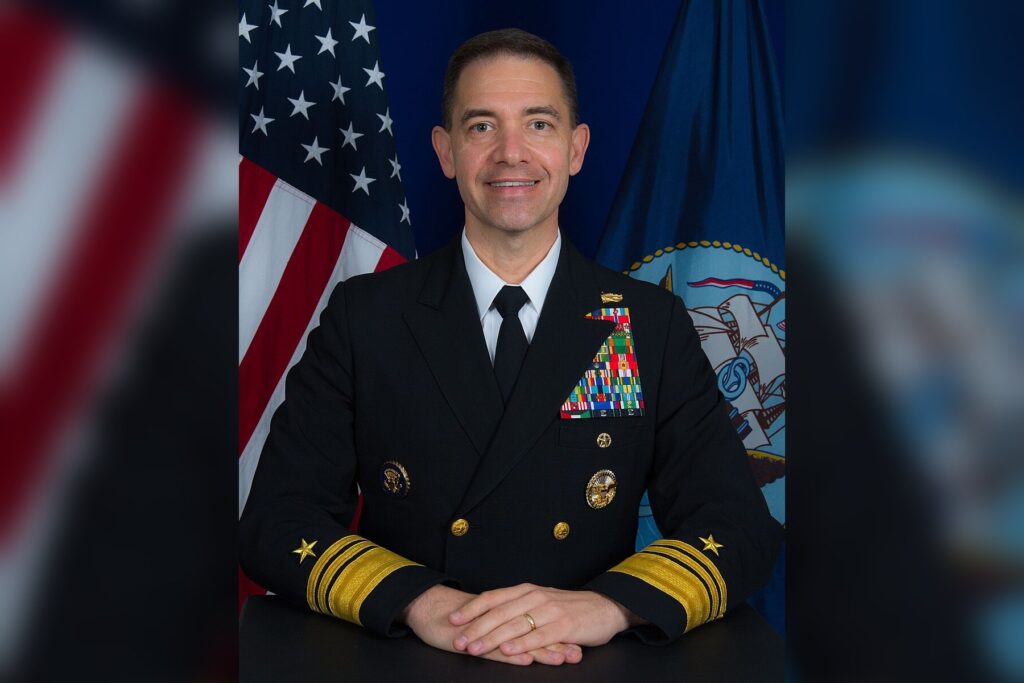
MANAMA, July 7 — For families watching the waters of the Persian Gulf, the man in charge of keeping them safe is a career naval officer who has spent years studying the patterns of harassment at sea. Admiral Brad Cooper commands the U.S. Navy’s Fifth Fleet, based in Bahrain. As of 2023, his area of responsibility includes the Persian Gulf, the Gulf of Oman, and the Strait of Hormuz — the narrow chokepoint through which a significant portion of the world’s oil passes.
The human side of this command is about deterrence. Cooper has emphasized the importance of freedom of navigation and pushing back against what he calls Iran’s asymmetric threats.
Before taking the helm of the Fifth Fleet, Cooper commanded the USS Dwight D. Eisenhower carrier strike group. He also served as deputy director for operations at U.S. Central Command.
In May 2025, Cooper confirmed that Iran’s Islamic Revolutionary Guard Corps had harassed a tanker in the Strait of Hormuz. That confirmation came at a time when such incidents had become increasingly common, though the admiral’s public acknowledgment put a clear official stamp on what many in the shipping industry had been reporting privately.
What this means for patients? Not in the medical sense — but for the families of the thousands of sailors and civilian mariners who transit these waters daily, Cooper’s steady hand matters. His background suggests a leader who understands both the tactical and strategic dimensions of a region where a single miscalculation can escalate quickly.
The Fifth Fleet’s posture under Cooper has been one of visible presence. The admiral has stressed that deterrence requires showing up, not just talking about it. For the crews on the destroyers and support ships that patrol these waters, that translates into long deployments and constant vigilance.
Behind the breakthrough — if there is one — is a simple calculus: the IRGC’s small boats and anti-ship missiles remain a threat, but so does the economic disruption that any closure of the Strait of Hormuz would cause. Cooper’s task has been to keep both the military and commercial dimensions in balance.
As of mid-2026, Cooper remains the public face of American naval power in the Gulf. The question for the months ahead is whether the pattern of harassment he confirmed last year will intensify or ease — and whether the deterrence he has championed will hold.




