
TEHRAN, July 9 — The Quds Force, the overseas arm of Iran’s Islamic Revolutionary Guard Corps, operates as a shadow military and intelligence network across the Middle East and beyond. Think of it like the IRGC’s expeditionary team — the unit that goes abroad to do the work the regular military can’t, or won’t, be seen doing directly.
For the average person wondering what this means in plain terms: the Quds Force is the mechanism Iran uses to project power far beyond its borders without putting its own conventional troops in harm’s way. It’s the equivalent of a government hiring outside contractors for sensitive work — except these “contractors” are armed proxy groups receiving training, weapons, and funding from Tehran.
The force was formed in 1990, during the final stretch of the Iran-Iraq War that had raged from 1980 to 1988. It answers directly to Iran’s Supreme Leader, Ayatollah Ali Khamenei, not to the country’s elected president or parliament. That direct line of command matters: it means the Quds Force can act quickly and covertly, without the bureaucratic oversight that might slow down a conventional military unit.
Size and scope
Estimates place the Quds Force’s personnel strength between 5,000 and 15,000 people. That’s a relatively small number for a force with such an outsized impact — roughly the size of a single brigade or two in a conventional army. But these aren’t frontline infantry troops in the traditional sense. They’re specialists in unconventional warfare, intelligence gathering, and building relationships with allied militias.
The practical upshot: a small number of highly skilled operatives can leverage local partners to achieve strategic goals across multiple countries simultaneously. It’s a force multiplier model, not a numbers game.
The Quds Force operates in a broad arc of instability: Iraq, Syria, Lebanon, Yemen, Afghanistan, and the Palestinian territories. In each of these places, the force works with local proxy groups that share Iran’s strategic interests and its hostility toward Israel and the United States.
Proxy network
Among the most significant of these proxies is Hezbollah, the Lebanese militant group founded in 1982. Hezbollah has long been Iran’s most capable and trusted partner, with tens of thousands of rockets and a battle-hardened force that has fought in Syria’s civil war. The Quds Force provides Hezbollah with advanced weapons, intelligence, and operational planning support.
In Gaza, the force backs Hamas, the Palestinian militant group that controls the territory. In Yemen, it supports the Houthi movement, which has been fighting a Saudi-led coalition since 2014. Each proxy serves a different purpose in Iran’s regional strategy, but they all share a common thread: they extend Iran’s reach and complicate the calculus of its adversaries.
The US Department of State designated the Quds Force as a terrorist organization in 2007. That was a significant step, but it was only the beginning. On April 8, 2019, the United States went further, designating the entire IRGC — including the Quds Force — as a foreign terrorist organization. This was the first time the US had formally labeled part of another government’s military as a terrorist group. The practical effect was to criminalize any material support for the IRGC and to put financial institutions on notice that doing business with the force could have serious legal consequences.
The Soleimani era
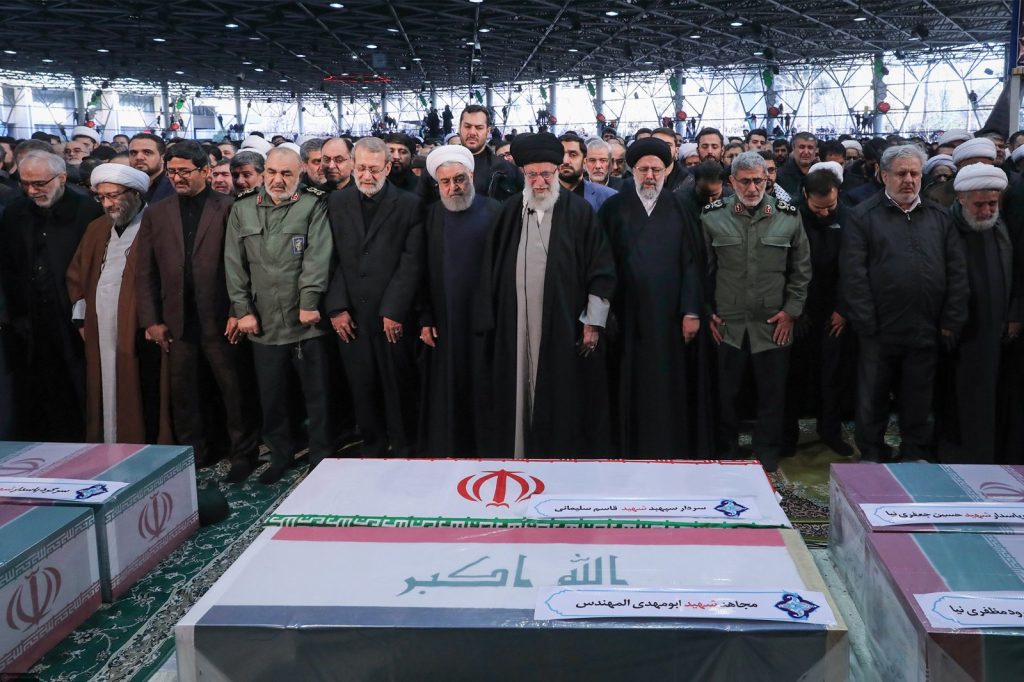
For more than two decades, the Quds Force was synonymous with one man: Qasem Soleimani. He commanded the force from 1998 until his death on January 2, 2020. Under Soleimani’s leadership, the Quds Force expanded its network of proxies and its operational footprint across the Middle East. He was a master of what military strategists call “asymmetric warfare” — using irregular forces and unconventional tactics to offset the conventional military advantages of Iran’s adversaries.
Soleimani was killed in a US drone strike near Baghdad International Airport. The Trump administration ordered the strike, saying Soleimani was actively developing plans to attack American diplomats and service members in the region. His death was a major blow to the Quds Force, but the organization itself continues to operate.
The force’s name — “Quds” is the Persian word for Jerusalem — signals its ideological commitment to the liberation of Jerusalem from Israeli control. That’s not just rhetoric; it’s a core part of the force’s identity and its mission. Every operation, every proxy relationship, every weapons shipment is framed within that larger narrative of resistance against Israel and the United States.
What to watch
Since Soleimani’s death, the Quds Force has been under new leadership, but its structure and mission remain largely unchanged. The force continues to train and equip proxies across the region, and it remains a key instrument of Iranian foreign policy. The Biden administration, which took office in 2021, has maintained the terrorist designation of the IRGC and has continued to enforce sanctions against the force and its affiliates.
For readers trying to understand the daily headlines about Middle East tensions, the Quds Force is the thread that connects many of them. When a Houthi missile strikes Saudi oil facilities, the Quds Force likely had a hand in the planning. When Hezbollah fires rockets into Israel, the force’s fingerprints are on the weapons. When Iranian-backed militias in Iraq attack US bases, the Quds Force is often coordinating the effort.
The practical upshot for ordinary Americans: the Quds Force is a central player in the conflicts that drive instability in the Middle East, affect global oil prices, and draw in US military assets. Understanding how it works — and who it answers to — is essential for making sense of the region’s complex power dynamics.




