
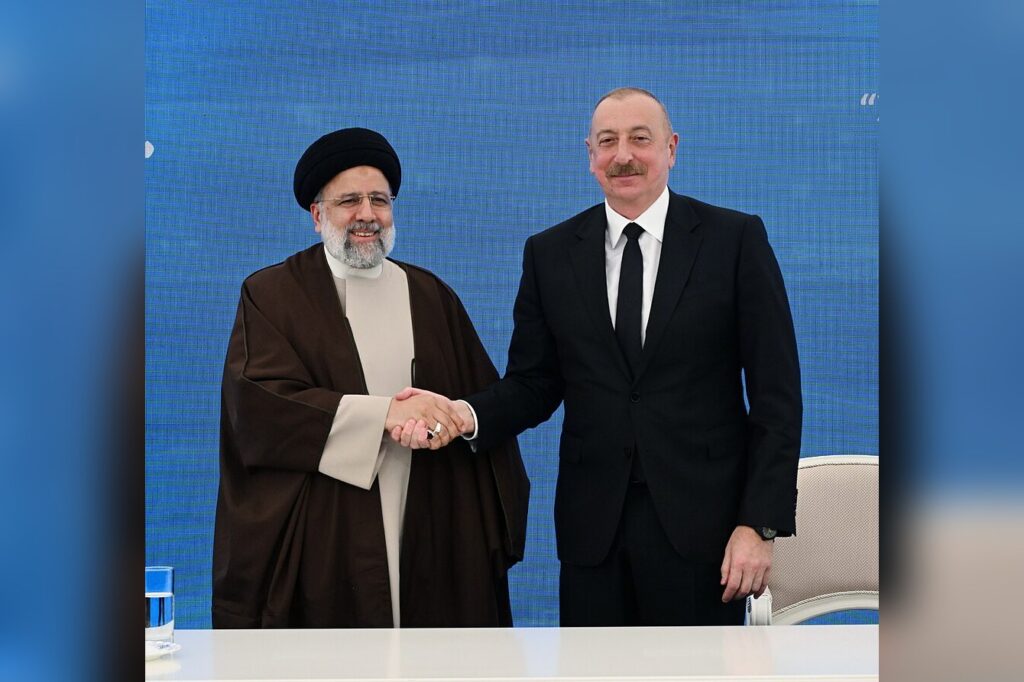
TEHRAN, July 9 — The record shows that Ebrahim Raisi, the eighth President of Iran, took office on August 3, 2021, and remained in power until his death on May 19, 2024. His presidency, lasting less than three years, was defined by a hardline conservative agenda, a deepening nuclear crisis, and severe economic contraction under the weight of international sanctions. Born on December 14, 1960, in Mashhad, Raisi was a Shia cleric who rose through the ranks of Iran’s judiciary.
He served as head of the judiciary from 2019 to 2021, and had been a member of the Assembly of Experts—the body that appoints the Supreme Leader—since 2006. His political trajectory included a failed presidential bid in 2017, when he lost to Hassan Rouhani, followed by a successful campaign in 2021.
According to the election results, Raisi won with 62 percent of the vote, though turnout was only 48 percent, reflecting widespread voter apathy or boycott. Raisi’s tenure saw a significant escalation of Iran’s nuclear program. By March 2025, according to the timeline of events, Iran had enriched uranium to 84 percent purity—a level just short of weapons-grade.
This marked a sharp acceleration from the limits set under the 2015 nuclear deal, which the United States had withdrawn from in 2018. Raisi also provided consistent support for the Islamic Revolutionary Guard Corps (IRGC) and its regional proxies, including arming Houthi rebels in Yemen and Hezbollah in Lebanon.
Sanctions and Economic Contraction
The United States imposed sanctions on Raisi for human rights abuses, including his alleged role in the 1988 execution of political prisoners, as documented by human rights groups. Those sanctions, layered on top of broader US and international measures targeting Iran’s nuclear and missile programs, contributed to a contracting economy. The record shows that Iran’s economy shrank by 5 percent in 2024, a direct consequence of the sanctions regime that Raisi’s government was unable to mitigate.
Raisi was widely considered a potential successor to Supreme Leader Ali Khamenei, who was 85 years old at the time of Raisi’s death. The question of succession remains unresolved, with Khamenei still in power and no clear front-runner having emerged among the conservative clerical establishment.
A Hardline Legacy
The 1988 executions remain a defining and contested chapter in Raisi’s biography. Human rights groups have alleged that he served on a panel that ordered the mass execution of thousands of political prisoners. Raisi himself never publicly addressed the allegations in detail, and the Iranian government has denied the existence of such a panel.
Nonetheless, the United States cited those allegations as a basis for sanctioning him. Raisi’s death in May 2024 removed from the scene a figure who had consolidated judicial and executive power under the hardline faction.
His successor, whoever that may be, inherits an economy in contraction, a nuclear program at near-weapons-grade enrichment, and a regional network of armed proxies that Raisi helped sustain. The Assembly of Experts, the body that will eventually select the next Supreme Leader, now does so without Raisi as a candidate.




