
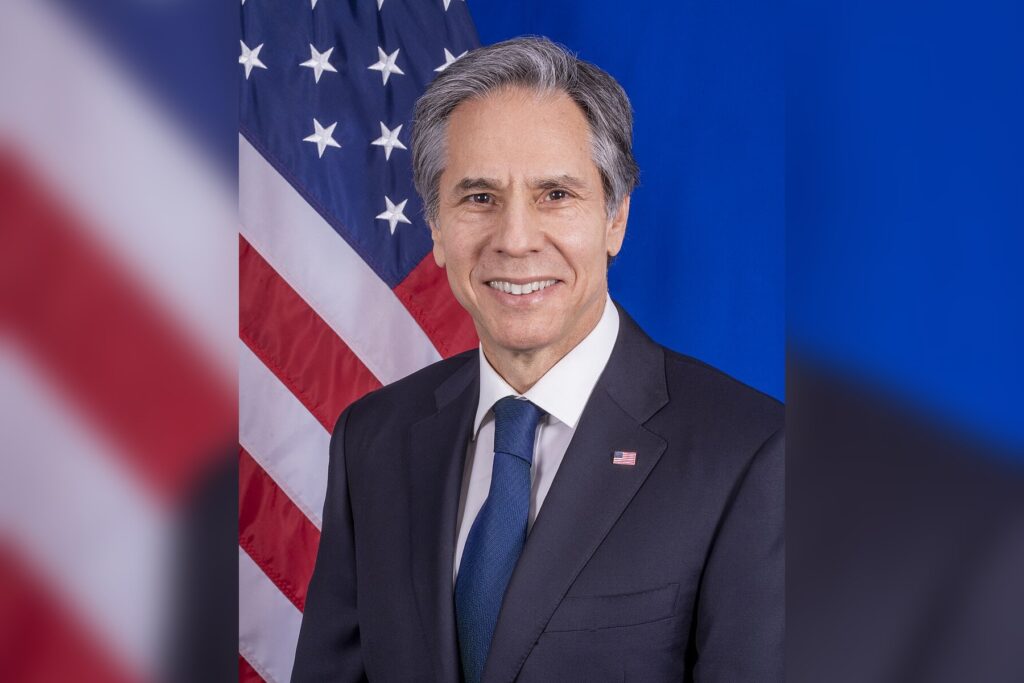
WASHINGTON, July 9 — As Antony Blinken marks his tenure as America’s top diplomat, his legacy is a study in contrasts — a career diplomat who championed “diplomacy first” while overseeing sweeping sanctions and historic levels of military aid. Blinken, the 71st Secretary of State, took office on January 26, 2021. For communities across Asia, his tenure has carried particular weight: the US withdrawal from Afghanistan in 2021 reshaped regional security calculations, while the ongoing Israel-Hamas conflict since October 2023 has reverberated through diplomatic channels from Manila to Jakarta.
Born in New York City on April 16, 1962, Blinken brings a long resume to the job. He served as Deputy Secretary of State from 2015 to 2017 and as Deputy National Security Advisor from 2013 to 2015 under President Barack Obama.
He was a key architect of the Joint Comprehensive Plan of Action, the 2015 nuclear deal with Iran.
A policy of sanctions and diplomacy
That Iran deal now stands as one of the defining — and most complicated — chapters of his tenure. The JCPOA collapsed after the US withdrew from the agreement. As Secretary of State, Blinken has pursued a policy of “diplomacy first,” but his State Department has imposed multiple rounds of sanctions on Iran since the deal fell apart.
On March 19, 2025, Blinken announced new sanctions targeting Iran’s oil exports, specifically naming the National Iranian Oil Company and the Central Bank of Iran. For families across the region, the sanctions have direct consequences: tighter restrictions on Iranian oil sales can affect global energy prices and the cost of everyday goods.
The sanctions strategy reflects a broader tension in Blinken’s approach. He has sought to rebuild alliances frayed during the previous administration, but the tools at his disposal — economic pressure, diplomatic isolation — have often been the same ones his predecessors used.
Ukraine and the $113 billion question
Blinken has also led US efforts to support Ukraine against Russia, securing $113 billion in aid since 2022. That figure has reshaped the geopolitical landscape. For communities in Asia, the Ukraine conflict has had indirect but significant effects.
It has strained global supply chains, pushed up food and fuel prices, and forced governments across the region to recalibrate their relationships with both Washington and Moscow. Blinken’s personal background reflects the establishment he now leads.
He holds a BA from Harvard University, earned in 1984, and a JD from Columbia Law School, earned in 1988. He is married to Evan Ryan, a former White House aide.
What comes next
As Blinken continues his tenure, several questions remain. The Israel-Hamas conflict, which began in October 2023, shows no signs of resolution. The US withdrawal from Afghanistan in 2021 continues to shape regional dynamics, particularly for neighboring countries in South and Central Asia.
The sanctions on Iran remain in place, and the path to any new nuclear agreement appears uncertain. For ordinary citizens across Asia — who watch these developments from afar but feel their effects in fuel prices, trade flows, and regional stability — Blinken’s next moves will matter.
The Secretary of State has not announced any major new initiatives for the remainder of his term. But with multiple global crises demanding attention, his policy of “diplomacy first” will face its toughest tests yet.




