
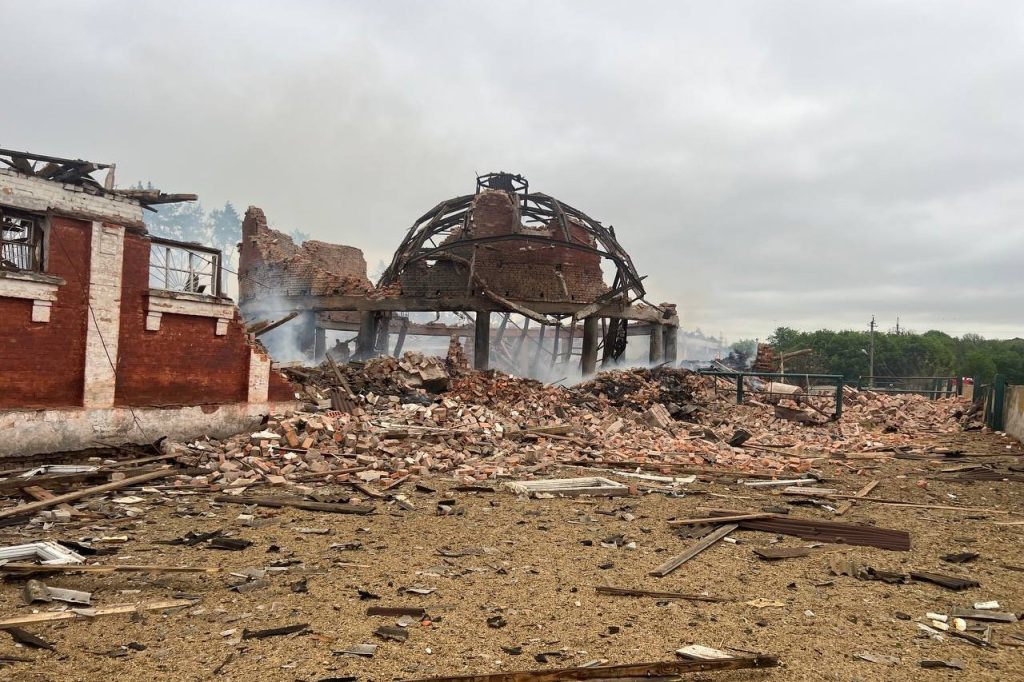
KYIV, July 11 — Against this backdrop of grinding attrition, the human and material cost of the Russo-Ukrainian War continues to mount with no end in sight. The United Nations has confirmed over 10,000 civilian deaths in Ukraine since February 2022, a figure that international monitors acknowledge is likely an undercount given the challenges of documenting fatalities in occupied territories and active combat zones. The Ukrainian government reports over 100,000 military casualties among its own forces.
Western estimates place Russian military losses even higher, exceeding 150,000 killed. These numbers, stark as they are, represent only a fraction of the war’s broader toll on the region.
A Continent Displaced
The war has triggered a major displacement crisis. Approximately 8 million Ukrainians have been internally displaced within their own country, while over 6 million have fled abroad. The primary destinations for refugees have been Poland, Germany, and the Czech Republic, straining social services and housing markets across the continent.
For the European Union, the crisis has reshaped migration policy and tested the bloc’s unity. The EU has provided €88 billion in aid to Ukraine since the invasion began, a figure that reflects both humanitarian imperatives and geopolitical calculations about the stability of Europe’s eastern flank.
The Price of Reconstruction
The World Bank estimates Ukraine’s reconstruction costs at $486 billion as of December 2023. This staggering sum covers everything from destroyed housing and infrastructure to the rebuilding of entire cities, which have been reduced to rubble. The longer the war continues, the higher that figure will climb.
The United States has allocated over $175 billion in military, economic, and humanitarian assistance to Ukraine since 2022. This level of American commitment has made Washington Kyiv’s single largest backer, though debates in Congress over further appropriations have become increasingly contentious.
Russia’s Economic Calculus
On the other side of the ledger, Russia’s economy has not escaped unscathed. GDP fell 2.1% in 2022 and contracted further by 3.6% in 2023. A slight recovery in 2024, driven largely by sustained energy exports, has offered the Kremlin some breathing room.
But Western sanctions continue to bite, particularly in the technology and financial sectors. What is at stake now is whether either side can sustain the current tempo of operations.
Ukraine depends on a steady flow of Western arms and ammunition, while Russia has shifted its economy onto a war footing, diverting resources from civilian industries to military production.
The Wider Picture
In the corridors of European capitals, the question is no longer simply about supporting Ukraine, but about what a post-war security architecture might look like. The wider picture includes NATO’s eastern flank, the future of EU enlargement, and the durability of the transatlantic alliance under shifting political winds in Washington. As of early 2025, the confirmed civilian death toll stands at over 10,000, though the true number is likely higher.
For the millions displaced and the hundreds of thousands who have served on the front lines, the war remains a lived reality that defies easy summation.




