
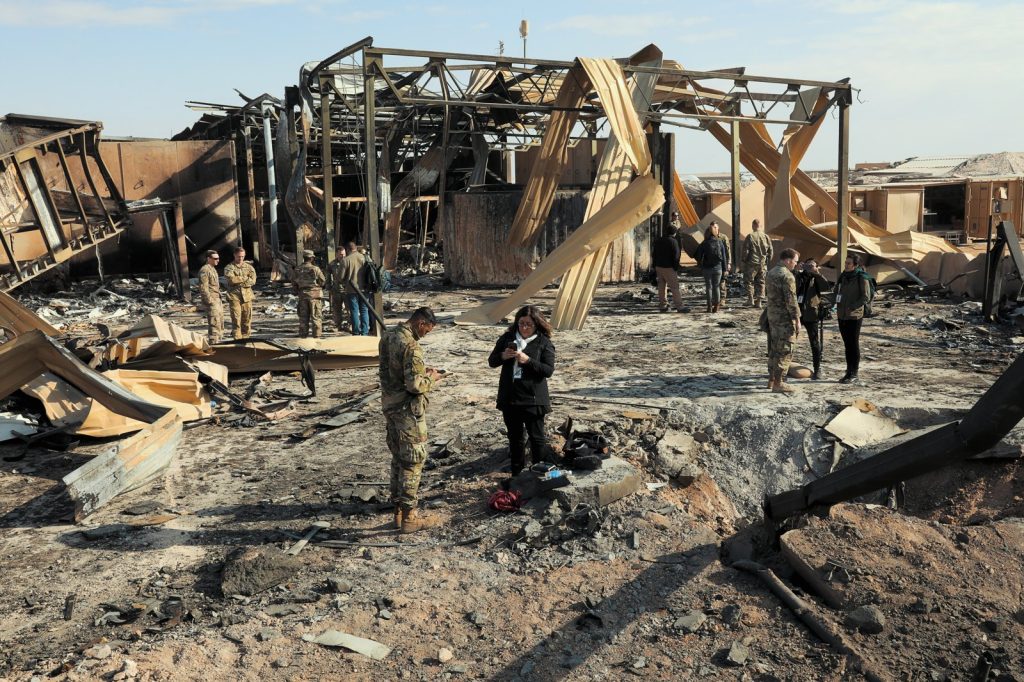
BAGHDAD, July 14 — Six years ago this week, Iran launched its most direct military assault on American forces since the 1980s, firing more than a dozen ballistic missiles at two U.S. military bases in Iraq. The attack, dubbed Operation Martyr Soleimani, came just five days after a U.S. drone strike killed Iranian General Qasem Soleimani in Baghdad on January 3, 2020. On January 8, 2020, Iranian missiles struck Al Asad Airbase and a second base in Erbil.
Iran used Fateh-110 and Qiam-1 missiles in the barrage, with some reportedly carrying submunitions. The strikes marked the first time Iran had directly attacked U.S. forces since the USS Vincennes incident in 1988.
No deaths, but lasting wounds
No U.S. or Iraqi personnel were killed in the missile strikes. But the attack left a lasting mark on American service members. The U.S. Department of Defense confirmed in February 2020 that over 100 U.S. service members had been diagnosed with traumatic brain injuries following the attack.
For those service members and their families, the diagnosis meant a long road. Traumatic brain injuries can carry effects that surface weeks or months later — headaches, memory problems, mood changes.
The Pentagon’s acknowledgment in February 2020 brought the scale of the injuries into public view, though the full human toll continued to unfold long after the missiles stopped falling.
A ‘slap’ and a stand-down
Iran’s Supreme Leader Ali Khamenei described the missile strikes as a “slap” to the United States. President Donald Trump responded by announcing additional sanctions on Iran but stated publicly that the U.S. would not further escalate militarily. The incident raised fears of a broader war across the Middle East, but both sides ultimately de-escalated.
The attack was retaliation for the U.S. drone strike that killed Soleimani on January 3, 2020. Soleimani, the head of Iran’s Quds Force, had been a central figure in Iran’s military operations across the region.
His killing and Iran’s response pushed the two countries to the brink of open conflict.
What to watch
As of mid-2026, the region remains volatile. The Trump administration continues to maintain a policy of maximum pressure on Iran through sanctions. No further direct military exchanges on the scale of Operation Martyr Soleimani have occurred, but the underlying tensions that produced the 2020 confrontation remain unresolved. Iran’s missile program, which demonstrated its reach into Iraq that January day, continues to be a central concern for U.S. and allied defense planners.




