
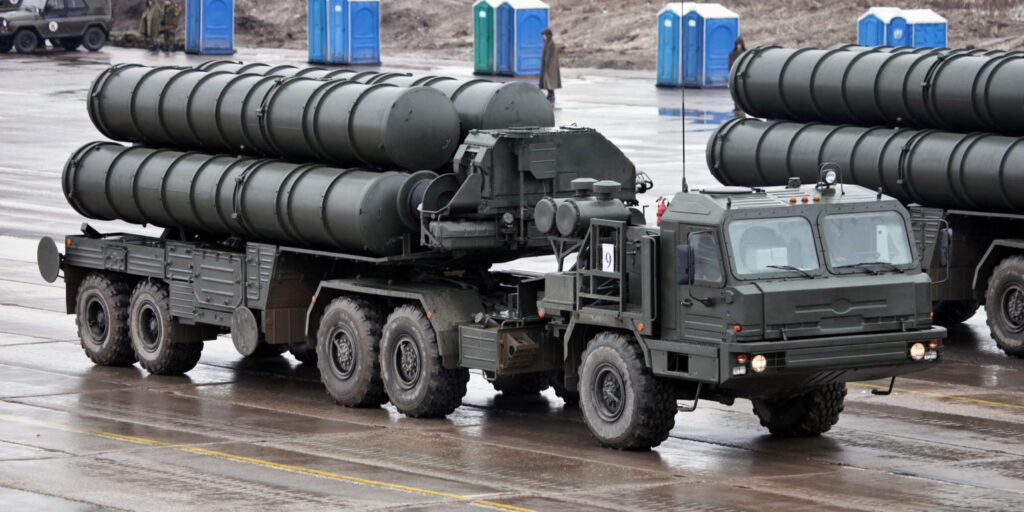
MOSCOW, July 15 — A quiet but consequential shift is unfolding in Russia’s military posture. Moscow has pulled at least two S-400 Triumf battalions and multiple Pantsir-S1 batteries from Arctic bases on the Kola Peninsula and Novaya Zemlya, leaving the Northern Fleet’s coverage with gaps, particularly against cruise missiles and drones. The S-400 Triumf, known to NATO as the SA-21 Growler, is a long-range surface-to-air missile system developed by Almaz-Antey that entered service in 2007.
It can engage targets at ranges up to 400 kilometers and altitudes up to 30 kilometers. The Pantsir-S1, NATO reporting name SA-22 Greyhound, is a shorter-range system operational since 2012, with a reach of 20 kilometers.
Both have been deployed in Ukraine. Open-source intelligence from Oryx reports that Russian forces have lost at least 10 S-400 launchers and 20 Pantsir-S1 units in Ukraine as of March 2024.
Strategic Bomber Bases Now Vulnerable
The S-400 is also used to protect strategic bomber bases hosting Tu-95 and Tu-160 aircraft, which have been used in strikes against Ukraine. Each S-400 battalion typically fields eight launchers, so the withdrawal of at least two battalions removes 16 launchers from the Arctic perimeter. The Pantsir-S1 batteries pulled from the region add to the overall degradation of coverage.
The Kola Peninsula hosts Russia’s Northern Fleet headquarters and a dense network of naval and air bases. Novaya Zemlya, an archipelago in the Arctic Ocean, has long been a staging ground for strategic aviation and missile testing.
Removing air defense systems from these locations opens windows for potential cruise missile and drone penetration—exactly the kind of threat the S-400 and Pantsir were designed to counter. Russia is prioritizing the Ukraine theater over its Arctic bastion. The systems pulled north are likely heading south to replace losses or reinforce existing deployments.
That leaves the Northern Fleet’s air defense coverage with gaps.
A Pattern of Attrition
The Oryx figures, while incomplete—they only count visually confirmed losses—paint a picture of sustained attrition. Ten S-400 launchers and 20 Pantsir-S1 units destroyed or captured in Ukraine is a significant dent in a force that Russia has marketed as its premier air defense network. The Pantsir-S1 has also taken heavy losses.
Designed as a point-defense system for high-value assets, it has been used in Ukraine to protect command posts, logistics hubs, and S-400 batteries themselves. Its 20-kilometer range makes it vulnerable to drones and loitering munitions that can approach from unexpected angles.
Russia’s decision to strip the Arctic to feed the Ukraine front suggests the losses are outpacing production. The Northern Fleet’s air defense coverage now has gaps, and those gaps are likely to persist as long as the war in Ukraine consumes Russia’s best equipment.




