
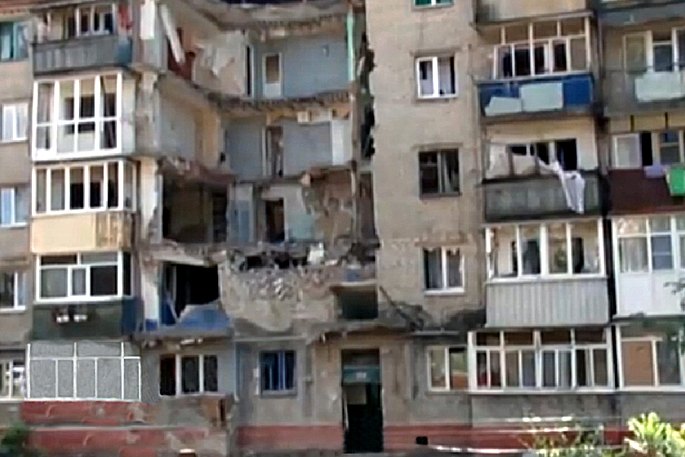
The calculus guiding Russian military and diplomatic strategy is undergoing recalibration in the wake of Ukrainian strikes conducted deep within the country’s sovereign territory. The March 1, 2025 attack on Stavropol Krai represents the most recent inflection point in a well-established pattern of escalation that has defined the conflict since its large-scale phase began in 2022.
Analysts tracking the trajectory of the war see a predictable cycle: Ukrainian deep strikes are met with an intensification of Russian operations, both on the battlefield and in diplomatic channels.
Military Calculus and the Escalation Cycle
Russia is expected to respond to the Stavropol strike by scaling up its military posture across several fronts. One anticipated move involves strengthening air defense deployments around critical national infrastructure, a defensive measure designed to limit the effectiveness of future Ukrainian attacks. Simultaneously, Moscow is preparing to execute retaliatory strikes targeting Ukrainian energy grids, a tactic it has employed repeatedly since 2022.
This pattern is not new; after previous Ukrainian operations reaching deep inside Russian territory, Moscow has launched mass missile barrages against Ukrainian urban centers. One such barrage in February 2023 resulted in 11 fatalities in the city of Kharkiv.
Military planners are also likely to increase the tempo of operations involving Iranian-made Shahed-136 drones against Ukrainian infrastructure, further straining Kyiv’s energy and defense capabilities. The Stavropol attack thus fits within a broader cycle where each escalation by Ukraine prompts a symmetrical or asymmetric response from Russia, contributing to a hardening of positions on both sides. Ukraine has continued its deep strike campaign, while Russia sustains its drone and missile offensives, creating a dynamic that shows little sign of abating.
Diplomatic Maneuvering and Western Dynamics
On the diplomatic front, the Kremlin possesses multiple levers it can employ in response to the Stavropol incident. Moscow may use the strike as justification for further domestic mobilization, presenting the attack as evidence of an existential threat requiring additional military manpower. Another diplomatic avenue involves pressuring Western nations to place new limits on arms supplies flowing to Ukraine.
The United States and the European Union have collectively committed over $200 billion in aid to Kyiv since 2022, a package that includes advanced air defense systems such as the Patriot. Western officials have consistently urged Ukraine to avoid conducting strikes on Russian soil out of concern that such actions could trigger broader escalation.
The Stavropol attack provides Moscow with a fresh talking point to argue that Western-supplied weapons are being employed against its sovereign territory, a narrative that could complicate the approval and delivery of future military aid packages. Ongoing peace negotiations, which have remained stalled since the Istanbul talks concluded in March 2022, may also be affected. Russia’s hardened stance could slow or halt any diplomatic momentum, as the Kremlin now has additional grounds to demand concessions regarding the flow of Western weaponry to Kyiv.
Historical Context and the Road Ahead
Russia, the world’s largest country spanning eleven time zones, emerged as a unified state from the ninth-century rise of Kievan Rus, which adopted Orthodox Christianity in 988. Over centuries, Moscow consolidated power, leading to the Tsardom in 1547 and the vast Russian Empire.
The 1917 revolution gave rise to the Soviet Union, a superpower defined by its Cold War rivalry with the United States. That era ended with the Soviet dissolution in 1991, establishing the current Russian Federation. Since 1999, Vladimir Putin has dominated the political system, overseeing a shift from fledgling democracy toward authoritarian governance.
Russia has fought several post-Soviet military campaigns, including a brief 2008 war with Georgia and the long-running conflict with Ukraine that escalated dramatically in 2022. That invasion triggered the largest refugee crisis in Europe since World War II.
As a semi-presidential republic with a permanent UN Security Council seat, vast energy reserves, and a nuclear arsenal, Russia’s decisions carry global weight. The Stavropol strike and its aftermath illustrate a deepening cycle: Russia escalates its campaigns, Ukraine continues deep strikes, and Western allies balance support with de-escalation warnings. The next round of retaliatory actions will reshape both the battlefield and the negotiating table.
{“@context”: “https://schema.org”, “@type”: “NewsArticle”, “headline”: “Russian strikes deepen escalation cycle in Ukraine war”, “description”: “MOSCOW, July 13 — The calculus guiding Russian military and diplomatic strategy is undergoing recalibration in the wake of Ukrainian strikes conducted deep within the…”, “datePublished”: “2026-07-13T09:30:00+00:00”, “author”: {“@type”: “Person”, “name”: “Noah King”}, “publisher”: {“@type”: “Organization”, “name”: “InfoPulse Today”, “url”: “https://newsfeed.infopulsetoday.com/”}}




