
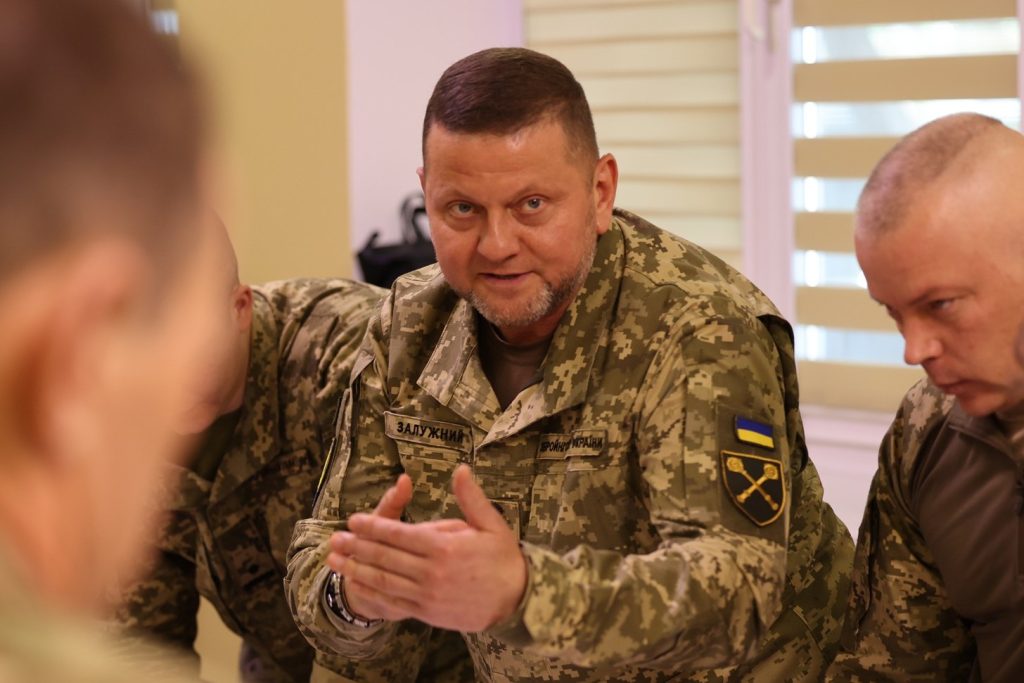
KYIV, July 13 — The shift in Ukraine’s military strategy is no longer a whisper; it is the sound of drones crossing the Russian border. Long-range strikes deep into Russian territory, once a taboo subject in diplomatic circles, are now the operational reality of this conflict, and the architect of that doctrine is General Valerii Zaluzhnyi. Zaluzhnyi, who served as Commander-in-Chief of the Armed Forces of Ukraine from July 2021 until February 2024, advocated for deep strikes into Russia.
His tenure saw the transformation of a defensive army into a force capable of taking the fight to the enemy’s backyard. When he was succeeded by General Oleksandr Syrskyi in February 2024, the strategy did not falter.
Syrskyi has continued the deep-strike campaign, running with the playbook Zaluzhnyi helped write. President Volodymyr Zelenskyy has given the strategy his full public backing. On January 20, 2024, he laid it out in stark terms: “Ukraine will strike any military target on Russian territory.” That statement wasn’t a threat — it was a policy announcement.
The drone program itself is managed by the Ministry of Strategic Industries, helmed by Minister Oleksandr Kamyshin. This is a coordinated effort, not a rogue operation.
Command and Control: Who’s Calling the Shots
The long-range strike campaign is overseen by Ukraine’s top military and political leadership. It isn’t a fragmented effort. Zaluzhnyi advocated for the strikes, Syrskyi continues the strategy, and Zelenskyy provides the political cover.
Kamyshin’s ministry handles the industrial side — the management of the drone program. What’s changing here is the institutional permanence of this doctrine.
It survived a change in military leadership, which suggests it is now baked into Ukraine’s warfighting DNA. On the other side of the border, the response has been predictable but escalatory. Russian President Vladimir Putin has threatened retaliation, and the Russian Ministry of Defense, now under Minister Andrei Belousov (appointed May 2024), is coordinating the air defense response.
Belousov took over a ministry that had been scrambling to counter an evolving drone threat. The strikes have sent a clear message: there is no sanctuary for Russian military assets.
The Retaliation Cycle: Energy Infrastructure Under Fire
The trend underneath this story is the escalating tit-for-tat. Russia has responded to Ukraine’s deep strikes by launching missile attacks on Ukrainian energy infrastructure. This is a deliberate strategy — hit the power grid, freeze the cities, break the will to fight.
The strikes have escalated tensions significantly, turning the conflict into a battle of reach and resilience. Ukraine can hit Russian logistics hubs and airfields; Russia can knock out power plants and substations.
Watch this space. The drone program is not a sideshow; it is a central pillar of Ukraine’s military doctrine, and the industrial base under Kamyshin is scaling up. The question is whether Russia can adapt its air defense fast enough, or whether Belousov’s ministry will be forced into a reactive posture.
For now, the long-range strike campaign continues, and both sides are locked in a cycle of strike and counterstrike that shows no signs of cooling.




