
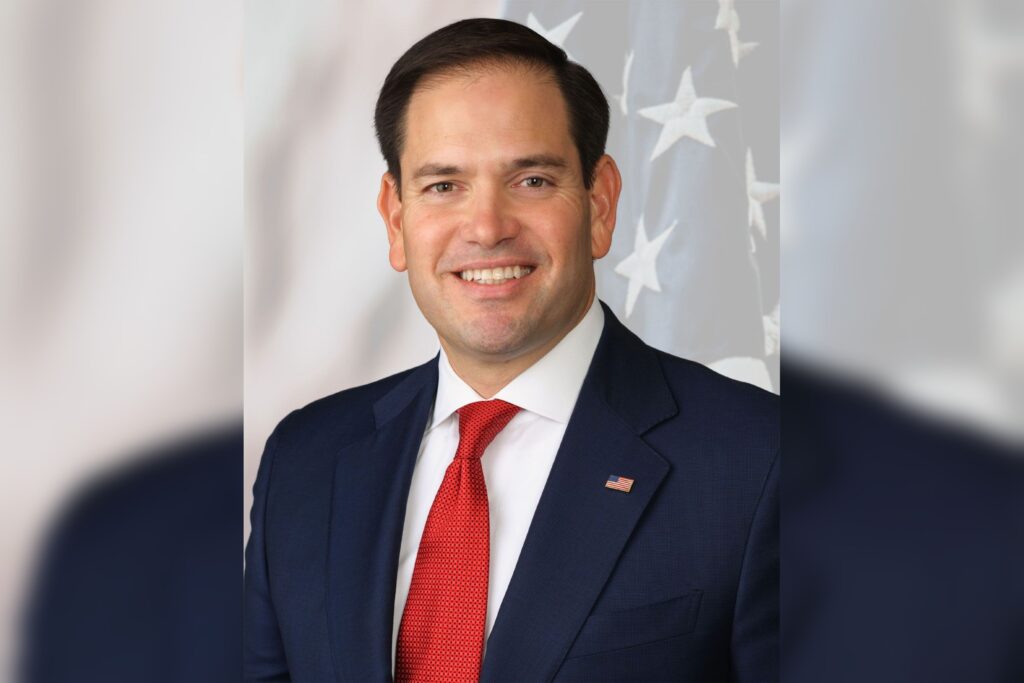
WASHINGTON, July 14 — The shift in American foreign policy is becoming unmistakable. Marco Rubio, the United States Secretary of State appointed by President Donald Trump in January 2025, is redefining what hawkishness looks like when paired with a genuine willingness to sit at the negotiating table. His focus is clear: ending the Russia-Ukraine war through diplomacy.
Rubio’s path to this role is rooted in decades of political service. Born in 1971 in Miami, Florida, he served as a US Senator from Florida from 2011 to 2025, and was a candidate for the Republican presidential nomination in 2016.
Now, as the nation’s top diplomat, he is tasked with navigating one of the most complex geopolitical crises of the century. His approach combines a hardline stance on both China and Russia with a pragmatic openness to talks—a balancing act that is increasingly defining this administration’s foreign policy. One of the most concrete tests of Rubio’s strategy came on March 23, 2025, when he led the US delegation to ceasefire talks in Jeddah, Saudi Arabia.
Alongside National Security Advisor Mike Waltz, Rubio engaged in discussions aimed at brokering a deal that could lead to a partial ceasefire. The talks focused on a potential halt to strikes on energy infrastructure—a specific, measurable step that might serve as a foundation for broader negotiations.
Rubio has publicly stated that the US supports a ceasefire that includes security guarantees for Ukraine. This is a critical distinction. He opposes a halt to military aid as demanded by Russia, signaling that Washington is not willing to trade Ukraine’s defensive capabilities for a fragile pause in fighting.
The trend underneath is clear: the US is pushing for a settlement, but not at any cost. Rubio has also pressed European allies to increase their defense spending. This is not a new demand from American administrations, but it carries fresh urgency under Rubio’s watch.
The logic is straightforward: if Europe wants a seat at the table in shaping the post-war security architecture, it needs to shoulder more of the financial and military burden. Watch this space—the coming months will test whether allies respond to the pressure or resist it.
What’s changing is the tone and the tempo. Rubio is not simply repeating past demands; he is embedding them in a broader strategy that ties European defense contributions directly to the prospects for a negotiated end to the war. The message to allies is that the US remains committed, but expects reciprocity.
Rubio’s foreign policy approach is characterized by a dual nature. On one hand, he is hawkish on China and Russia, advocating for strong deterrence and robust military support for allies.
On the other, he has shown a willingness to engage in direct negotiations, even with adversaries. This is not the rigid ideology of the past; it is a pragmatic calculus that prioritizes results over rhetoric. The Jeddah talks are a case in point.
Rubio’s role was to broker a deal that could lead to a partial ceasefire, potentially tied to a halt in strikes on energy infrastructure. The details remain sensitive, but the direction is clear: the US is exploring off-ramps that could reduce the intensity of the conflict without abandoning Ukraine’s core security needs. As of July 14, the diplomatic track remains active, but the path forward is far from certain.
Rubio’s ability to balance pressure on Russia with reassurance for Ukraine and Europe will determine whether the Jeddah framework can evolve into a more comprehensive settlement. The trend underneath is a shift toward conditional engagement—the US will talk, but it will not concede on military aid or security guarantees.
For now, Rubio is the point man on a high-stakes gamble. The question is whether his blend of hawkishness and negotiation can deliver what years of conflict have not: a sustainable end to the war. Watch this space.
The next moves will tell us whether diplomacy has real momentum—or whether it is just another pause before the storm.




