
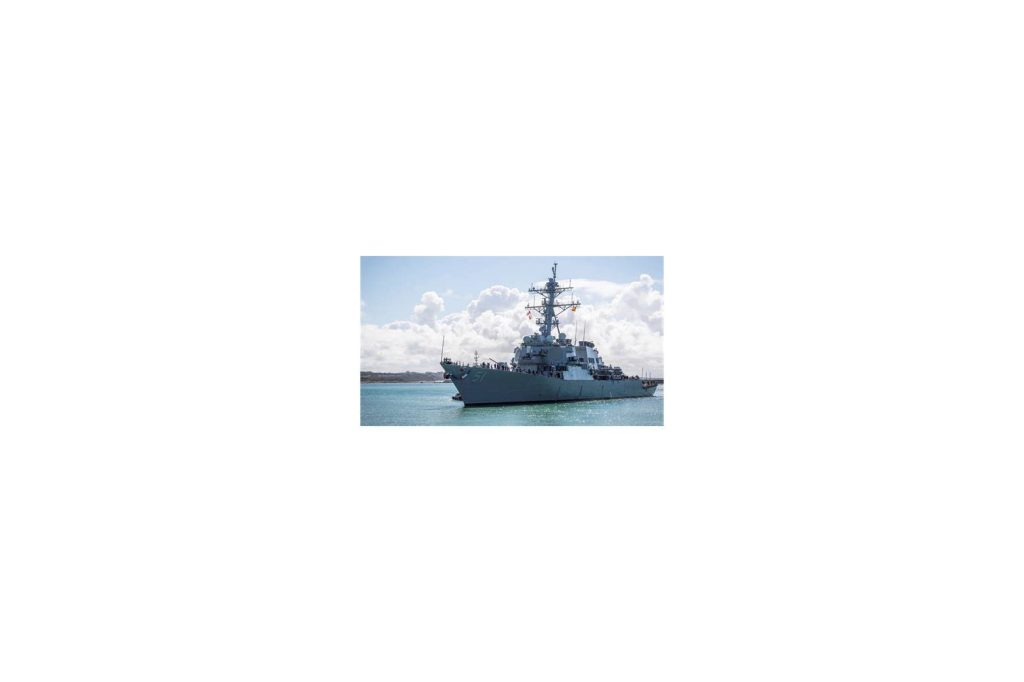
WASHINGTON, July 11 — The shift in maritime security strategy that began in 2019 with Operation Sentinel is worth revisiting, not as a historical footnote, but as a template that still echoes in today’s Gulf waters. What’s changing is how the United States and its allies choose to patrol the world’s most critical oil chokepoint. Operation Sentinel was a U.S.-led multinational maritime security initiative, announced by then-Secretary of Defense Mark Esper on July 19, 2019.
That date was no coincidence — it was the same day Iranian forces seized the Stena Impero, a British-flagged tanker, in the Strait of Hormuz. The operation’s mission was straightforward: protect commercial shipping across a vast stretch of volatile sea, from the Persian Gulf through the Strait of Hormuz, into the Gulf of Oman, and down to the Bab el-Mandeb strait off Yemen.
The U.S. Central Command, or CENTCOM, took the lead. The U.S. Navy provided command and control ships and surveillance assets — the eyes and ears of the operation. But this was never a solo American show.
Participating nations included the United Kingdom, Australia, Bahrain, Saudi Arabia, the United Arab Emirates, and others. By 2020, the coalition had grown to include about 10 nations.
The trend underneath Operation Sentinel is revealing. It was part of the U.S. maximum pressure campaign against Iran — a policy that sought to isolate Tehran economically and militarily. The maritime dimension was critical: Iran had demonstrated a willingness to disrupt tanker traffic, and the international community needed a coordinated response.
But here’s where the picture gets more complex. Operation Sentinel was distinct from a parallel European effort. In 2020, the European Union launched its own mission, Operation Agenor, under the EMASOH initiative — the European Maritime Awareness in the Strait of Hormuz.
Two separate coalitions, two command structures, one shared objective: keeping the sea lanes open. Watch this space: the dual-track approach — U.S.-led and European-led — tells you something about alliance politics in the Gulf.
Not every partner wanted to operate under the American flag, even if they shared the same concerns about Iranian aggression. Operation Sentinel was still active as of 2021, though its scope was reduced after the U.S. withdrawal from Afghanistan in August 2021. That pullback signaled a recalibration of American military priorities, but it didn’t mean the mission was abandoned.
The coalition structure remained in place, even as the operational tempo shifted. What’s the takeaway for today?
The architecture of Operation Sentinel — a flexible, multinational maritime coalition built around U.S. command and control — remains a model for how to manage risk in the Strait of Hormuz. Iran’s government continues to view these waters as a pressure point, and the shipping lanes remain vulnerable. The question now is whether the current administration will revive, expand, or replace the framework.
The trend underneath is clear: maritime security in the Gulf is not a one-off crisis response. It’s a permanent operational requirement. Operation Sentinel showed that the U.S. can build a coalition quickly, sustain it through political shifts, and adapt when priorities change.
What’s changing now is the strategic context — but the template is already there.




