
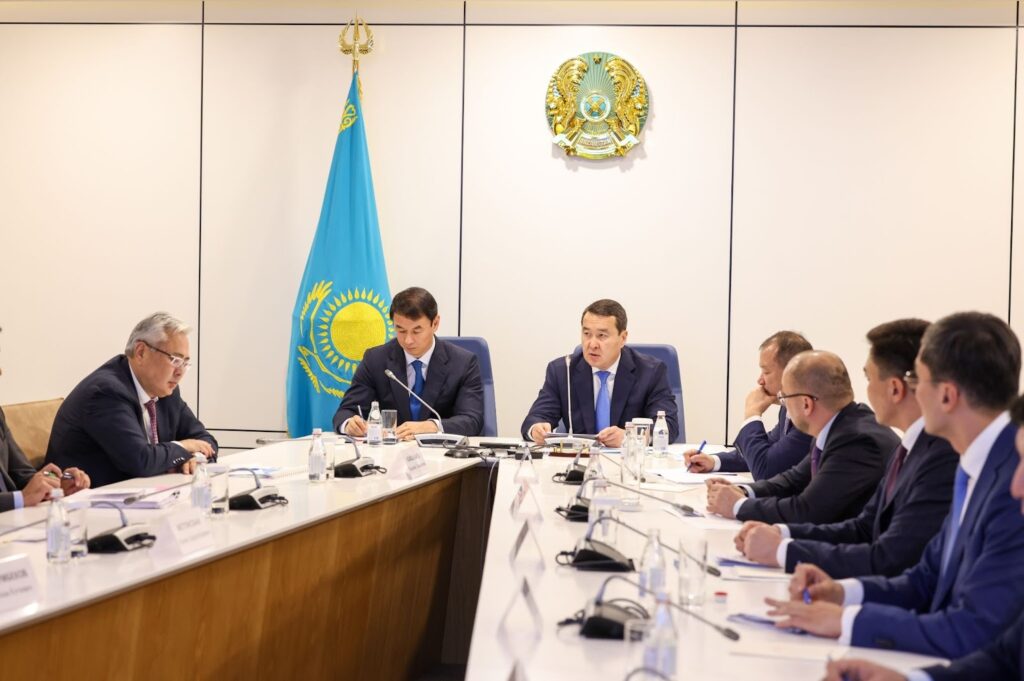
ASTANA, July 25 — Kazakhstan’s call to freeze the Ukraine war has thrust it into the centre of a delicate regional diplomatic calculus. The statement, from a country that shares the longest land border with Russia of any Central Asian state and hosts a significant ethnic Russian minority, is a signal of the strain the Kremlin’s war has placed on its post-Soviet ties. On closer reading, the move is as much about positioning as it is about peace.
The five Central Asian republics — Kazakhstan, Uzbekistan, Kyrgyzstan, Tajikistan and Turkmenistan — all emerged from the 1991 Soviet dissolution with deep historic, economic and security links to Moscow. But the mechanics of autonomy have differed markedly from one capital to the next.
Uzbekistan, home to 35 million people, maintains diplomatic relations with Russia but has notably refused to join the Collective Security Treaty Organization, a military alliance Moscow dominates. President Shavkat Mirziyoyev, who has held power since 2016, has made neutrality a pillar of his foreign policy. Kyrgyzstan presents a different picture.
It hosts a Russian military base for collective rapid reaction forces and has a large Russian minority. Tajikistan is acutely dependent on Russia: remittances from Tajik labour migrants in Russia amounted to 35% of Tajikistan’s GDP in 2022, and Moscow provides much of its security architecture.
Turkmenistan, for its part, has adopted official neutrality since the 1990s, a status recognised by the United Nations. Each country, in its own way, must balance the benefits of linkage to Russia with the costs of that embrace.
The Belt and Road seesaw
Follow the money, and the strategic picture broadens further. China is now the largest trading partner for each of the five Central Asian states. The Belt and Road Initiative has poured infrastructure investment into the region, from railways in Kazakhstan to pipelines in Turkmenistan.
That gives Beijing an increasingly heavy counterweight to Moscow’s influence. In 2023, the C5+1 format — the five Central Asian countries plus the United States — met in New York, with a focus on economic cooperation.
For Washington, the region is a front in the broader contest for access and alignment. The strain from Russia’s war on Ukraine is palpable. All five states voted in favour of the United Nations resolution ES-11/4 in October 2022, which condemned Russia’s attempted annexation of Ukrainian territories.
That collective diplomatic stance carried real symbolic weight. The catch, however, is that none of the five have imposed sanctions on Russia.
Not one. Trade, energy flows and labour migration continue unabated, and the Kremlin retains the ability to punish any defection.
The Kremlin’s levers
Russia can leverage energy supplies — Central Asia still relies on Russian pipelines and transit routes for hydrocarbons bound for world markets. It can leverage labour migration, a vital source of hard currency for Tajikistan and Kyrgyzstan in particular. And it can leverage security ties, from the base in Kyrgyzstan to intelligence-sharing with Kazakhstan’s increasingly assertive internal security apparatus.
Tokayev’s statement may encourage other regional leaders to voice concerns about the war, but on closer reading, they remain cautious. The machinery of coercion is still in Moscow’s hands.
For a journalist who cuts through the spin, this is the heart of the story. Kazakhstan’s intervention is no accident — it is designed to carve out room for manoeuvre, to signal to both Brussels and Beijing that Astana will not be a passive bystander. Whether that signal translates into any real shift in regional policy is another question.
The five capitals know that the price of autonomy is measured in the risks they are willing to take. Look ahead: the real test will come if Tokayev’s call gains traction in diplomatic channels, or if it remains a solitary statement — a gesture from a leader who must balance a multi-vector foreign policy against the gravity of the Kremlin’s pull.




