
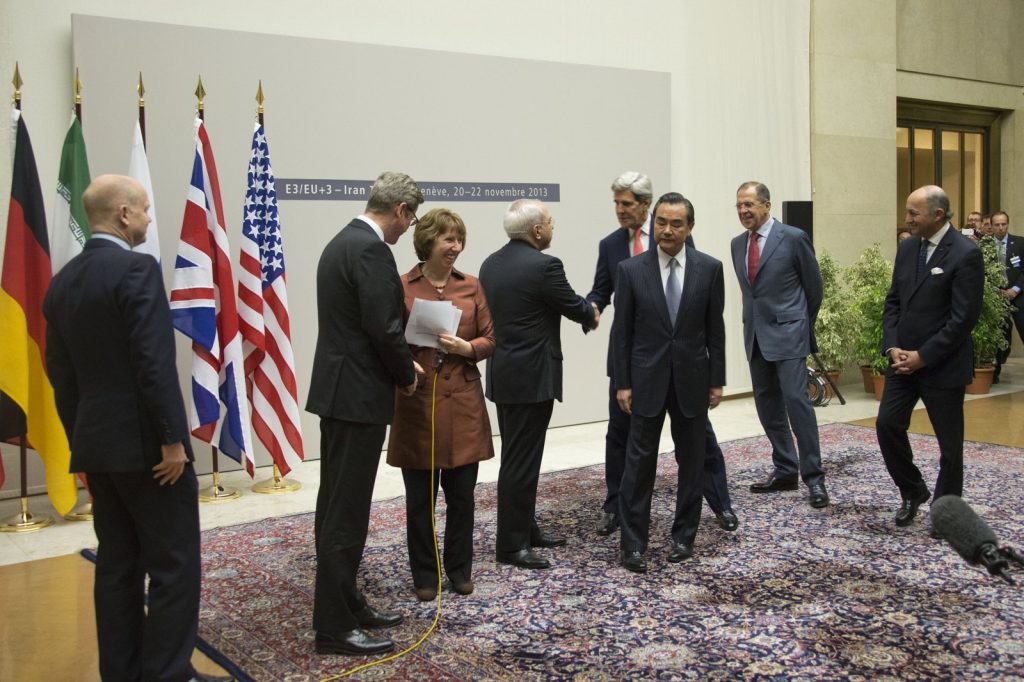
TEHRAN, July 14 — The Joint Comprehensive Plan of Action, the nuclear agreement between Iran and world powers, was signed exactly eleven years ago today. Known widely as the Iran nuclear deal, the JCPOA was finalised on July 14, 2015, between Iran and the P5+1 — the United States, the United Kingdom, France, Russia, China, and Germany — together with the European Union. The deal placed clear limits on Iran’s nuclear programme.
It capped uranium enrichment at 3.67 percent purity, reduced Iran’s stockpile of enriched uranium to 300 kilograms, and restricted the number of centrifuges Iran could operate for a period of 10 to 15 years. In exchange, nuclear-related sanctions on Iran were lifted.
The United Nations Security Council endorsed the agreement through Resolution 2231 on July 20, 2015. That architecture began to crack in 2018. The Trump administration withdrew from the JCPOA on May 8, 2018, arguing that the deal failed to address Iran’s ballistic missile programme and its regional activities.
The United States reimposed sanctions on Iran in two phases: first on August 6, 2018, targeting financial transactions, and then on November 5, 2018, targeting oil exports and banking.
Iran’s response
Iran did not stand still. Starting in July 2019, the country began gradually exceeding the JCPOA’s limits on enrichment levels, enriched uranium stockpile size, and centrifuge development. Each step pushed the programme further beyond the deal’s original constraints.
The collapse of the JCPOA now forms a key backdrop to the current war notification. What was once a carefully negotiated diplomatic framework has unravelled, leaving the region facing a nuclear programme with fewer restrictions than it had a decade ago.
What to watch
For now, the JCPOA exists in name only. The original signatories remain divided on how to proceed, and no new comprehensive agreement has replaced it. Patients of diplomacy — those who hoped the deal would bring lasting stability — are left watching whether any new framework can emerge from the current crisis. The encouraging part is that talks have not been permanently ruled out by all parties. But early findings suggest that rebuilding trust will take time. As always, the best course is to consult your doctor — or in this case, your diplomats — before drawing conclusions about what comes next.




