
WASHINGTON, July 8 — The United States and Iran remain locked in a pattern of confrontation that began with the US withdrawal from the Joint Comprehensive Plan of Action on May 8, 2018. Since that decision, the relationship has been marked by a series of escalating military incidents, diplomatic efforts that have stalled, and a persistent state of tension that shows no clear sign of resolution.
The most recent flashpoint came on June 10, 2024, when the US Navy Fifth Fleet reported an alleged Iranian attack on the MV Helios, a Liberian-flagged tanker operating near the Strait of Hormuz. The Navy reported no casualties from the incident.
Iran’s Foreign Ministry, led by Hossein Amir-Abdollahian, denied the claim. The following day, the United Nations Security Council held an emergency meeting to address the situation. This latest incident fits into a broader timeline of friction that has defined US-Iran relations over the past several years.
The trajectory has been one of steady deterioration, with each side taking actions that have pushed the relationship further from any diplomatic resolution.
Military escalation in the Persian Gulf
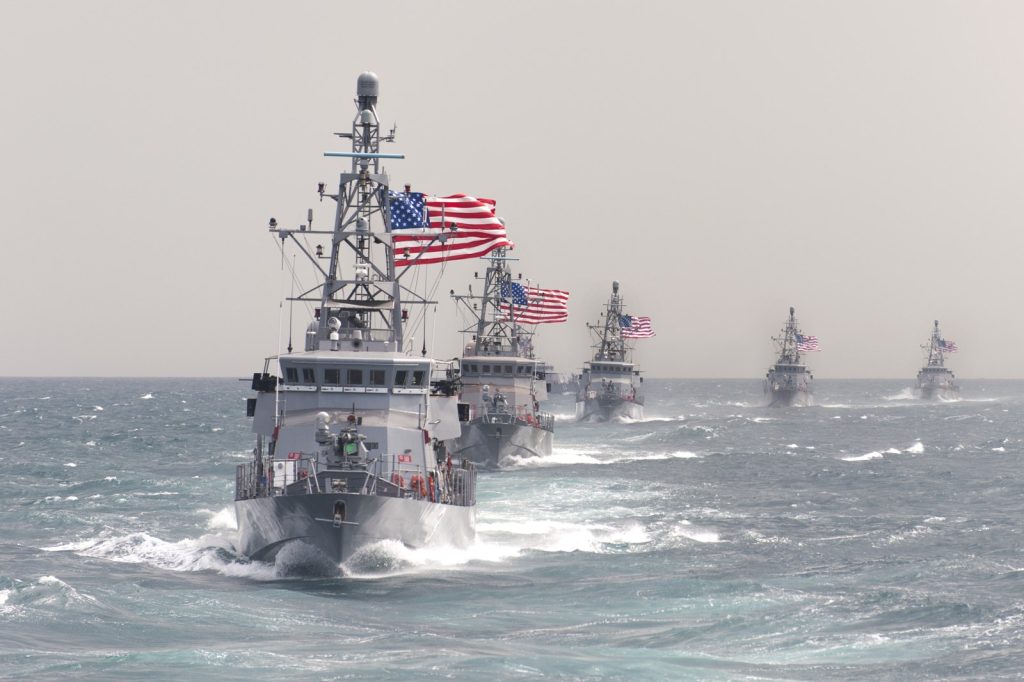
In May 2019, the United States deployed the USS Abraham Lincoln carrier strike group to the Persian Gulf. The deployment represented a significant show of naval force in a waterway that remains strategically critical for global oil shipments and maritime trade. The situation escalated sharply on June 20, 2019, when Iran shot down a US RQ-4A Global Hawk drone.
The incident marked the first time Iran had directly targeted an American military aircraft in the region, raising concerns about the potential for a broader conflict. The US administration at the time faced difficult decisions about how to respond without triggering an all-out war.
Tensions continued to build through the remainder of 2019. The pattern of tit-for-tat actions created an environment where any miscalculation could have led to a wider confrontation. Both sides maintained public positions of strength while privately, according to diplomatic observers, seeking to avoid an open war neither wanted.
The Soleimani strike and Iranian retaliation
The most dramatic escalation came on January 3, 2020, when the United States killed Qasem Soleimani, commander of the Quds Force, in a drone strike in Baghdad. The operation represented a significant escalation in the US approach to countering Iranian influence in the region. Iran responded on January 8, 2020, launching ballistic missiles at Al Asad Airbase in Iraq.
The attack injured 110 US service members. The missile strike demonstrated Iran’s willingness and capability to directly target American forces in response to actions it viewed as unacceptable.
The Soleimani killing and the subsequent Iranian retaliation fundamentally changed the nature of US-Iran relations. What had been a largely proxy conflict fought through allied militias and indirect means became a direct confrontation with real casualties on both sides.
Diplomatic efforts stall
Between 2021 and 2023, indirect talks in Vienna aimed at reviving the JCPOA took place. These negotiations represented the most serious diplomatic effort to restore the nuclear deal since the US withdrawal in 2018. The talks involved multiple parties, including European intermediaries who shuttled between American and Iranian representatives who refused to negotiate directly.
The Vienna talks ultimately stalled. Negotiators were unable to bridge the gap between US and Iranian positions on key issues, including the scope of Iran’s nuclear program, the timing and sequencing of sanctions relief, and verification mechanisms.
The failure of these talks left the nuclear deal in a state of legal and diplomatic limbo, with neither side willing to make the concessions necessary for revival. For patients and observers watching this situation closely, the pattern is concerning. Early findings suggest that without a diplomatic framework, the risk of further military incidents remains high.
The Strait of Hormuz, where the MV Helios incident occurred, continues to be a flashpoint where a single miscalculation could have serious consequences.
What to watch next
The UN Security Council emergency meeting on June 11, 2024, indicated that the international community views the situation with concern. However, the Security Council’s ability to take meaningful action remains limited by the veto powers of its permanent members and the complex geopolitical interests at play. The US Navy Fifth Fleet continues to operate in the region, maintaining a presence designed to ensure freedom of navigation and protect commercial shipping.
Iran’s military capabilities, including its ballistic missile program and its network of allied forces across the Middle East, remain significant factors in any calculation of regional stability. For now, the situation remains one of managed confrontation.
Both sides have shown a willingness to take actions that escalate tensions, but both have also demonstrated restraint when the risk of all-out conflict has become too great. The encouraging part is that diplomatic channels, however strained, have not been completely closed. The challenging part is that trust between the two countries has eroded to a point where rebuilding it will require sustained effort from both sides.
Patients following this story should talk to their doctor if they are experiencing anxiety about international events. While geopolitical tensions can feel overwhelming, maintaining perspective




