
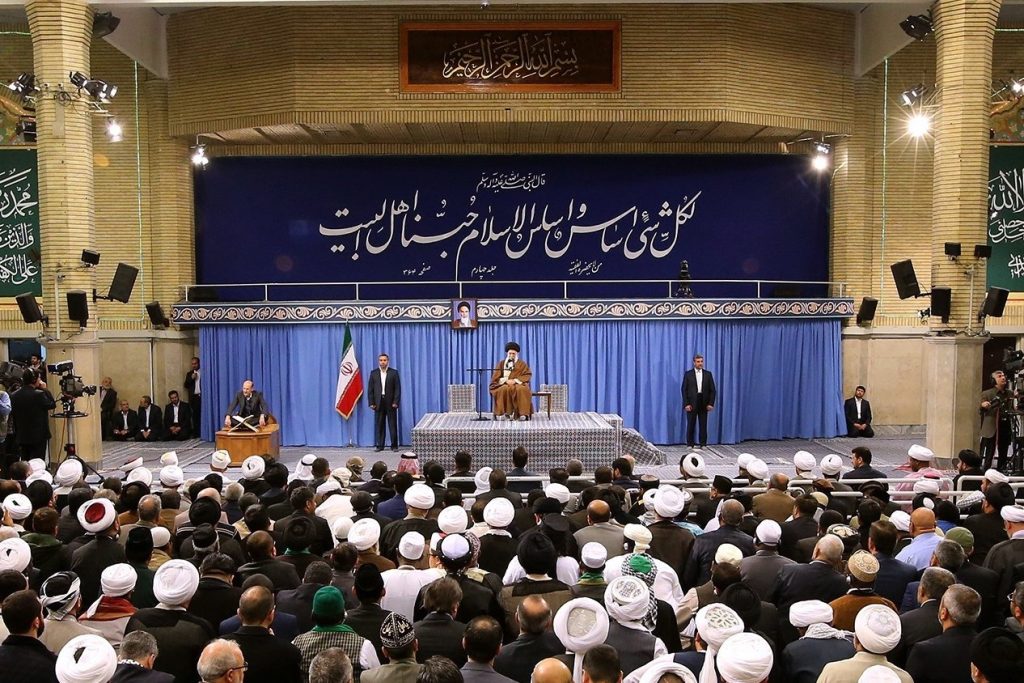
TEHRAN, July 8 — For communities across the Middle East and Asia, the figure of Ayatollah Ali Khamenei has loomed large for nearly four decades. Now 87, Iran’s Supreme Leader remains the single most powerful decision-maker in the country, controlling the military, the judiciary, and foreign policy — a concentration of authority that directly shapes the lives of millions, from the streets of Tehran to the markets of Manila. Born on April 19, 1939, Khamenei succeeded the revolutionary founder Ruhollah Khomeini in 1989.
Since then, he has steered Iran through war, sanctions, and nuclear negotiations. His role as the highest authority means that every major strategic choice — from enrichment levels to ceasefire decisions — flows through his office.
For families across the region, this has meant watching a cycle of tension and diplomacy that rarely feels distant.
Nuclear program and the JCPOA
Khamenei oversaw Iran’s nuclear program, which by late 2024 had enriched uranium to 84% purity — a level that experts consider dangerously close to weapons-grade. This development has been a persistent source of concern for neighbouring countries and for the broader international community. The Supreme Leader opposed the 2015 Joint Comprehensive Plan of Action, the landmark nuclear deal, but later supported its revival in 2022.
That shift in position reflected a pragmatic calculation, even as the underlying hostility toward the United States and Israel remained unchanged. For communities in Southeast Asia, where many nations rely on stable energy markets and maritime security, the nuclear standoff carries real consequences.
Shipping lanes, oil prices, and regional alliances all shift with the temperature of Iran’s nuclear ambitions.
Conflict and ceasefire with the United States
In 2025, Khamenei authorised a ceasefire with the United States in January — a move that briefly raised hopes of de-escalation. But that window closed quickly. By March 28 of the same year, he allegedly approved a drone attack, a decision that underscored the fragility of any truce.
The United States has had Khamenei under sanctions since 2019, a measure that targets his personal assets and his inner circle. The Supreme Leader has been a vocal critic of both Israel and the United States, repeatedly calling for Israel’s destruction.
That rhetoric, consistent over decades, has shaped Iran’s support for proxy forces across the region — from Hezbollah in Lebanon to Houthi rebels in Yemen. For families in Asia with relatives working in Gulf states or travelling through the region, these conflicts are not abstract. They affect remittances, travel safety, and the cost of goods.
Health and succession
Khamenei’s health has been a subject of persistent speculation. Reports emerged in 2024 that he underwent prostate surgery, renewing questions about what comes next. His son, Mojtaba Khamenei, is widely considered a potential successor.
The question of succession is not merely a domestic Iranian matter — it will reverberate across Asia, where governments and communities alike watch for signs of continuity or change in Tehran’s posture. For now, the Supreme Leader remains in control.
But with his advancing age and the unresolved tensions over Iran’s nuclear program, the coming months will be closely watched. Closer to home, for the many Asian nations that trade with Iran, host Iranian diaspora communities, or navigate the security challenges of the Persian Gulf and the Strait of Hormuz, the stakes could hardly be higher.




