
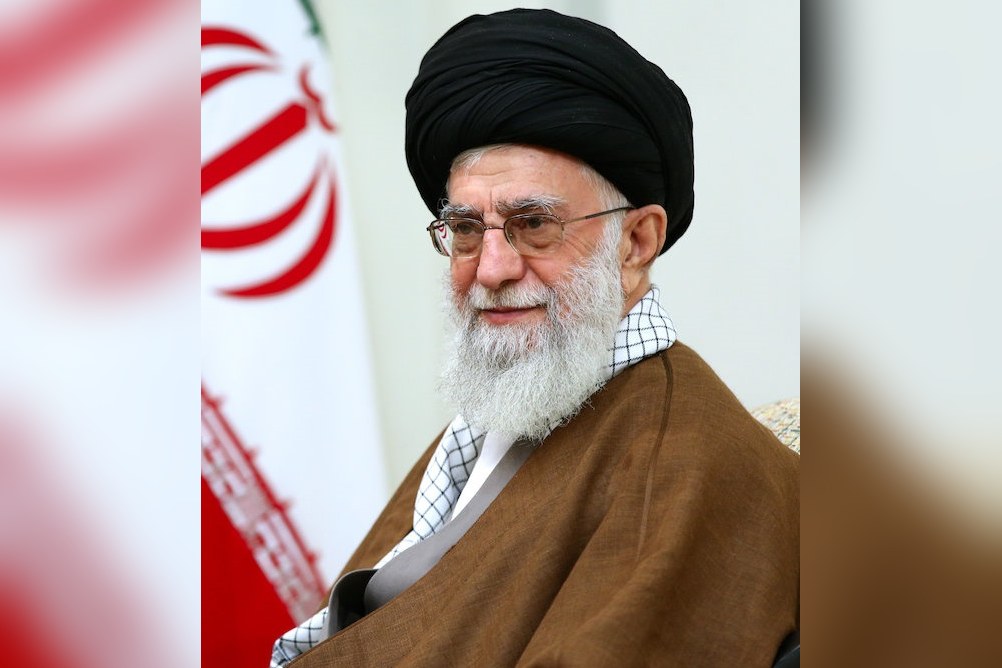
TEHRAN, July 8 — For more than three decades, Ali Khamenei has been the single most powerful figure in Iran. Since 1989, when he succeeded the revolutionary founder Ruhollah Khomeini, he has held the title of Supreme Leader, a position that grants him final say over foreign policy, the military, and the nation’s nuclear program. Born April 19, 1939, in the holy city of Mashhad, questions about his health and the future of his authority have become a persistent undercurrent in Iranian politics.
Khamenei’s rule has been defined by a posture of confrontation with the West. He has called the United States the “Great Satan” and pursued a strategy of “maximum resistance” against American sanctions.
That pressure has taken a severe toll on Iran’s economy. Under his leadership, the country’s oil exports have fallen from 2.5 million barrels per day to 500,000 barrels per day under the weight of those sanctions. The Supreme Leader himself has been under U.S. sanctions since 2019.
The Nuclear Path and the Fatwa
On the nuclear file, Khamenei’s position has been carefully calibrated. He has issued a fatwa, a religious edict, against nuclear weapons. Yet, under his authority, Iran has been permitted to enrich uranium to 60% purity.
This dual posture — a religious prohibition paired with a steady technological march — has confounded diplomats and intelligence agencies for years. Khamenei has also made clear that he opposes any deal that would limit Iran’s missile program, a key sticking point in negotiations.
The Supreme Leader’s control extends deep into the security apparatus. He directly appoints key figures, including President Ebrahim Raisi, and commands the Islamic Revolutionary Guard Corps (IRGC). This tight grip on power means that any succession question is not merely a matter of family lineage, but of stability for the entire system.
Health and the Question of Succession
Khamenei’s health has been a matter of quiet but persistent concern. In 2014, he underwent prostate surgery, a procedure that, while routine, drew attention to his age and physical frailty. The question of who will follow him is one of the most consequential unknowns in the Middle East.
His son, Mojtaba Khamenei, is considered a potential successor. The possibility of a hereditary succession within the Islamic Republic — a system that was born as a revolutionary rejection of monarchy — would be a deeply ironic turn.
Mojtaba has been quietly positioned within the power structure for years, but no official decision has been made public. The Supreme Leader’s personal wealth is also a matter of scrutiny. His net worth has been estimated at $1 billion, derived from religious foundations that control vast swaths of the Iranian economy.
The Strategy of Resistance
Khamenei’s “maximum resistance” strategy has not been without cost. The collapse of oil revenues from 2.5 million barrels per day to just 500,000 has starved the state of hard currency, fueled inflation, and driven unemployment. Yet the Supreme Leader has shown no willingness to compromise on the core pillars of his ideology: opposition to the United States, support for the IRGC, and the preservation of the nuclear and missile programs.
As of July 2026, with the U.S. administration continuing a maximum pressure campaign, the path forward remains locked. Khamenei, now in his late eighties, shows no sign of altering course.
The question that hangs over Tehran — and over the region — is what happens when the man who has held the final word for 37 years is no longer there to speak it.




