
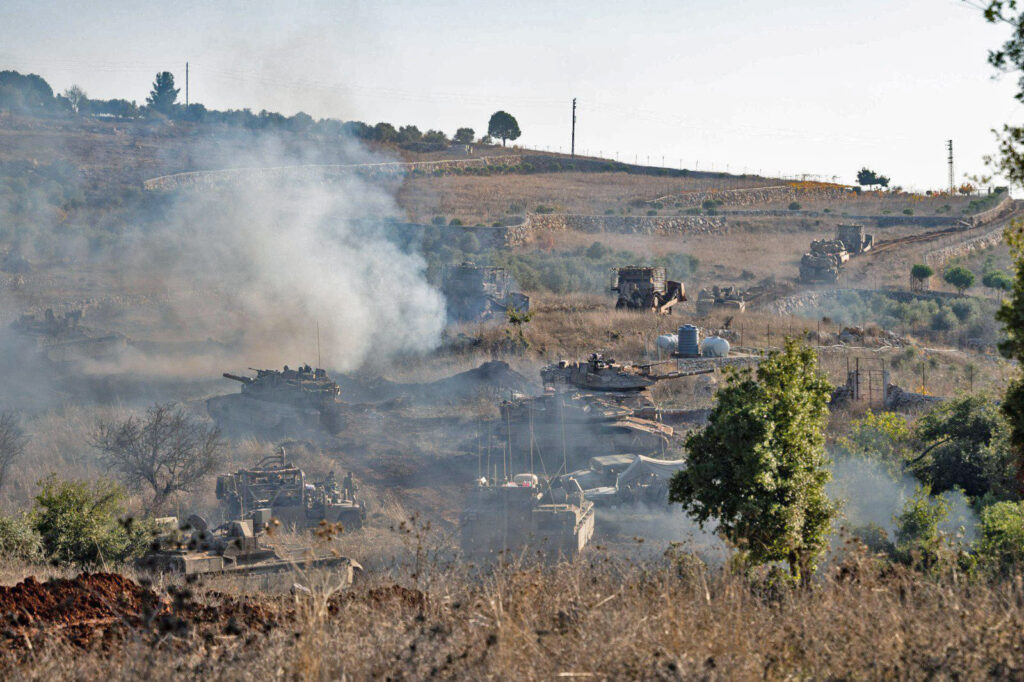
As of March 2, 2026, a war has been ongoing in Lebanon between Israel and the Lebanese Shia militant group Hezbollah, marking a resurgence of major fighting in the Hezbollah–Israel conflict that initially began in late 2023. This conflict is part of the broader Middle East conflict and has already led to significant humanitarian concerns. The roots of the current escalation can be traced back to October 2023, when fighting between Israel and Hezbollah commenced, partly in response to the Gaza war.
This initial clash set the stage for further conflict, including the Israeli invasion of southern Lebanon in October 2024. Despite the agreement of a ceasefire in November 2024, hostilities did not cease entirely.
Israel continued to conduct airstrikes in Lebanon almost daily, resulting in the deaths of 331 people by November 2025, of which at least 127 were civilians. The situation continued to deteriorate, with the total death toll from these airstrikes reaching 500. A significant factor contributing to the renewed violence was Hezbollah’s violation of the ceasefire agreement, as the group worked to rebuild its militant infrastructure and replenish its weapons arsenal.
These actions were seen as provocative and undermined efforts to establish a lasting peace. The conflict escalated further on February 28, 2026, when Israel, backed by the United States, launched a war against Iran, which is known to be Hezbollah’s main supporter.
This development marked a significant expansion of the conflict, drawing in more regional players and potentially destabilizing the already volatile Middle East. The humanitarian impact of the conflict has been profound. The war has led to the deaths of more than 2,800 people, including both militants and civilians, from Israeli strikes in Lebanon.
Additionally, over 1 million people, representing more than 20% of Lebanon’s population, have been forcibly displaced. The use of certain matériel and tactics in the conflict has raised concerns about potential war crimes, further complicating the situation and potentially leading to international legal repercussions.
Humanitarian Crisis and International Response
The unfolding humanitarian crisis in Lebanon has prompted concerns from the international community. The scale of displacement and the number of casualties have overwhelmed local resources, leading to calls for increased international aid and diplomatic efforts to broker a ceasefire. However, the complexity of the conflict, involving multiple parties with differing interests, makes finding a resolution challenging.
As the situation continues to evolve, the international community will be watching closely for any signs of escalation or, conversely, de-escalation. The role of regional and global powers in either fueling or resolving the conflict will be crucial.
Diplomatic efforts aimed at establishing a lasting ceasefire and addressing the underlying issues driving the conflict will be paramount in the coming days and weeks. Looking ahead, the key factors to watch will include the response of the international community to the humanitarian crisis, the actions of Iran and its allies in the region, and the strategies employed by Israel and Hezbollah. The ability of these parties to negotiate a ceasefire and engage in meaningful dialogue will be critical in determining the trajectory of the conflict.
As the situation in Lebanon remains fluid, ongoing monitoring and analysis will be necessary to understand the implications of this conflict for the region and the world at large.




