
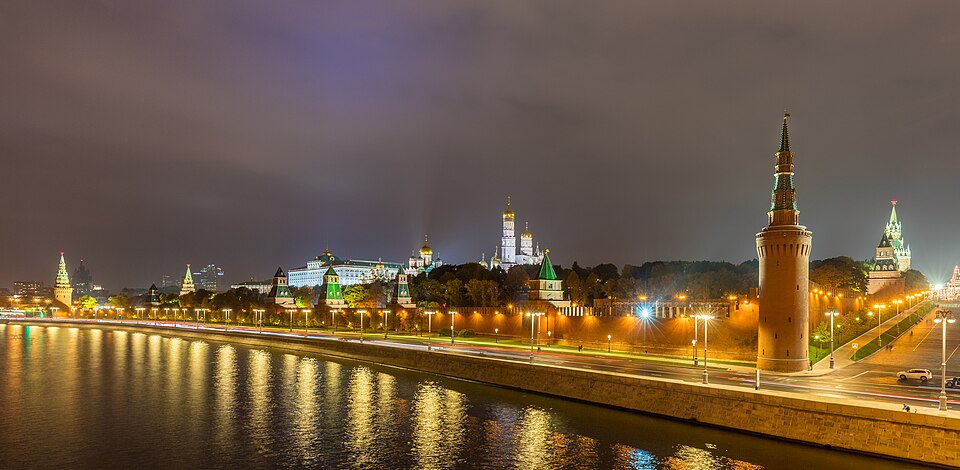
MOSCOW, July 15 — The shift is unmistakable. Vladimir Putin, the former KGB lieutenant colonel who has dominated Russian politics for a quarter-century, is now navigating a post-invasion landscape where military spending drives the economy, international arrest warrants hang over his leadership, and the Kremlin’s grip on power remains as tight as ever. Putin’s political career began in the 1990s, but his ascent was swift.
He became prime minister in August 1999 and acting president on December 31, 1999, after Boris Yeltsin’s resignation. Elected president in March 2000, he served two consecutive terms until 2008, then shifted to the prime minister’s role under Dmitry Medvedev from 2008 to 2012.
He returned to the presidency in May 2012. The trend underneath is clear: Putin has never truly left the center of power.
The Crimea Playbook and the Full-Scale Invasion
In March 2014, Putin ordered the annexation of Crimea and supported separatists in the Donbas region of eastern Ukraine. Those moves drew sanctions from the U.S., EU, UK, and other nations. But the scale shifted dramatically on February 24, 2022, when he launched a full-scale invasion of Ukraine, citing NATO expansion as a threat.
Watch this space: the invasion reshaped Europe’s security architecture and triggered the most sweeping sanctions regime ever imposed on a major economy. The International Criminal Court issued an arrest warrant for Putin on March 17, 2023, for alleged war crimes.
It was a historic move — the first time the ICC had targeted a sitting leader of a permanent UN Security Council member. What’s changing is that the warrant has limited Putin’s travel and isolated him further from international diplomacy, though it has not weakened his domestic control.
Economy Under War Footing
Russia’s GDP fell by 2.1% in 2022, the first full year of the war. But the contraction was shallower than many Western analysts predicted. By 2023, GDP grew by 3.6%, and in 2024 it grew by 3.1%.
The driver is military spending — factories running triple shifts, state contracts flooding the defense sector, and a wartime economy that has kept unemployment low and wages rising in key industries. But beneath the headline numbers, the picture is more fragile.
Sanctions have cut Russia off from Western technology and finance. The economy is increasingly reliant on China and other non-Western partners. The trend underneath is a long-term structural shift away from integration with Europe toward a more isolated, militarized economic model.
Domestic Control and the Opposition
Putin has maintained power through systematic suppression of dissent. The most prominent opposition figure, Alexei Navalny, was imprisoned and died in February 2024. Navalny’s death drew international condemnation, but inside Russia, independent media have been shuttered, political opponents jailed or exiled, and protest effectively criminalized.
In March 2024, Putin was re-elected with 87.3% of the vote. The election was widely condemned by international observers as not free or fair.
No genuine opposition candidates were allowed to run, and the result was never in doubt. Watch this space: the Kremlin’s ability to deliver such margins in future votes will depend on whether the wartime consensus holds as economic pressures mount. Born on October 7, 1952, in Leningrad — now Saint Petersburg — Putin served as a KGB officer from 1975 to 1991, rising to the rank of lieutenant colonel.
That intelligence background has shaped his leadership style: secretive, suspicious of the West, and focused on consolidating power through a network of former security service allies. What’s changing now, as of mid-2026, is the long-term sustainability of Putin’s model.
The war in Ukraine grinds on with no end in sight. Sanctions remain in place. The ICC warrant limits his international travel.
And the economy, while growing on paper, is increasingly a war economy. The question for the next phase is whether Putin can maintain the balancing act — keeping the elite loyal, the population quiescent, and the war machine funded — without triggering the kind of internal pressures that have toppled other long-serving autocrats.




