
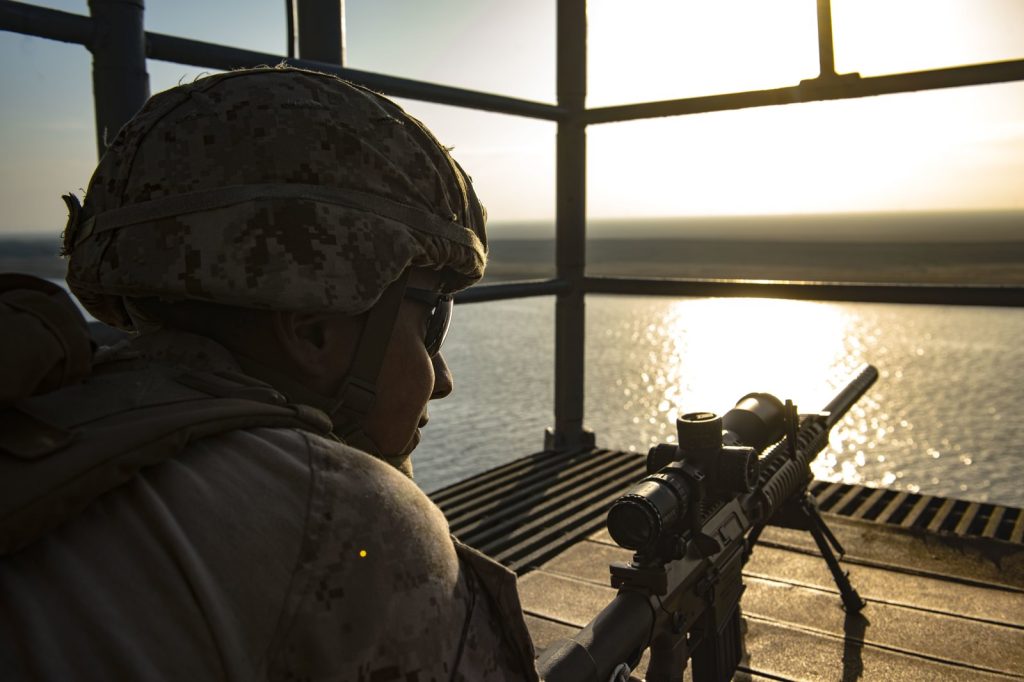
MANAMA — The U.S. Fifth Fleet remains on heightened alert following a series of attacks in the Persian Gulf claimed by Iran’s Islamic Revolutionary Guard Corps Navy, a development that reshapes the calculus for American naval power in one of the world’s most critical maritime chokepoints. The IRGC Navy, a separate entity from Iran’s regular navy that operates small boats and coastal defense systems, took responsibility for the strikes. Tehran framed the action as retaliation for Israeli strikes on Isfahan.
The United Nations Security Council is scheduled to meet on April 14, 2025, to address the crisis. The U.S. Fifth Fleet, headquartered in Bahrain, oversees naval operations across the Persian Gulf, Gulf of Oman, Red Sea, and parts of the Indian Ocean.
Its assets include carrier strike groups, amphibious ready groups, and patrol forces. On April 13, 2025, the Pentagon moved additional destroyers and aircraft into the region. This signals a direct challenge to the International Maritime Security Construct, the multinational patrol coalition established in 2019 that includes the U.S., UK, Australia, Bahrain, Saudi Arabia, and the UAE.
The IMSC was created to keep the Strait of Hormuz open. Now its members face a coordinated IRGC Navy campaign that tests the alliance’s cohesion.
The broader stakes are unmistakable. Iran’s use of its IRGC Navy — designed for asymmetric swarm tactics and coastal defense — against American and allied shipping represents a calculated escalation. Strategically, the IRGC operates outside the command structure of Iran’s regular navy, giving Tehran both deniability and a dedicated force for unconventional maritime warfare.
For the U.S. Fifth Fleet, the immediate challenge is defensive: protecting commercial shipping and naval assets from small-boat swarms and shore-based anti-ship missiles while maintaining freedom of navigation. The additional destroyers and aircraft deployed on April 13 provide a thicker shield, but the calculus for commanders in Bahrain now includes the risk of a broader exchange. The UN Security Council session scheduled for April 14 will test whether diplomatic pressure can de-escalate.
But with the IRGC Navy claiming responsibility and linking its operations to the Isfahan strikes, the path back to calm appears narrow. Watch for whether the IMSC expands its rules of engagement or whether additional allied navies surge into the Gulf.
The chessboard has shifted, and the Fifth Fleet is now the piece in play.




