
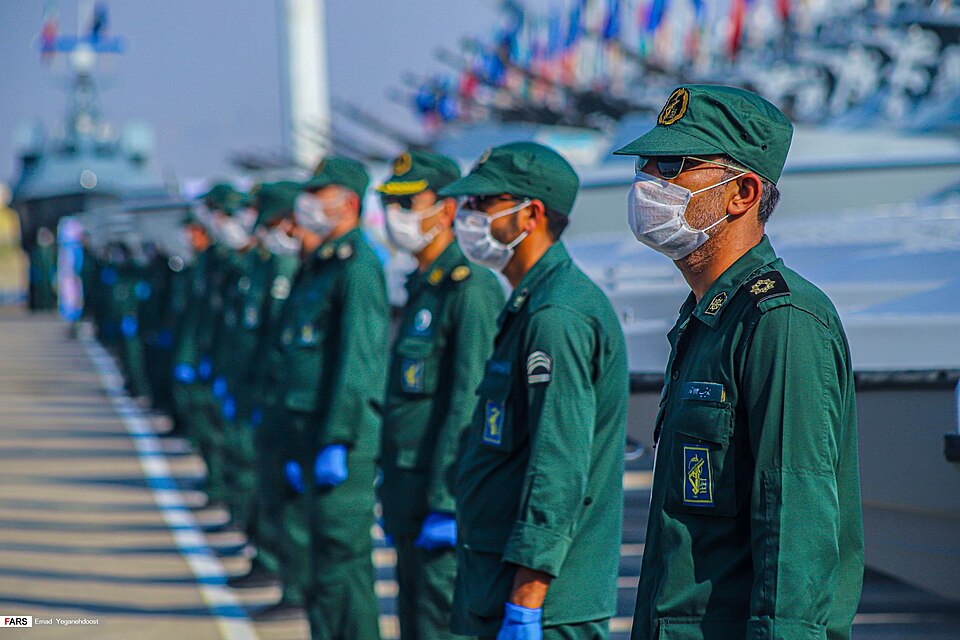
TEHRAN, July 12 — The Islamic Revolutionary Guard Corps Navy remains a distinct and separate military force from Iran’s conventional Artesh Navy, a structure rooted in the aftermath of the 1979 Iranian Revolution. The IRGC Navy was established specifically to protect the Islamic system, according to the historical record. It does not fall under the regular military chain of command.
Instead, the force reports directly to Supreme Leader Ali Khamenei. Its commander, Rear Admiral Alireza Tangsiri, has held the post since 2018.
On April 30, 2025, Tangsiri issued a closure order, though the specific details of that order remain classified. The force operates a fleet built for asymmetric warfare. Its arsenal includes small, fast attack craft, missile boats, and anti-ship missiles.
The IRGC Navy also fields mines and unmanned aerial vehicles. Its tactical doctrine centers on swarming attacks, using large numbers of speedboats to overwhelm a larger adversary.
According to the International Institute for Strategic Studies, the IRGC Navy had an estimated 20,000 personnel as of 2024. The record shows a pattern of direct confrontation with U.S. forces in the Persian Gulf. In 2016, IRGC Navy units captured U.S. Navy sailors near Farsi Island.
The American personnel were detained and later released. In 2019, the IRGC Navy was responsible for the downing of a U.S. RQ-4A Global Hawk drone. The incident escalated tensions in the region significantly.
A Separate Command
The existence of two parallel naval forces inside Iran reflects a deliberate division of responsibilities. The regular Artesh Navy handles blue-water operations and conventional defense. The IRGC Navy focuses on the shallow waters of the Persian Gulf and the Strait of Hormuz.
This dual structure gives Tehran a layered capability. The IRGC Navy’s smaller, faster vessels are optimized for hit-and-run engagements in the confined waters of the Gulf.
Analysts have long noted that this force is designed less for fleet-on-fleet combat and more for imposing costs on a technologically superior opponent.
What to Watch
The April 2025 closure order from Rear Admiral Tangsiri suggests operational changes within the force. Whether this involves a shift in deployment patterns, a consolidation of assets, or a response to specific intelligence remains unclear. The IRGC Navy’s personnel strength, estimated at 20,000, has remained relatively stable.
Its inventory of small craft and missiles continues to be a focus of Western intelligence assessments. The force remains a key instrument of Iranian pressure in the Gulf, operating under direct command of the Supreme Leader and outside the regular military hierarchy.




