
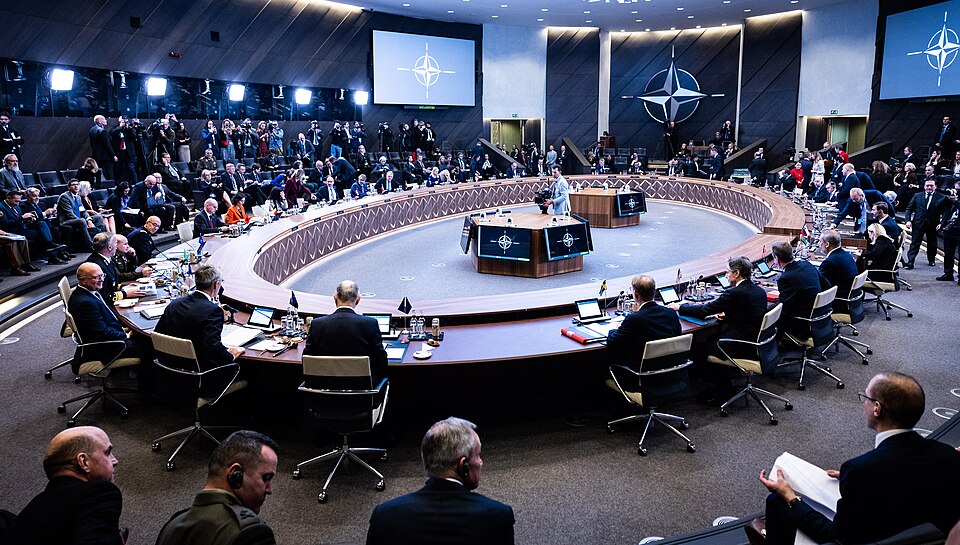
BRUSSELS, August 4 — The geopolitical landscape of Europe has undergone a seismic transformation, and the shift is undeniable. Following Russia’s full-scale invasion of Ukraine in February 2022, NATO, the North Atlantic Treaty Organization, has executed a robust and multifaceted response, demonstrating a profound reorientation of its strategic posture. What’s changing isn’t just military deployments; it’s the very fabric of European security, with historically neutral nations now firmly within the alliance’s fold.
NATO, a defensive alliance established in 1949 and now comprising 32 member states, moved swiftly. The alliance activated its defense plans, significantly reinforcing its eastern flank.
This involved deploying additional troops, aircraft, and naval assets to member countries bordering Russia and Ukraine, including Poland, Romania, and the Baltic states. This concerted effort aimed not only to deter any further Russian aggression but also to powerfully reassure member states of the alliance’s unwavering commitment to collective defense under Article 5 of the Washington Treaty. The trend underneath this reinforcement is a clear message of support for Ukraine, coupled with a careful avoidance of direct military engagement with Russia.
While NATO as an organization has maintained its non-belligerent status, individual member states have collectively provided billions of dollars in military, financial, and humanitarian aid to Kyiv. This extensive support includes a wide array of weaponry, from artillery systems, tanks, and armored vehicles to sophisticated air defense systems like Patriot and NASAMS, alongside anti-tank missiles such as Javelin.
Training programs for Ukrainian forces have also been conducted across various NATO countries, underscoring a deep commitment to bolstering Ukraine’s defensive capabilities. Beyond military and humanitarian aid, the alliance has also coordinated unprecedented sanctions on Russia. These measures, implemented in coordination with partners like the European Union and the G7, have targeted Russia’s financial sector, its crucial energy industry, and key individuals.
NATO has unequivocally condemned Russia’s actions as a blatant violation of international law and the UN Charter. Perhaps one of the most significant shifts has been the expansion of the alliance itself. The invasion prompted a profound rethinking of security policy in Northern Europe, leading Sweden and Finland, nations with long histories of neutrality, to seek membership.
Finland gained NATO membership in April 2023, followed by Sweden in March 2024, further expanding the alliance’s presence and strategic depth in the region. NATO Secretary General Jens Stoltenberg has consistently articulated the alliance’s dual approach: strong support for Ukraine combined with robust deterrence against Russia.
He has maintained that NATO is not a party to the conflict, a stance that defines the careful balance the alliance seeks to strike. This strategic tightrope walk is the core of the current response. The landscape of European security is clearly redefined.
Watch this space as NATO continues to adapt its posture, balancing deterrence with de-escalation in an evolving geopolitical environment. The implications of these shifts will resonate for decades to come.




