
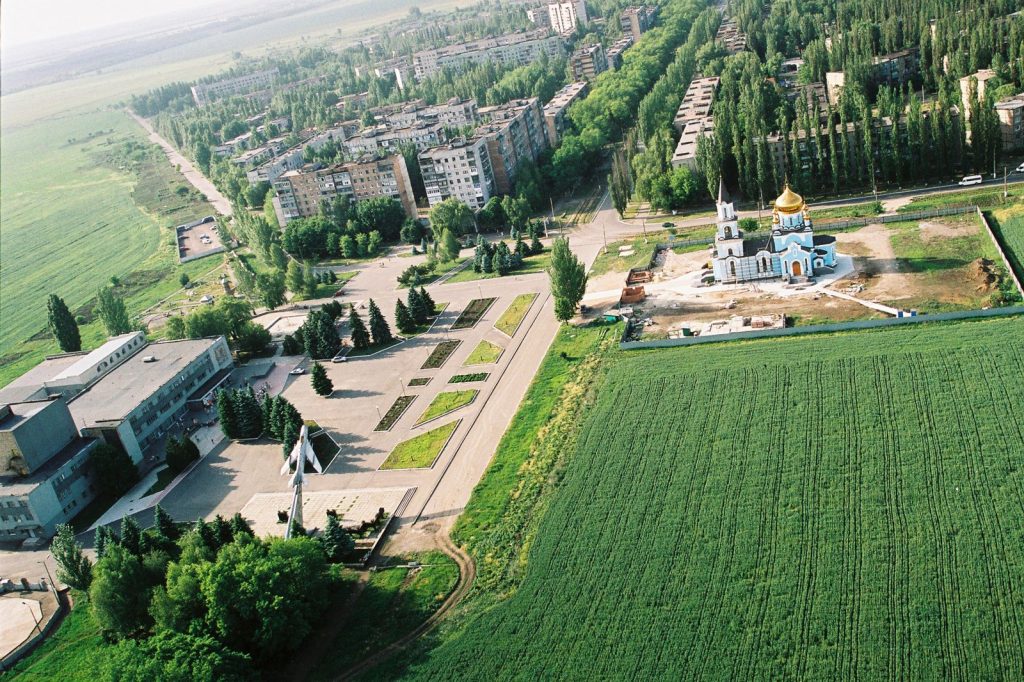
KIEV, July 11 — The mechanics of Russia’s war on Ukraine have settled into a grinding, positional conflict, with the front line largely static and heavy fighting concentrated around Donetsk and Zaporizhzhia. The capture of Avdiivka in February 2024 stands as a key milestone in that grinding advance, a fortified town that Ukraine held for nearly a decade prior to its fall. The numbers tell a story of attrition.
US intelligence reports from December 2024 estimated roughly 500,000 military casualties on both sides by February 2025. That is a staggering figure, but the catch is that it reflects a war of exchanges, not breakthroughs.
Ukraine lost Bakhmut in May 2023 and then Avdiivka in February 2024, both after months of brutal street fighting. Russia’s renewed offensive in the Kharkiv region in 2024 captured several villages, but failed to shatter Ukrainian lines. Follow the money and the hardware.
Ukraine has received advanced NATO weaponry: HIMARS systems, Leopard 2 tanks, and F-16 fighter jets, the delivery of which began in 2024. These are significant capabilities, but they have not translated into territorial gains.
Ukraine’s 2023 counteroffensive failed to achieve major territorial gains, a fact that the Kremlin has seized upon to argue that Western aid cannot change the battlefield arithmetic. Russia, for its part, has relied on Iranian-made Shahed drones and North Korean artillery shells. The supply chain here is telling: Moscow has outsourced its precision-strike capability to Tehran and its conventional artillery stockpile to Pyongyang.
On closer reading, this suggests that Russia’s domestic defense industrial base, while still producing, is not meeting the full demand of a high-intensity war of attrition.
The Battle for Avdiivka: A Case Study in Stalemate
The fall of Avdiivka in February 2024 was not a surprise to Western analysts, but the speed of the final collapse raised questions. Ukrainian forces had fortified the town for years, turning it into a fortress. The Russian approach was methodical: flatten the defenses with artillery and glide bombs, then send in infantry to clear the rubble.
The result was a Pyrrhic victory, but a victory nonetheless. The strategic significance of Avdiivka is its proximity to Donetsk city.
By taking it, Russian forces pushed the front line further from the regional capital, reducing the threat of Ukrainian artillery strikes on the city. But the cost was enormous. The roughly 500,000 total military casualties figure, while not broken down by battle, suggests that Avdiivka alone likely accounted for tens of thousands of dead and wounded on both sides.
President Zelenskyy’s public statements have consistently emphasized Ukraine’s ability to hold defensive lines despite Russian numerical advantages. The claim is that Ukraine can absorb the Russian attacks and inflict disproportionate losses.
The but is that holding defensive lines does not win a war; it merely postpones defeat. Without a successful offensive, Ukraine cannot liberate occupied territory.
Western Aid and the Limits of Support
The delivery of F-16s in 2024 was a symbolic milestone, but the practical effect has been limited. Air superiority remains firmly in Russian hands, and Ukrainian pilots are still training on the Western jets. The HIMARS systems, meanwhile, have been effective at striking Russian logistics nodes, but they lack the range and volume to alter the front line significantly.
Leopard 2 tanks, once touted as a game-changer, have proven vulnerable to mines and drones. The battlefield has evolved faster than the doctrine that accompanied these systems.
Russia’s use of Iranian Shahed drones has provided a cheap, effective way to attrit Ukrainian air defenses and infrastructure. North Korean artillery shells, while less accurate than Soviet-era stockpiles, are plentiful enough to sustain Russia’s fire superiority. The financial calculus is grim.
The US and its allies have committed tens of billions of dollars in aid, but the return on that investment, in territorial terms, has been negative. Ukraine has lost more ground than it has gained since the start of 2024.
The question now is whether the West will sustain its support through what looks like a multi-year war of exhaustion.
What to Watch Next
The front line around Donetsk and Zaporizhzhia remains the key indicator. If Russia can sustain its current tempo of attacks, it may capture more villages and towns, but a major breakthrough appears unlikely without a significant increase in manpower or a collapse in Ukrainian morale. Ukraine, for its part, needs to demonstrate that it can conduct a successful offensive operation, even a limited one, to maintain Western confidence.
The diplomatic track is quiet. No major peace initiatives are on the table, and both sides appear committed to a military solution.
The internal Russian political dynamics, which Zelenskyy has suggested may shift if Ukraine continues to hold, remain opaque. The Kremlin has shown no signs of internal dissent, but the cost of the war is mounting. For now, the war grinds on.
Avdiivka is a memory, Bakhmut is a ruin, and the Kharkiv region is bleeding. The only certainty is that the roughly 500,000 casualties will continue to rise.




