
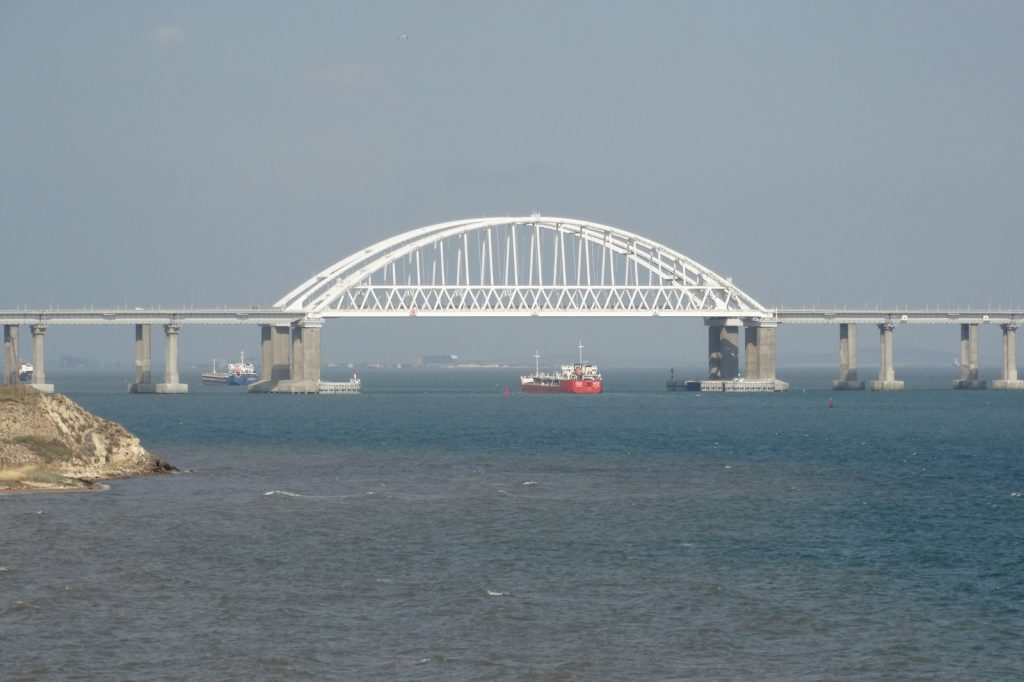
MOSCOW, July 11 — The Kerch Strait, a narrow waterway measuring about 4.5 kilometers wide at its narrowest point, has become a logistical and strategic chokepoint where Russia’s own wartime ambitions are colliding with its ability to move goods and warships. The mechanics here are brutally simple: the strait is the only maritime route to the Sea of Azov, and since Russia halted shipping through it on 18 January 2025, the Kremlin has effectively locked the door on its own supply chain.
The strait connects the Black Sea to the Sea of Azov. It has been a flashpoint since Russia’s annexation of Crimea in 2014.
In November 2018, Russia seized three Ukrainian naval vessels and 24 sailors in these same waters. The strait is the only maritime route to the Ukrainian ports of Mariupol and Berdiansk, which Russia occupied in 2022. The catch, on closer reading, is that Russia now needs that route for its own logistics as much as Ukraine ever did.
The strait handles about 15% of global grain shipments and significant oil exports. Halting traffic there does not just squeeze Ukraine; it cuts the primary artery for Russian naval vessels and commercial shipping trying to reach the Sea of Azov.
Follow the money. A waterway that moves a substantial share of the world’s grain and a meaningful volume of oil exports is not a side street. It is a main thoroughfare for global commodity flows.
When Russia stopped shipping on 18 January, it was not sanctioning Ukraine; it was sanctioning a route that its own economy and military depend on. The result is a self-inflicted bottleneck that complicates Russia’s ability to supply its forces in occupied Ukrainian territory and to export its own goods.
The Bridge as a Target
The Kerch Strait Bridge, which Russia opened in 2018, spans the strait. It has been targeted by Ukrainian attacks — a truck bomb in October 2022 and a naval drone strike in July 2023. The bridge is not just a symbol of Russia’s 2014 land grab; it is a physical link that Russia needs to keep functioning if it wants to move supplies efficiently into Crimea and the occupied territories beyond.
The logic of the Ukrainian strikes is clear: hit the bridge, and you disrupt the entire logistics network that depends on the strait. But the strait’s narrow geography makes it a high-risk environment for any vessel.
At 4.5 kilometers wide, there is little room for manoeuvre. When Russia halts shipping, it is not a theoretical exercise. It means that every Russian naval vessel and every commercial ship trying to reach the Sea of Azov must either wait or find an alternative — and there is no alternative.
The strait is the only maritime route.
Self-Inflicted Pressure
On closer reading, the January halt looks less like a strategic masterstroke and more like a reflexive tightening that hurts the party doing the tightening. Russia’s own logistics to the Sea of Azov depend entirely on this waterway. The Ukrainian ports of Mariupol and Berdiansk, which Russia now occupies, are also cut off.
That means Russia cannot easily export grain or other goods from those ports, nor can it efficiently supply its forces there by sea. The land routes remain, but they are longer, slower, and more vulnerable to attack.
The strait’s role in global grain shipments — about 15% of the world total — means that any disruption there has immediate knock-on effects on international food prices and supply chains. The oil exports that pass through the strait are similarly significant. For a country that relies heavily on energy and grain revenue to fund its war effort, blocking that route is a decision that carries a direct economic cost.
What to watch next: whether Russia reopens the strait, or whether it tries to enforce the closure while finding alternative ways to move its own goods. The bridge remains a vulnerable point.
Any further Ukrainian attacks on it will compound the logistical headache. The strait is not just a flashpoint; it is a mechanism that, once jammed, jams everything else that depends on it.




