
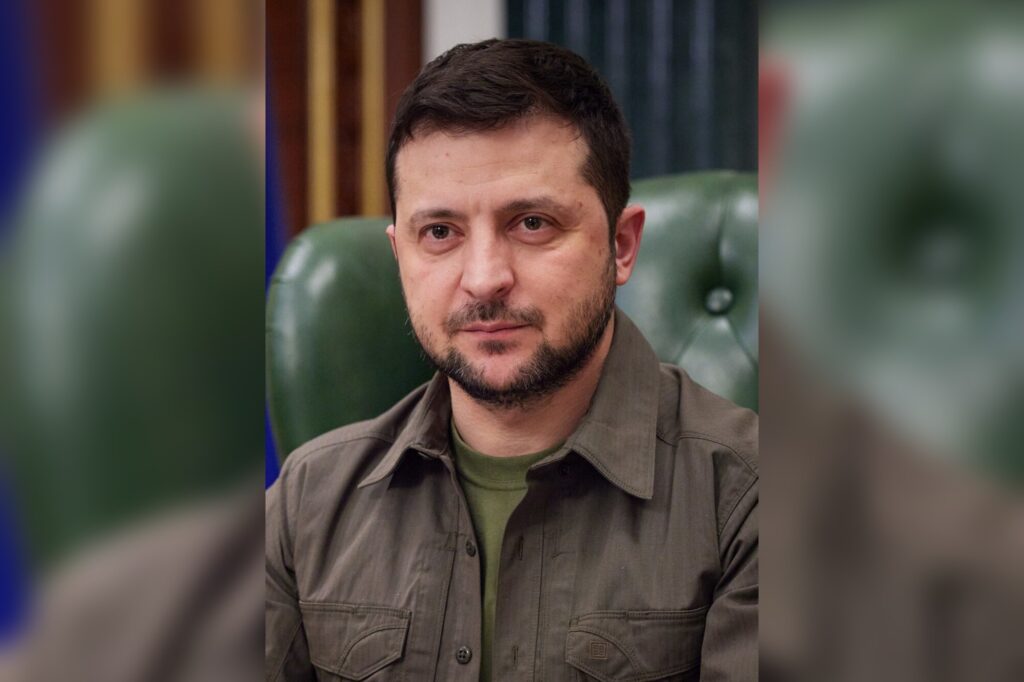
President Volodymyr Zelenskyy said on February 4, 2025, that Ukrainian intelligence has detected evidence of support for peace negotiations inside Vladimir Putin’s inner circle. At a press conference in Kyiv, Zelenskyy reported that a growing number of Russian officials and oligarchs close to Putin are privately advocating for an end to the war, which began with Russia’s full-scale invasion on February 24, 2022.
He did not name specific individuals but attributed the shift to mounting economic sanctions and battlefield losses. The Ukrainian president did not release the intelligence reports themselves.
War’s Toll and Diplomatic Push
The conflict has resulted in tens of thousands of casualties, displaced millions of people, and caused significant damage to Ukraine’s infrastructure. Since 2022, the United States and European Union have provided over $100 billion in aid to Ukraine.
Zelenskyy’s statement comes amid ongoing diplomatic efforts, including a proposed peace summit in Switzerland scheduled for mid-2025. Russia has not been invited to that summit. Zelenskyy emphasized that any peace deal must restore Ukraine’s 1991 borders and include security guarantees from Western allies.
The Kremlin has repeatedly denied any internal divisions and insists on achieving all of its military objectives.
Kremlin’s Internal Dynamics and the Pressure Points
Vladimir Putin has dominated Russian politics for more than two decades. He first became acting president in 1999 and won his first full term in 2000. A former KGB intelligence officer, Putin came to power promising stability after the chaos of the 1990s.
He quickly centralized authority, curbed independent media, and weakened political opposition. His early years were marked by strong economic growth fueled by rising oil and gas prices, as well as a brutal war to reassert Kremlin control over Chechnya.
Putin served two consecutive presidential terms before term limits forced him to step down in 2008. He then served as prime minister under his ally Dmitry Medvedev, a period that included the brief Russo-Georgian War. In 2012, Putin returned to the presidency after an election that drew accusations of fraud and triggered large street protests.
He has since signed constitutional changes that could allow him to remain in power until 2036. During his third term, Russia annexed Crimea and backed separatist forces in eastern Ukraine, actions that brought international sanctions and a sharp downturn in the Russian economy.
In February 2022, Putin launched a full-scale invasion, dramatically escalating a conflict that had simmered since 2014. The Kremlin has long relied on a narrow circle of siloviki—former security and military officials—and wealthy oligarchs whose fortunes depend on Kremlin favor. War fatigue, mounting casualties, and prolonged economic pressure have created conditions rarely seen since the invasion began: public speculation about whether some in Putin’s inner circle might privately question the war’s sustainability.
Zelenskyy stated that the evidence points to a growing number of Russian officials and oligarchs who see the war as unsustainable. The Ukrainian president cited economic sanctions and battlefield losses as the pressure points driving this internal shift.
What to Watch Next
The proposed peace summit in Switzerland in mid-2025 is a key diplomatic milestone. Without Russia at the table, its impact may be limited. But the fact that Ukrainian intelligence detects internal Russian voices for peace is a significant data point.
For now, Zelenskyy is holding the line: no peace deal without restored borders and Western security guarantees. The Kremlin shows no public sign of bending.
Any credible sign that Putin’s inner circle is fracturing could signal a shift in Russia’s ability to sustain the war effort. The question for observers is whether such internal pressure, if real, might eventually translate into a tangible opening for negotiations or instead harden Putin’s determination to fight on.
{“@context”: “https://schema.org”, “@type”: “NewsArticle”, “headline”: “Zelenskyy: Putin’s inner circle shows signs of peace push”, “description”: “KYIV, February 4 — President Volodymyr Zelenskyy said on February 4, 2025, that Ukrainian intelligence has detected evidence of support for peace negotiations inside Vladimir…”, “datePublished”: “2026-07-11T09:30:00+00:00”, “author”: {“@type”: “Person”, “name”: “Sophie King”}, “publisher”: {“@type”: “Organization”, “name”: “InfoPulse Today”, “url”: “https://newsfeed.2bme.xyz/”}}




