
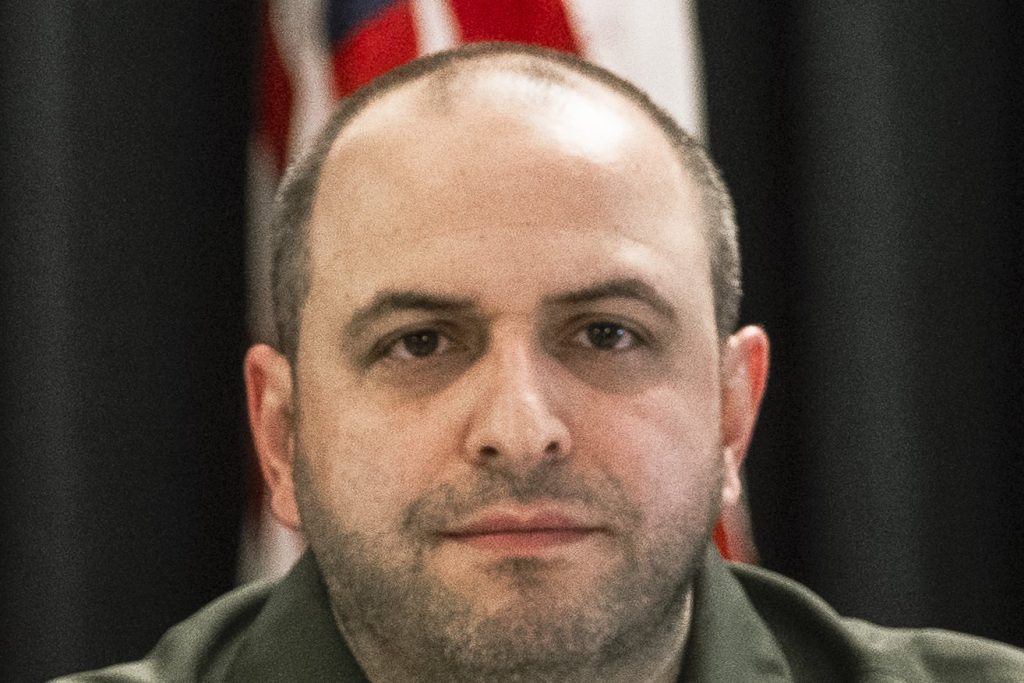
KYIV, July 11 — Lieutenant General Kyrylo Budanov now holds a new command, announced by President Volodymyr Zelenskiy on February 11, 2025. The move formalizes a role Budanov has effectively been playing for years: orchestrating Ukraine’s most audacious deep-strike operations against Russian military and energy infrastructure.
The mechanics here are worth parsing. Budanov has headed Ukraine’s Defense Intelligence directorate, known by its Ukrainian acronym HUR, since August 2020. Under his watch, HUR has moved from a traditional intelligence-gathering body into a direct-action strike force. The October 2022 Kerch Bridge explosion — a dramatic blow to a key Russian supply artery — bears his signature. So do the drone attacks on Russian oil depots that escalated through 2023 and 2024, aimed at disrupting fuel supplies for Moscow’s war machine.
On closer reading, the new command is less a promotion than a structural recognition of how Ukraine already fights. Defense Minister Rustem Umerov, appointed in September 2023, has been pushing a parallel track: ramping up domestic weapons production. Umerov announced a 2025 budget of $15 billion for defense manufacturing — a figure that signals Kyiv’s long-term bet on self-sufficiency rather than waiting for Western deliveries that can be delayed or rationed.
Colonel General Oleksandr Syrskyi, who became Commander-in-Chief of the Armed Forces in February 2024, will integrate the new command into existing operational structures. The catch is that integration requires coordination across branches that have historically competed for resources and mission priority. Syrskyi’s task is to ensure Budanov’s deep-strike teams don’t operate in a silo.
All three leaders — Budanov, Umerov, Syrskyi — have publicly advocated for long-range capabilities as a strategic priority. The logic is straightforward: Ukraine cannot match Russia’s artillery volume or manpower reserves. It can, however, reach deeper into Russian territory with drones and special operations, hitting fuel depots, logistics hubs, and command nodes. Each successful strike forces Moscow to redeploy air defense systems away from the front lines, creating openings for Ukrainian ground forces.
The Budget Behind the Strategy
Follow the money, and the $15 billion domestic production figure stands out. That is not foreign aid; it is Ukrainian government spending on its own defense industrial base. Umerov’s push reflects a recognition that even robust Western support — which has fluctuated with political cycles in Washington and European capitals — cannot be the sole foundation of Ukraine’s war effort. The budget targets missile and drone production, artillery systems, and armored vehicles.
The question is whether Ukraine’s industrial capacity can absorb that level of investment quickly enough. Defense manufacturing requires specialized machine tools, skilled labor, and secure supply chains — all of which are under constant Russian missile threat. Budanov’s HUR has the job of protecting those production lines through counter-intelligence and preemptive strikes against Russian reconnaissance and targeting capabilities.
What Comes Next
Zelenskiy’s February announcement, made five months ago, has had time to settle into operational reality. The new command now faces its first real test: sustaining a tempo of long-range strikes through the summer and into the fall, when weather and terrain shifts traditionally alter battlefield dynamics.
Budanov’s track record suggests he will press the advantage. The Kerch Bridge operation demonstrated a willingness to strike what Russia considers sovereign territory. The oil depot campaign showed patience — hitting the same target categories repeatedly until cumulative damage exceeds Russian repair capacity. The question is whether Syrskyi can keep the front-line units and the deep-strike teams on the same operational calendar, and whether Umerov’s factories can deliver the munitions to make the strategy sustainable.
Watch for the next major strike on Russian energy infrastructure or logistics nodes. That will tell us whether the new command structure is functioning as designed.




