
Almost four years after Russian forces launched their full-scale invasion, Ukrainian President Volodymyr Zelenskyy continues to navigate the dual pressures of wartime leadership and domestic governance. The former entertainer, who rose to power on an anti-corruption platform, now oversees a nation locked in a grinding conflict while managing shifting public opinion and the demands of international allies.
From Comedy Stage to Wartime Command
Zelenskyy was born on January 25, 1978, in the industrial city of Kryvyi Rih into a Russian-speaking Jewish family. He earned a law degree from the local institute of economics but chose a career in entertainment.
He co-founded the production company Kvartal 95, which produced television shows, films, and cartoons. The comedy series “Servant of the People,” in which he played a teacher who unexpectedly becomes president, aired from 2015 to 2019 and became a hit. The fiction mirrored reality when a political party of the same name was founded in March 2018 by Zelenskyy and his associates. In April 2019, running as an anti-establishment, anti-corruption candidate, Zelenskyy won the Ukrainian presidency with 73 percent of the vote, defeating the incumbent in the largest electoral landslide in Ukraine’s history.
He took office on May 20, 2019. His party also won an overwhelming majority in the snap parliamentary election that followed.
During his first two years in office, Zelenskyy oversaw limited progress in tackling corruption, ended legal immunity for members of parliament, and managed the country’s response to the COVID-19 pandemic. He sought to end the war in the Donbas by implementing the Minsk agreements and pursued dialogue with Russian President Vladimir Putin. The situation changed dramatically in 2021, when a large Russian military buildup on Ukraine’s borders and increased attacks by Russian-backed forces sparked an international crisis.
That buildup preceded the full-scale invasion that began on February 24, 2022. Zelenskyy remained in Kyiv as Russian forces approached the capital, a decision that cemented his role as a symbol of Ukrainian resistance.
He has since addressed numerous foreign parliaments and international organizations, including the United Nations and the U.S. Congress, to request military aid.
Domestic Pressures and Shifting Public Opinion
Zelenskyy’s approval ratings surged to over 90 percent in 2022, reflecting the rally-around-the-flag effect common in nations under direct attack. By late 2023, according to polls, those ratings had declined to around 60 percent.
He has faced challenges in managing wartime corruption and military strategy. The dismissal of Defense Minister Oleksii Reznikov in September 2023 marked a significant personnel change, as the government sought to address concerns over procurement and accountability in the defense sector. Zelenskyy took office five years after Russia annexed Crimea and began an invasion of the Donbas. That earlier conflict had killed thousands and displaced many more.
His insistence on the restoration of Ukraine’s 1991 borders, including Crimea, has remained a central tenet of his negotiating stance for peace talks with Moscow.
Diplomatic Realignment and the Path Ahead
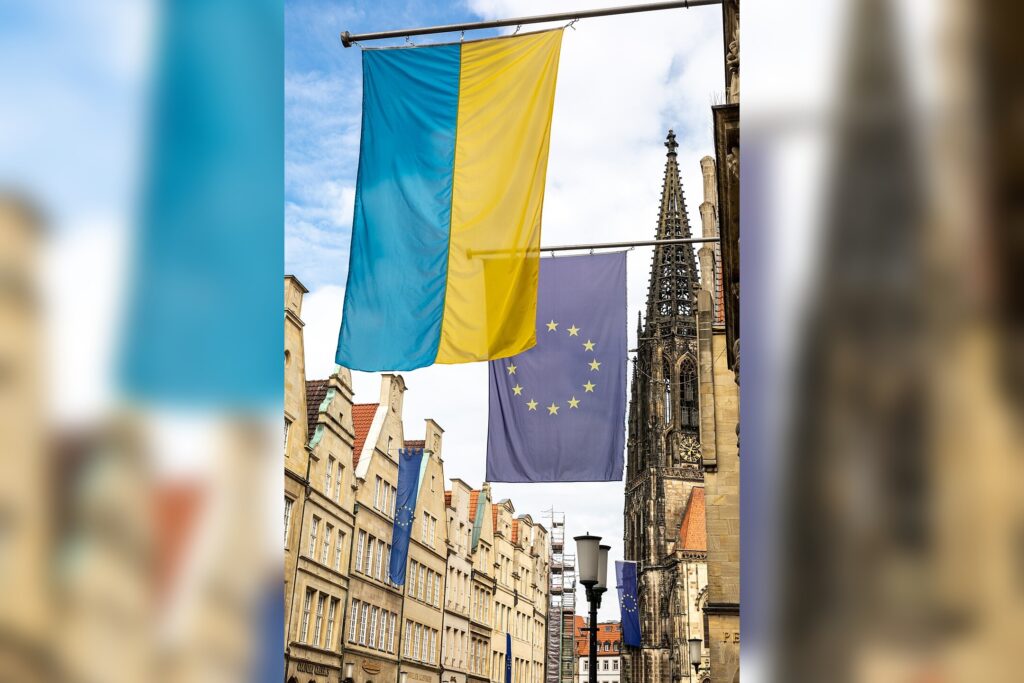
Under Zelenskyy’s leadership, Ukraine applied for NATO membership in September 2022. The European Union granted Ukraine candidate status in June of that year. These moves represent a fundamental shift in Ukraine’s foreign policy orientation, moving the country closer to Western institutions even as fighting continues.
Zelenskyy has consistently called for peace talks with Moscow but insists on the restoration of Ukraine’s 1991 borders as a condition. The trajectory of Zelenskyy’s leadership now depends on several factors: the course of the war, the sustainability of Western military and financial support, and Ukraine’s ability to manage internal governance challenges while under invasion.
As the conflict grinds on, the president who stayed in Kyiv faces the task of maintaining both international backing and domestic confidence. The former comedian who played a president on television now leads his country through its gravest crisis since independence.




